Mini medical machines destroy pancreas cancer cells in new study

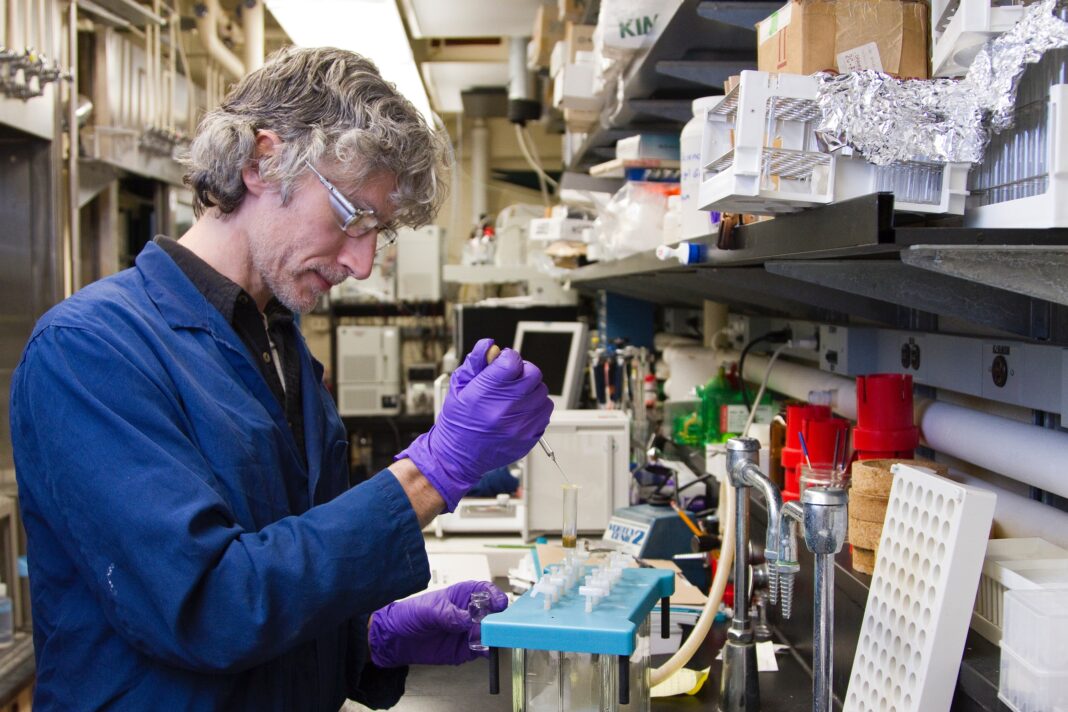
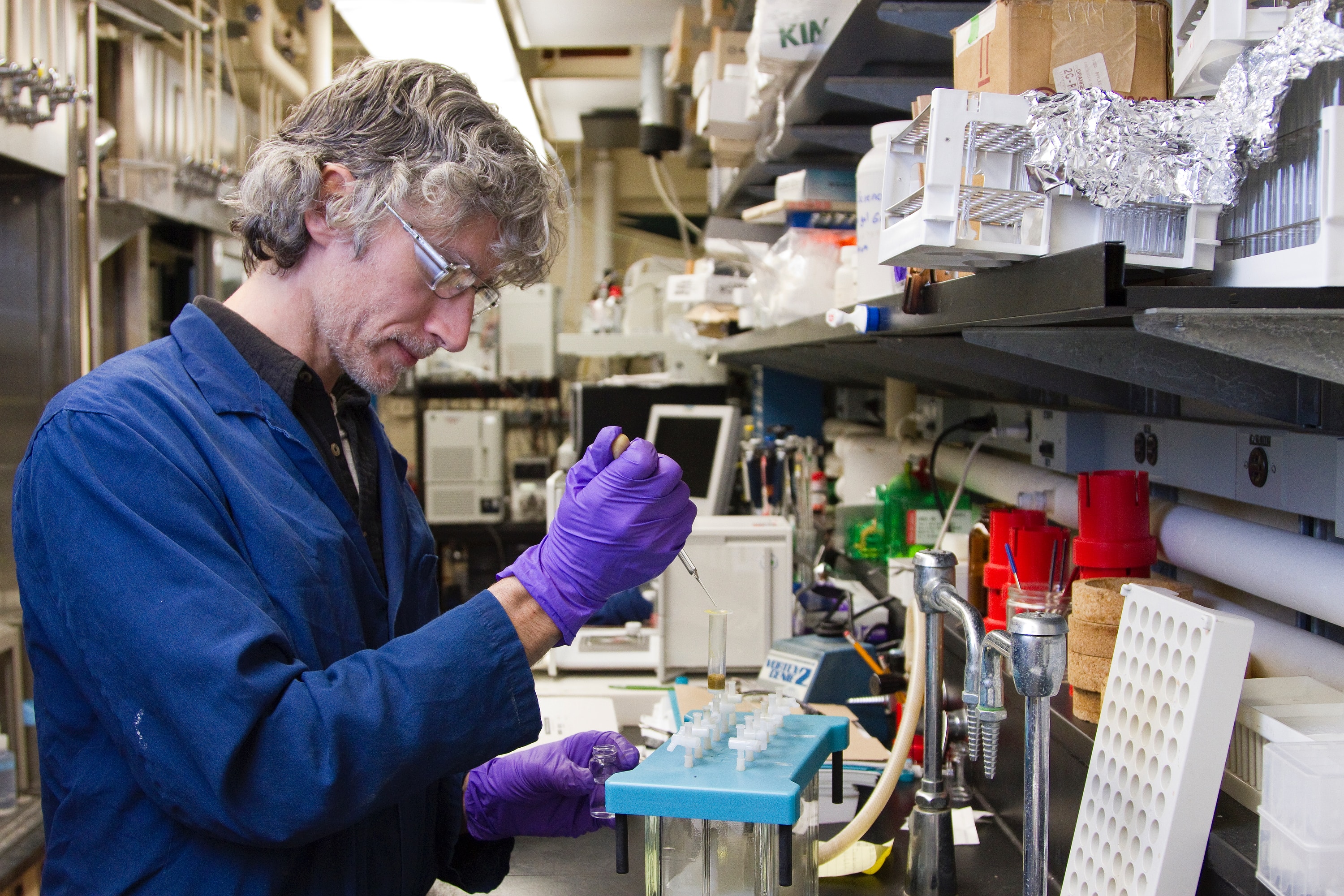
man testing bacteria resistance with pipettes in lab

A new study has found for the first time that magnetoelectric nanoparticles — tiny, wirelessly controlled particles activated by magnetic fields — can both locate and destroy pancreatic tumors in preclinical models, offering a potential new approach to minimally invasively treating one of the deadliest cancers.

The study was led by scientists and engineers at Sylvester Comprehensive Cancer Center, the University of Miami College of Engineering, Moffitt Cancer Center and Cellular Nanomed, Inc. The findings appeared in the issue of Advanced Science.

In the study, a single intravenous dose of these magnetoelectric nanoparticles (MENPs), when activated by a magnetic field inside an MRI machine, caused pancreatic tumors to shrink to one-third their size and completely disappear in one-third of the treated models. The treatment also more than doubled survival time, all without damaging healthy organs.

Unlike chemotherapy or surgery, this approach uses no drugs, heat, or invasive procedures. Instead, MENPs are injected into the bloodstream, guided by a small magnet to the tumor site, and then activated by the magnetic field of a standard MRI scanner. When switched “on,” the particles generate tiny electric fields that disrupt cancer cell membranes and trigger natural cell death — leaving nearby healthy tissue unharmed.

The approach could overcome key limits of existing electric-field-based therapies, such as tumor treating fields (TTFs) and irreversible electroporation (IRE), which require either wearable devices or surgical electrodes.

“This study brings us one step closer to connecting to the human body wirelessly to help it heal in real time,” said Sakhrat Khizroev, Ph.D., a professor in the College of Engineering and the study’s co-senior author. “We hope it opens a new era in medicine where technology can precisely target diseases that were once considered untreatable.”

The research shows how MENPs can be delivered directly to pancreatic tumors, where they are remotely activated by a magnetic field inside an MRI scanner. Once activated, the nanoparticles generate local electric fields that distinguish between healthy and cancerous cells based on their molecular properties, causing only the malignant cells to undergo apoptosis, or programmed cell death.

MRI scans confirmed that this treatment reduced tumor size and produced clear imaging signals, supporting MENPs as a powerful therapy and diagnostic, or “theranostic,” tool. Because the particles function without pharmaceutical drugs or biological reagents, the approach minimizes side effects and could eventually be applied to other difficult-to-treat diseases.

The idea of using MENPs to wirelessly control local electric fields was first proposed by Khizroev and Liang in 2011. Over the past decade, the concept evolved through global research partnerships and technological breakthroughs, culminating in this study.

Despite major advances in oncology, pancreatic ductal adenocarcinoma (PDAC) remains one of the deadliest cancers, with a five-year survival rate below 10%. It is projected to become the second leading cause of cancer-related death in the United States by 2030. Traditional methods, including surgery, radiation and chemotherapy, often harm healthy tissue, while newer approaches such as immunotherapy have shown limited success.

One of the greatest challenges in treating PDAC lies in controlling the electric fields that influence cancer cell growth. Because human tissue conducts electricity, it has been nearly impossible to manipulate these fields precisely inside the body.

The new findings suggest that MENP therapy could one day give patients a safer, more precise option.


 

LEAVE A REPLY

Please enter your comment!
Please enter your name here

TRENDING

Oil pollution in Basrah’s soil is 1,200% higher than it should be

Soil pollution levels in parts of Basra are 1,200% to 3,300% higher than those typically measured in cities like Toronto or New York, according to new comparative soil data. It's getting into water.

Factors That Determine the Payout of Asbestos Cases

Asbestos is found in eye shadow and talc. Know your rights of this deadly environmental hazard.

Can Herpes Kill Cancer? A Modified Virus Offers New Hope for Skin Cancer Patients

So, can herpes kill cancer? Not the kind you catch on a bad date. But a lab-modified version of the virus might just save lives, turning a once-feared pathogen into a new kind of precision weapon in oncology.

A blood test to diagnose leukemia

What if a blood test could reveal the pace of our aging – and the diseases that may lie ahead?

Real life Snoopy sniffs out cancer for this medical startup

Patients breathe into a specially designed face mask for three minutes. The mask is then sent to the company’s laboratory, where trained beagles "analyze" the sample under the supervision of an AI system. Each sample undergoes 3 to 5 examinations to ensure high accuracy.

Qatar’s climate hypocrisy rides the London Underground

Qatar remains a master of doublethink—burning gas by the megaton while selling “sustainability” to a world desperate for clean air. Wake up from your slumber people.

How Quality of Hire Shapes Modern Recruitment

A 2024 survey by Deloitte found that 76% of talent leaders now consider long-term retention and workforce contribution among their most important hiring success metrics—far surpassing time-to-fill or cost-per-hire. As the expectations for new hires deepen, companies must also confront the inherent challenges in redefining and accurately measuring hiring quality.

8 Team-Building Exercises to Start the Week Off 

Team building to change the world! The best renewable energy companies are ones that function.

Thank you, LinkedIn — and what your Jobs on the Rise report means for sustainable careers

While “green jobs” aren’t always labeled as such, many of the fastest-growing roles are directly enabling the energy transition, climate resilience, and lower-carbon systems: Number one on their list is Artificial Intelligence engineers. But what does that mean? Vibe coding Claude? 

Somali pirates steal oil tankers

The pirates often stage their heists out of Somalia, a lawless country, with a weak central government that is grappling with a violent Islamist insurgency. Using speedboats that swarm the targets, the machine-gun-toting pirates take control of merchant ships and then hold the vessels, crew and cargo for ransom.

Leopoldo Alejandro Betancourt López Turned Ocean Plastic Into Profitable Sunglasses

Few fashion accessories carry the environmental burden of sunglasses. Most frames are constructed from petroleum-based plastics and acrylic polymers that linger in landfills for centuries, shedding microplastics into soil and waterways long after they've been discarded. Leopoldo Alejandro Betancourt López, president of the Spanish eyewear brand Hawkers, saw this problem differently than most industry executives.

Why Dr. Tony Jacob Sees Texas Business Egos as Warning Signs

Everything's bigger in Texas. Except business egos.  Dr. Tony Jacob figured...

Israel and America Sign Renewable Energy Cooperation Deal

Other announcements made at the conference include the Timna Renewable Energy Park, which will be a center for R&D, and the AORA Solar Thermal Module at Kibbutz Samar, the world's first commercial hybrid solar gas-turbine power plant that is already nearing completion. Solel Solar Systems announced it was beginning construction of a 50 MW solar field in Lebrija, Spain, and Brightsource Energy made a pre-conference announcement that it had inked the world's largest solar deal to date with Southern California Edison (SCE).

Related Articles

Popular Categories