American students build “bread-loaf sized” satellite they will send to space

A multidisciplinary team of undergraduate students led by the University of New Hampshire designed and built a mini satellite, known as a CubeSat, that will launch into space to gather data in collaboration with NASA’s Interstellar Mapping and Acceleration Probe (IMAP) mission. The small-but-mighty satellite is set to launch on a SpaceX rocket from Vandenberg Space Force Base in California no earlier than Nov. 10, 2025 at 10:19 a.m. PST. It will head to the outer reaches of the atmosphere to study the solar wind which will help scientists in their quest to improve space weather forecasting and better protect technology in space and on Earth—such as communication networks, power grids and GPS—from potentially damaging large solar flare events. “This is an amazing opportunity for UNH students to not only get hands-on technical experience but to also collaborate with other undergraduates across the country to design and build an entire space mission from the instrument to the software that will operate it in space and the antenna and radio to command the satellite once there,” said Noé Lugaz, research professor in physics and astronomy at the University of New Hampshire. “The experience is invaluable and can open doors to future opportunities in space-related or other science and engineering careers.” A team of 70 undergraduate students from the University of New Hampshire (UNH), Sonoma State University (SSU) and Howard University (HU) designed, developed and built the satellite which was named 3UCubed—reflecting the overall concept of uplifting undergraduate students to study upwelling, and giving a nod to the three participating universities. Selected as part of NASA’s CubeSat Launch Initiative, once it is launched, the satellite will travel to the Earth’s upper atmosphere, known as thermosphere, which is the same region where many other satellites and the International Space Station orbit around Earth. It will take measurements of the atmosphere density (single oxygen at this altitude) and electron precipitation from space onto the upper atmosphere, which can cause disturbances in communication signals and lead to changes in the ozone. Data from the mission will be collected by the students and analyzed in combination with data from IMAP and will help advance the understanding of how the thermosphere in the auroral and cusp regions responds to particle precipitation and varying conditions associated with solar wind. CubeSats are a specific subset of satellites that are small and standardized and provide a cost-effective way to study space science. It is about the size of a loaf of bread and offers a simpler way to start building and operating than larger satellites, making it an ideal piece of equipment for students to hone their skills outside of the classroom. The 3UCubed satellite was fully assembled at UNH and the two payload instruments that are a part of its structure were built, tested and calibrated at UNH. The students worked for five years on the satellite, performing a variety of tasks ranging from creating the software code that controls the 3UCubed to soldering the wires during the physical build. Students with mentorship from professors and staff engineers, performed trade studies, orbit analyses, selected vendors for different subsystems, oversaw budgets for various mass, power, link and telemetry jobs and developed the framework for the flight software and operations. “At the time, I had a keen interest for the aerospace industry and saw this as a great opportunity to get valuable experience working with industry professionals,” said Alex Chesley ’22, who studied mechanical engineering at UNH and was a part of the 3UCubed mission team. “It was fascinating to learn about so many new subjects about space science and instrumentation that I had never studied before.” The hands-on experience is meant to introduce, inspire and prepare students for a successful career in a related field like space science, computer science, engineering or science education. Chesley designed the initial CAD model of the satellite and also helped create the detailed specification list for the CubeSat’s altitude control system. He now works as a configuration engineer at STS Aerospace in Laconia, N.H., where he helps develop fluid distribution systems for customers in the space, aeronautics and defense industries. “The experience with the 3UCubed mission helped with my professional growth, and it was definitely valuable to have, no matter what industry you end up working in,” said Chesley. Students from UNH also took the lead in developing the instrument software and worked with students from SSU on the flight software. SSU oversaw the development of the software for the ground station and will serve as the primary ground station for the mission, which will collect the data from the satellite and will send commands to the spacecraft so it can adjust once it is in orbit. UNH worked with HU to build the back up ground station. Students from Sonoma State University have also engaged with their region’s amateur radio operators and Scout members to construct a ground station for them to communicate with the satellite.
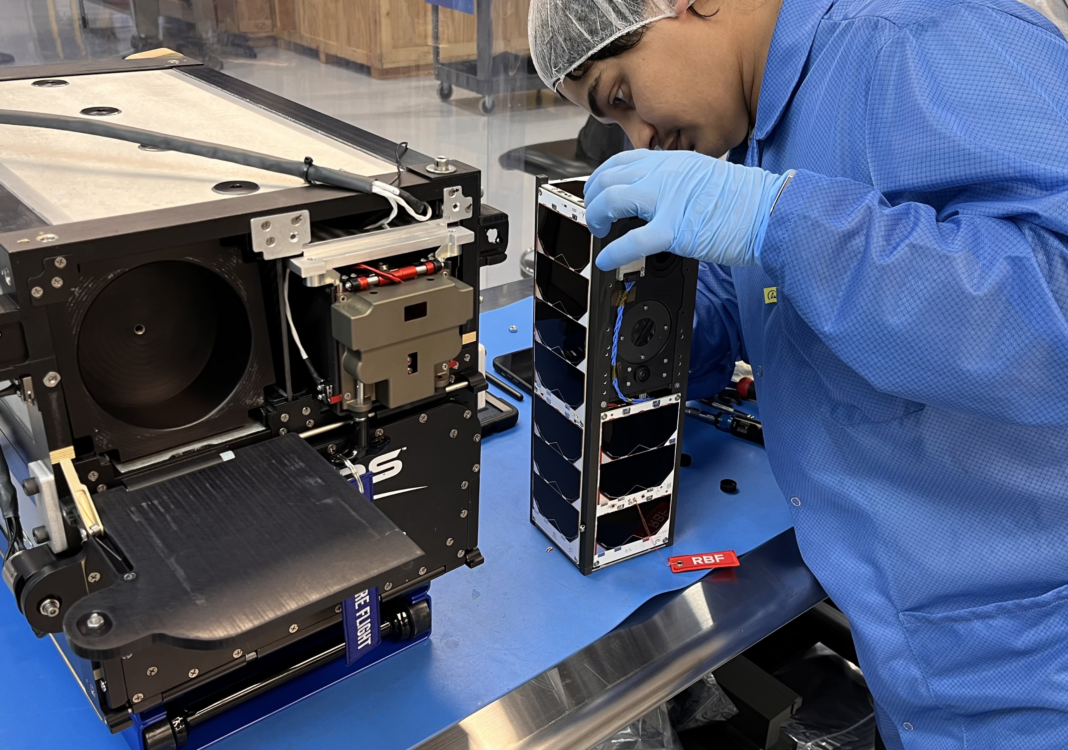
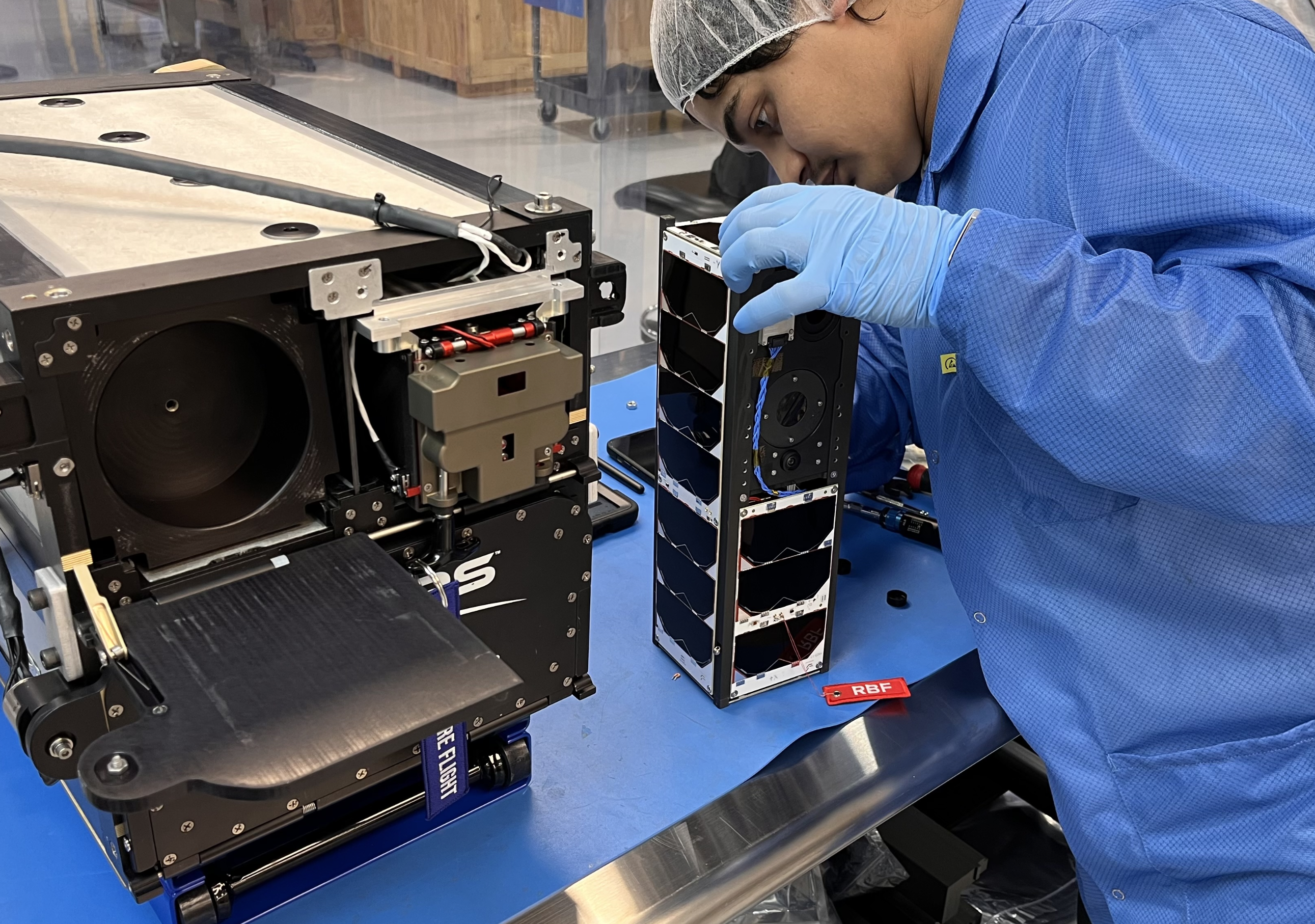
A bread-sized satellite developed by students

Talk about an amazing science fair opportunity! A multidisciplinary team of undergraduate students led by the University of New Hampshire designed and built a mini satellite, known as a CubeSat, that will launch into space to gather data in collaboration with NASA’s Interstellar Mapping and Acceleration Probe (IMAP) mission. Satellites, power grids, GPS, and communication systems can be ruined by solar storm damage. The orbiting “loaf” will help collect data for better predictions.

The small-but-mighty satellite is set to launch on a SpaceX rocket from Vandenberg Space Force Base in California no earlier than Nov. 10, 2025 at 10:19 a.m. PST. It will head to the outer reaches of the atmosphere to study the solar wind which will help scientists in their quest to improve space weather forecasting and better protect technology in space and on Earth—such as communication networks, power grids and GPS—from potentially damaging large solar flare events.

Selected as part of NASA’s CubeSat Launch Initiative, once it is launched, the satellite will travel to the Earth’s upper atmosphere, known as thermosphere, which is the same region where many other satellites and the International Space Station orbit around Earth. It will take measurements of the atmosphere density (single oxygen at this altitude) and electron precipitation from space onto the upper atmosphere, which can cause disturbances in communication signals and lead to changes in the ozone.

Data from the mission will be collected by the students and analyzed in combination with data from IMAP and will help advance the understanding of how the thermosphere in the auroral and cusp regions responds to particle precipitation and varying conditions associated with solar wind.

CubeSats are a specific subset of satellites that are small and standardized and provide a cost-effective way to study space science. It is about the size of a loaf of bread and offers a simpler way to start building and operating than larger satellites, making it an ideal piece of equipment for students to hone their skills outside of the classroom.

The 3UCubed satellite was fully assembled at UNH and the two payload instruments that are a part of its structure were built, tested and calibrated at UNH. The students worked for five years on the satellite, performing a variety of tasks ranging from creating the software code that controls the 3UCubed to soldering the wires during the physical build. Students with mentorship from professors and staff engineers, performed trade studies, orbit analyses, selected vendors for different subsystems, oversaw budgets for various mass, power, link and telemetry jobs and developed the framework for the flight software and operations.

“At the time, I had a keen interest for the aerospace industry and saw this as a great opportunity to get valuable experience working with industry professionals,” said Alex Chesley ’22, who studied mechanical engineering at UNH and was a part of the 3UCubed mission team. “It was fascinating to learn about so many new subjects about space science and instrumentation that I had never studied before.”

The hands-on experience is meant to introduce, inspire and prepare students for a successful career in a related field like space science, computer science, engineering or science education. Chesley designed the initial CAD model of the satellite and also helped create the detailed specification list for the CubeSat’s altitude control system. He now works as a configuration engineer at STS Aerospace in Laconia, N.H., where he helps develop fluid distribution systems for customers in the space, aeronautics and defense industries.

“The experience with the 3UCubed mission helped with my professional growth, and it was definitely valuable to have, no matter what industry you end up working in,” said Chesley.

LEAVE A REPLY

Please enter your comment!
Please enter your name here

TRENDING

Astro uses AI to help procure land for renewable energy

For oil-rich, environmentally vigilant Gulf states, Astro isn’t just another startup story. It is a blueprint for accelerating an energy transition that is now existential, not optional.

The Science Behind How Elite Marathon Runners Train

Discover the science behind elite marathon training. Explore techniques, nutrition, and mental strategies that propel top runners to success.

Earth building with Dead Sea salt bricks

Researchers develop a brick made largely from recycled Dead Sea salt—offering a potential alternative to carbon-intensive cement.

The Christ’s thorn (sidr tree) is also a well-known folk medicine

Christ’s thorn jujube (Ziziphus spina-christi) also known as the sidr tree is a real, identifiable tree native to the Middle East, and it appears—directly or indirectly—in Islam, Judaism, and later Christian tradition. The connections between the three faiths are not theological agreements but overlapping uses, names, and symbolic associations rooted in the same landscape.

Farm To Table Israel Connects People To The Land

Farm To Table Israel is transforming the traditional dining experience into a hands-on journey.

Qatar’s climate hypocrisy rides the London Underground

Qatar remains a master of doublethink—burning gas by the megaton while selling “sustainability” to a world desperate for clean air. Wake up from your slumber people.

How Quality of Hire Shapes Modern Recruitment

A 2024 survey by Deloitte found that 76% of talent leaders now consider long-term retention and workforce contribution among their most important hiring success metrics—far surpassing time-to-fill or cost-per-hire. As the expectations for new hires deepen, companies must also confront the inherent challenges in redefining and accurately measuring hiring quality.

8 Team-Building Exercises to Start the Week Off 

Team building to change the world! The best renewable energy companies are ones that function.

Thank you, LinkedIn — and what your Jobs on the Rise report means for sustainable careers

While “green jobs” aren’t always labeled as such, many of the fastest-growing roles are directly enabling the energy transition, climate resilience, and lower-carbon systems: Number one on their list is Artificial Intelligence engineers. But what does that mean? Vibe coding Claude? 

Somali pirates steal oil tankers

The pirates often stage their heists out of Somalia, a lawless country, with a weak central government that is grappling with a violent Islamist insurgency. Using speedboats that swarm the targets, the machine-gun-toting pirates take control of merchant ships and then hold the vessels, crew and cargo for ransom.

Leopoldo Alejandro Betancourt López Turned Ocean Plastic Into Profitable Sunglasses

Few fashion accessories carry the environmental burden of sunglasses. Most frames are constructed from petroleum-based plastics and acrylic polymers that linger in landfills for centuries, shedding microplastics into soil and waterways long after they've been discarded. Leopoldo Alejandro Betancourt López, president of the Spanish eyewear brand Hawkers, saw this problem differently than most industry executives.

Why Dr. Tony Jacob Sees Texas Business Egos as Warning Signs

Everything's bigger in Texas. Except business egos.  Dr. Tony Jacob figured...

Israel and America Sign Renewable Energy Cooperation Deal

Other announcements made at the conference include the Timna Renewable Energy Park, which will be a center for R&D, and the AORA Solar Thermal Module at Kibbutz Samar, the world's first commercial hybrid solar gas-turbine power plant that is already nearing completion. Solel Solar Systems announced it was beginning construction of a 50 MW solar field in Lebrija, Spain, and Brightsource Energy made a pre-conference announcement that it had inked the world's largest solar deal to date with Southern California Edison (SCE).

Related Articles

Popular Categories