
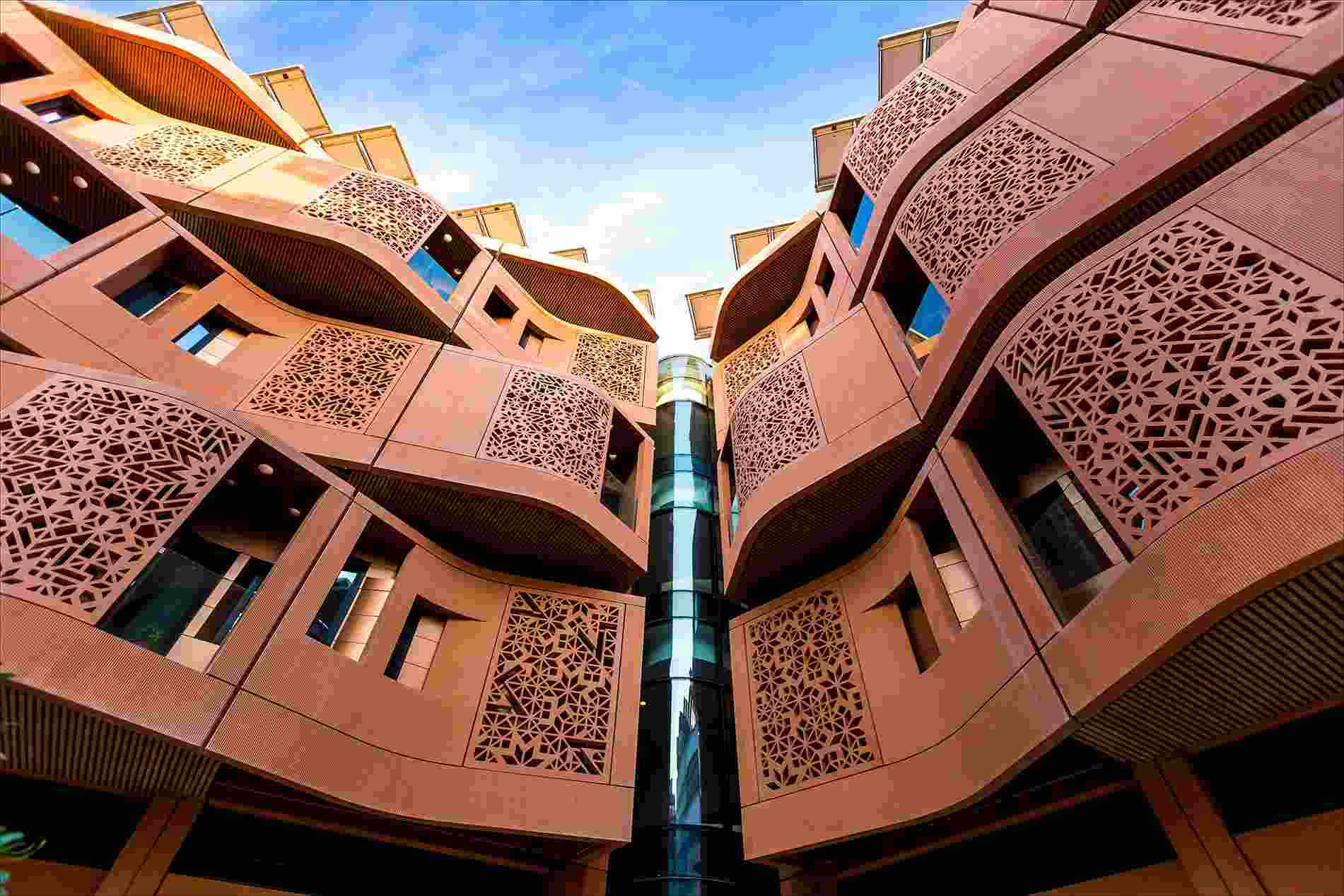
The United Arab Emirates (UAE) is a dominant force in the Middle East’s green-finance landscape, driven by strong government commitments, influential sovereign-wealth funds, and clear regulatory frameworks. The market continues to grow in sophistication and volume, reinforced by initiatives following COP28. The country first came on our radar in and around 2008 when it began developing Masdar City, which was to be a zero carbon city. It has become an innovation hub and poster for the country’s sovereign wealth that is investing in cleantech and innovation. As the UAE knows full well, the fossil fuel economy can’t grow innovation or a future once the world reaches peak oil, or peak tolerance for carbon emissions.
Market Leadership and Growth
How does the UAE lead in bond market resilience? The UAE remains a primary source of sustainable bond issuance in the Middle East. While regional issuance saw a slight dip in 2024 due to global economic factors, the market is expected to recover, with S&P Global Ratings projecting USD 18 to 23 billion in total regional sustainable-bond issuance for 2025.
Financial-institution dominance: Financial institutions drive a large portion of the sustainable-bond market in the UAE, while corporate issuances have been more volatile.
Green financing in the UAE focuses heavily on renewable energy, energy efficiency, sustainable real estate, and transportation.
The Catalytic Role of Sovereign Wealth Funds (SWFs)
Leading wealth funds: Abu Dhabi-based entities like Mubadala, ADQ, and Masdar are pivotal in driving the UAE’s green transition.
Masdar’s green bonds:
As a global clean-energy leader, Masdar uses its green bonds to finance greenfield projects in renewable energy, green hydrogen, and battery storage. In May 2025, Masdar’s third USD 1 billion green bond was oversubscribed by 6.6 times, attracting strong international and regional investor interest. The proceeds have been deployed globally, supporting solar, wind, and storage projects. Masdar releases 2024 Green Finance Report.
Masdar City never reached its projected population but it now houses thousands of students, residents, and businesses (e.g., Siemens, IRENA). It’s a functioning R&D and university hub, not abandoned.
The Alterra Fund:
Launched by the UAE at COP28 with a USD 30 billion commitment, Alterra aims to mobilise USD 250 billion by 2030 to finance the new climate economy. It includes a USD 5 billion arm focused on catalysing investment in underserved markets.
ADQ’s strategy:
ADQ embeds ESG principles across its portfolio and has a dedicated Sustainable Finance Framework to guide its investments toward creating a low-carbon economy.
Mubadala’s commitment:
Mubadala integrates sustainability across its investment lifecycle and has committed to achieving net-zero emissions across its global portfolio by 2050.
Regulatory Framework and Transparency
Financial regulators like the Central Bank of the UAE (CBUAE), the Securities & Commodities Authority (SCA), Abu Dhabi Global Market (ADGM), and the Dubai Financial Services Authority (DFSA) have established strong frameworks.
ADGM’s framework: In 2023, ADGM implemented a comprehensive sustainable-finance regulatory framework, including ESG disclosure requirements and regulatory designations for various green financial instruments.
Combating greenwashing: The ADGM framework and SCA regulations aim to mitigate greenwashing by requiring third-party verification, regular reporting and adherence to international standards like the ICMA Green Bond Principles. Because the UAE does not have a history or culture of free press, we cannot verify how those international standards will be monitored and supervised.
UAE Sustainable Finance Working Group: The SFWG, which includes federal regulators, is actively developing a nationwide taxonomy and pushing for enhanced sustainability disclosures. International third parties, without monetary stakes must be involved in supervision of policies and procedures.
Forced disappearances, the lack of worker rights, and lack of human rights questions how the UAE will be able to disclose, monitor and support green frameworks which include these standards at the core. Cross-dressing and homosexuality is illegal in the UAE.
Initiatives for a Sustainable Transition
The UAE continues to rollout frameworks such as the UAE Energy Strategy 2050 in support of its transition to a green economy.
Carbon market: In 2022, ADGM launched the world’s first regulated carbon-credit trading exchange, the AirCarbon Exchange (ACX).
Capacity building: Forums such as the Abu Dhabi Sustainable Finance Forum and educational initiatives from ADGM are building awareness and expertise in sustainable finance.
Green Finance Mechanisms and Models in the UAE: A Strategic Blueprint for a Sustainable Economy
The UAE is rapidly cementing its position as a global leader in green finance, moving beyond its traditional role as an oil-dependent economy to become a hub for sustainable investment. A sophisticated mix of regulatory frameworks, strategic investments by sovereign wealth funds and innovative financial instruments is driving this transition. Backed by ambitious targets like the UAE Net Zero 2050 Strategic Initiative, the country has built a robust ecosystem for financing a green economy.
Sovereign Wealth Funds: The Primary Catalysts

At the heart of the UAE’s green finance strategy are its influential SWFs, which are transitioning from traditional capital allocators to strategic enablers of sustainable finance. Their long-term investment horizons make them ideal for funding large-scale, capital-intensive green projects.
The Alterra Fund, launched with a USD 30 billion seed at COP28, aims to mobilise USD 250 billion by 2030 for global climate action. It has a unique two-part structure, including a USD 5 billion arm dedicated to de-risking investments in the Global South.
Masdar, owned by ADNOC, TAQA and Mubadala, is a global catalyst for sustainable development. It has been instrumental in issuing green bonds and scaling clean-energy projects internationally.
Masdar is the the UAE’s flagship renewable energy company. Compare it to Neom in Saudi Arabia. Masdar has become one of the world’s most active clean energy investors, with projects in more than 40 countries across six continents. Established in 2006 and jointly owned by ADNOC, Mubadala, and TAQA, Masdar operates and develops solar, wind, and green hydrogen projects with a current portfolio exceeding 50 gigawatts of capacity. Masdar also buys companies, and bought a 50% stake in the US business Terra-Gen last year. While the sum was not disclosed, it’s estimated to be a deal worth $500 Mllion
The company’s ambition is to reach 100 GW of installed renewable capacity and produce one million tonnes of green hydrogen annually by 2030. Its projects stretch from the deserts of Abu Dhabi to the steppes of Uzbekistan, where Masdar is developing multi-gigawatt wind farms, and to the Philippines, where it has signed a $15 billion deal for solar, wind, and battery storage projects.
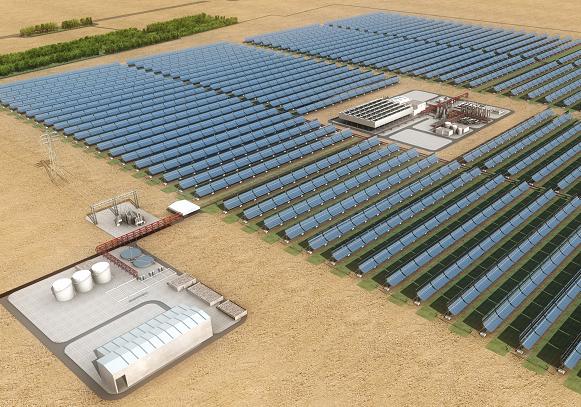
In Europe, Masdar has expanded into Spain and Portugal through the acquisition of a large wind and solar portfolio, while in Africa and island nations like Seychelles it supports off-grid solar and microgrid systems. Domestically, its Shams 1 solar plant remains a regional landmark. Collectively, Masdar’s projects generate more than 26,000 GWh of clean power each year, offsetting around 14 million tonnes of carbon emissions, and symbolizing the UAE’s broader ambition to lead the global clean energy transition.
Innovative financial instruments for foreign investment
The UAE has adopted and adapted a variety of financial instruments to channel capital toward sustainable projects, leveraging both conventional and Islamic finance models.
Sustainable bonds and sukuk: Issuances of green and sustainability-linked bonds and sukuk are foundational to the UAE’s green-finance market. For example, corporate green sukuk were used to fund green commercial buildings. Private sector green sukuk in UAE to incentivise green commercial buildings.
Blended finance: UAE financial institutions, supported by the UAE Banks Federation’s pledge of AED 1 trillion toward green finance by 2030, are increasingly applying blended finance models to attract private capital for sustainable projects.
Carbon-credit trading: The ADGM-based AirCarbon Exchange turns emissions reductions into tradable financial assets, creating a new frontier of green-finance innovation.
Regulatory frameworks
Robust and proactive regulation from both financial free zones and federal bodies is essential for building investor trust and mitigating green-washing risks.
ADGM: A free-zone regulator that now offers regulatory “labels” for Green, Climate Transition and Sustainability-Linked funds and mandates ESG disclosures.
DIFC: The Dubai International Financial Centre runs its own Sustainable Finance Framework and recently launched a Sustainable Finance Catalyst, an AI-driven platform to boost sustainable-finance investment flows.
Federal coordination: The Sustainable Finance Working Group (SFWG) is finalising a national green taxonomy and enhancing ESG-reporting standards.
While the UAE’s green-finance landscape is advanced, significant challenges remain. A unified national green taxonomy is still in development, regulatory differences persist between mainland and free-zone jurisdictions, and data transparency and capacity building remain work-in-progress. Nevertheless, major growth opportunities lie ahead, including:
- Increased focus on green infrastructure beyond renewable energy—such as water and waste management.
- Green fintech platforms and climate-technology innovation environments.
- Improved ESG data-quality and disclosure frameworks, enabling more informed investment decisions.
- Investing in the UAE gives investors close access to Asian markets.
With its religious tolerance policy and a current embrace of western culture, despite practicing Sharia law, UAE’s green-finance model is dynamic and forward-looking — built on a foundation of sovereign wealth, regulatory sophistication and market-driven innovation. This multi-pronged approach not only underpins its own national climate ambition, but positions the UAE as a critical engine for mobilising global climate-finance flows into the sustainable economy of the next decade. It is certainly leading the green financing market by far in the Middle East, in practice and action.
Zakat, taxes and cultural surprises in the UAE

Beyond finance-instruments and regulation, investors and companies operating in the UAE should be aware of several cultural, religious and tax-related “surprises.”
Zakat is a Muslim duty: Though the UAE does not officially mandate zakat under federal law, many Muslim-owned businesses voluntarily observe it as a religious obligation. Typical calculation is about 2.5 % of eligible wealth (cash, inventory, receivables) after deducting liabilities. And of course, there are regulations, lawayers and advisers in this space: see Zakat advisory & compliance services in the UAE.
If you want to live in the UAE and raise a family there, it’s not easy to become a citizen: Non-Muslims can become citizens of the United Arab Emirates, but the process is highly selective and tightly controlled. Traditionally, UAE citizenship was reserved almost entirely for Emiratis by birth. However, since 2021, the UAE has introduced special pathways for foreigners with exceptional contributions to the country. Citizenship if granted, is mostly symbolic. They don’t have an open-immigration process for the millions of laborers who come there from Pakistan or India. Unlike, Canada.
Also, learn about why Muslims don’t drink alcohol. And how to behave as a foreigner in Dubai.

Taxes: While the UAE is known for having no personal income tax, and a certain kind of tax freedom, it does levy other taxes and fees:
- Value-Added Tax (VAT) at a standard rate of 5% on most goods and services. Official UAE taxation portal.
- Corporate Tax (CT): As of 1 June 2023 for qualifying businesses, a standard rate of 9% on taxable income exceeding AED 375 000. KPMG corporate tax overview.
- Additional levies: Municipal taxes on rental contracts, hotel services, and selective “excise” taxes on certain goods (e.g., energy drinks, tobacco). See: TAXATION OF INTERNATIONAL EXECUTIVES – UAE guide.
Cultural surprises:
- Business relations in the UAE are still heavily influenced by personal trust, relationship-building, and local customs. Respect for Islamic tradition, Friday prayer schedules and Ramadan timing remain very important important if you are doing business there. Things which are normal at home, may not be acceptable in the UAE, like having cannabis in your blood or using CBD oil. If you come on an official visit, invited by a person of power of influence you should be fine.
- Operational licence regimes differ across emirates and free-zones: rules can vary between Dubai, Abu Dhabi and other emirates so on-the-ground due diligence is critical.
- The regulatory framework for green finance is young and evolving — local interpretation of “green” or “sustainable” may still diverge from global norms, so verification and local partner-insight matter.
Further reading on Green Prophet:

- Arab Energy Fund commits $1 billion to energy transition and decarbonization
- World Green Economy Summit 2025: Sandeep Chandna’s mission to make sustainability core to business strategy
- The history and promise of geological hydrogen for fuel
- $100 million USD fund unites Arab Gulf and Israel (cleantech investments)
- Abu Dhabi’s Masdar buys 50% stake in American renewables Terra-Gen
- The Future of Energy: Nuclear Realism vs. Solar Idealism
- The wind farms of the Middle East