Egypt overhauls its irrigation system in anticipation of losing the Nile

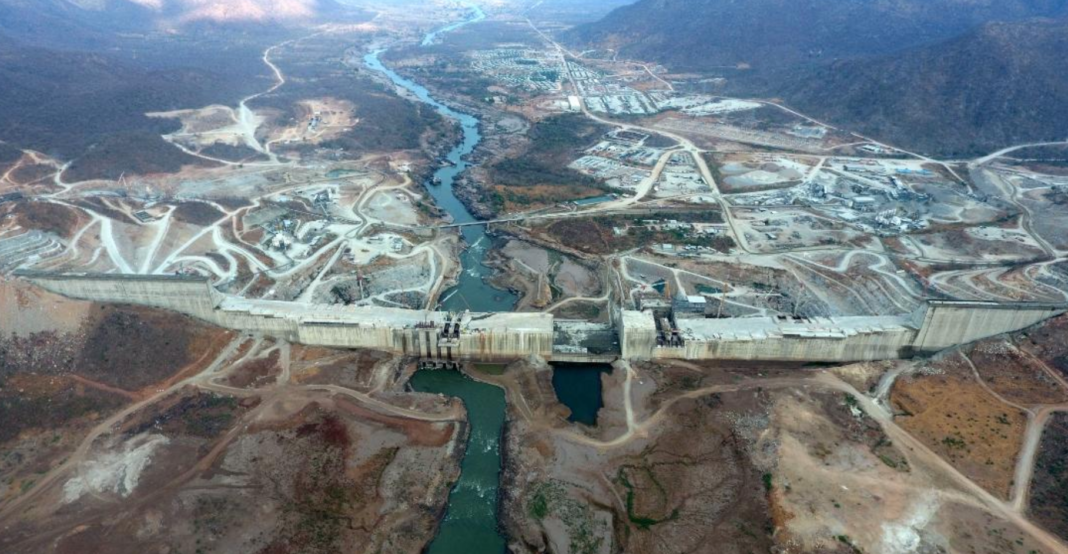
GERD Ethiopian dam
GERD Ethiopian dam

Egypt is modernizing its massive irrigation network—lining canals, expanding drip and sprinkler systems across approximately 3.7 million feddans, about 6,000 square miles, and deploying smart irrigation technologies—not just for efficiency, but as preparation for potential reductions in Nile water. Sources highlight that Egypt’s modernization targets could slash irrigation waste by up to one-third, potentially saving billions of cubic meters annually. 

The urgency is fueled by growing water scarcity—Egypt now faces an annual deficit of around 7 billion m³, exacerbated by population growth, climate change, and upstream projects like the GERD a new dam built by Ethiopis. While Egypt remains deeply reliant on the Nile, fears of reduced flows—especially during drought years or due to unilateral actions—have reinforced the strategic urgency for domestic resilience.

Egypt’s irrigation overhaul isn’t just about modern farming—it’s a proactive strategy to stretch its diminishing Nile share and future-proof agriculture in a volatile water landscape. Its expansive irrigation modernization initiative aims to enhance agricultural efficiency and protect its water supply. The plan includes upgrading field-level irrigation systems, lining canals, and introducing smart water management—all aimed at transforming inefficient flood irrigation and securing the Nile’s vital flows.

The Ministry of Planning in Egypt has budgeted nearly EGP 144.8 billion (~$3 billion USD) for agriculture and irrigation in FY 2025–26, including public and private funding, targeting improved irrigation systems and increased yield per feddan. And it is also targeting modernization across 3.7 million feddans, switching from traditional flood methods to semi-modern techniques like drip and pivot irrigation over the next few years. These changes could reduce water usage by up to 30% while boosting productivity by 30–40%.

Egypt’s top farm exports to global markets are led by citrus fruits (about 4.2 billion lb shipped in mid-2025, ≈1.9 MMT) with orchards covering roughly 152,000 ha (~375,600 acres); followed by potatoes (~2.9 billion lb exports; national harvested area ~213,000 ha or ~526,300 acres); fresh onions (~511 million lb exports; ~64,000 ha or ~158,100 acres under cultivation); table grapes (~351 million lb exports; harvested area ~73,000 ha or ~180,400 acres); and sweet potatoes (~273 million lb exports; 2023 area ~12,427 ha or ~30,700 acres).

Collectively, these crops drive roughly $4 billion in annual farm export earnings, underscoring Egypt’s pivotal role in regional food supply chains.

Cotton is still very much a thing in Egypt, though its role has shifted. Egypt is famous for its long-staple and extra-long-staple cotton, often branded internationally as Egyptian Cotton. It has a reputation for high-quality, fine fibers used in luxury textiles and bedding. Production peaked in the mid-20th century, but land competition with food crops, water constraints, and global price fluctuations have reduced its cultivated area.

Yes—cotton remains a notable Egyptian crop. In calendar year 2024, Egypt’s raw cotton exports were valued at about $475 million, driven by the country’s famed long- and extra-long-staple fibers (“Egyptian cotton”). For context, USDA projects MY 2024/25 raw cotton exports at roughly 184,000 bales (480-lb bales).

If implemented well, the overhaul could save billions of cubic meters annually, relieve pressure on groundwater, and strengthen Egypt’s position in Nile water discussions. However, key challenges include financing costs, farmer acceptance, and ensuring “saved” water doesn’t simply expand water-intensive agriculture. Companies like Netafim, the regional and global pioneer of drip irrigation systems, could help Egypt achieve its goals.

Grand Ethiopian Renaissance Dam, GERD Ethiopia, Blue Nile hydroelectric project, Ethiopia Nile River dam, Africa’s largest dam, Ethiopian hydropower, GERD water security, Nile River dispute, Ethiopia Egypt Sudan water conflict, renewable energy Ethiopia
Grand Ethiopian Renaissance Dam (GERD) on the Blue Nile — Africa’s largest hydroelectric project reshaping East Africa’s power supply and sparking regional water security debates.

Egypt’s irrigation system has roots in millennia-old techniques, from Aswan Dam regulation to historic canal networks. The current program builds on this heritage, blending tradition with pressure-based systems and digital monitoring. Watch developments on the GERD dam opening this year from Ethiopia as water volume from the Nile that goes to Egypt may drop dramatically.

Further reading on Green Prophet:

Karin Kloosterman
Karin Kloostermanhttp://www.greenprophet.com
Karin Kloosterman is an award-winning journalist, innovation strategist, and founder of Green Prophet, one of the Middle East’s pioneering sustainability platforms. She has ranked in the Top 10 of Verizon innovation competitions, participated in NASA-linked challenges, and spoken worldwide on climate, food security, and future resilience. With an IoT technology patent, features in Canada’s National Post, and leadership inside teams building next-generation agricultural and planetary systems — including Mars-farming concepts — Karin operates at the intersection of storytelling, science, and systems change. She doesn’t report on the future – she helps design it. Reach out directly to [email protected]

LEAVE A REPLY

Please enter your comment!
Please enter your name here

TRENDING

Ethiopians are Looking to Somaliland for Red Sea Access as Global Powers Move In

Somaliland, for its part, has operated as a de facto independent state since 1991. It has its own government, elections, currency, and security forces. It’s often described as one of the more stable and democratic political systems in the region, despite never being formally recognized internationally. 

Egypt building nuclear power

Egypt is building a nuclear energy plant, expected to go online in 2026 when countries like Germany have shut down all its domestic nuclear power. The El Dabaa Nuclear Power Plant is the first nuclear power plant planned for Egypt and will be located at El Dabaa, Matrouh Governorate, Egypt, about 320 kilometers northwest of Cairo. 

More investments of 1.2 GW in Benban solar, Egypt

Egypt’s Ministry of Electricity and Renewable Energy, the Egyptian Electricity Transmission Company, and a consortium comprising Infinity Power and Hassan Allam Utilities Energy Platform signed an agreement to jointly develop solar power projects at Benban Solar, one of the world's largest solar energy parks in Egypt.

Benban solar in Egypt and the companies that make the energy shine

Benban isn’t a single solar plant at all, but a collection of 41 facilities, each developed by different companies but connected through shared infrastructure. This structure is what makes Benban unique: dozens of developers working like nodes in a vast energy network, each feeding electricity into shared substations and Egypt’s national grid.

Undercover divers find fatal flaws in Egypt’s dive boat industry

German magazine stern and broadcaster RTL have confirmed what Green Prophet has reported for months — the sinking of Egypt’s Sea Story dive yacht in November 2024, which killed 11 people, was no freak accident. Their undercover investigation reveals the captain had no licence, the operator lacked legal authorisation, and the vessel had serious stability flaws. A wider probe of 17 Red Sea liveaboard boats found every one had dangerous safety deficiencies, echoing Green Prophet’s earlier coverage of Egypt’s dive tourism safety crisis.

Qatar’s climate hypocrisy rides the London Underground

Qatar remains a master of doublethink—burning gas by the megaton while selling “sustainability” to a world desperate for clean air. Wake up from your slumber people.

How Quality of Hire Shapes Modern Recruitment

A 2024 survey by Deloitte found that 76% of talent leaders now consider long-term retention and workforce contribution among their most important hiring success metrics—far surpassing time-to-fill or cost-per-hire. As the expectations for new hires deepen, companies must also confront the inherent challenges in redefining and accurately measuring hiring quality.

8 Team-Building Exercises to Start the Week Off 

Team building to change the world! The best renewable energy companies are ones that function.

Thank you, LinkedIn — and what your Jobs on the Rise report means for sustainable careers

While “green jobs” aren’t always labeled as such, many of the fastest-growing roles are directly enabling the energy transition, climate resilience, and lower-carbon systems: Number one on their list is Artificial Intelligence engineers. But what does that mean? Vibe coding Claude? 

Somali pirates steal oil tankers

The pirates often stage their heists out of Somalia, a lawless country, with a weak central government that is grappling with a violent Islamist insurgency. Using speedboats that swarm the targets, the machine-gun-toting pirates take control of merchant ships and then hold the vessels, crew and cargo for ransom.

Leopoldo Alejandro Betancourt López Turned Ocean Plastic Into Profitable Sunglasses

Few fashion accessories carry the environmental burden of sunglasses. Most frames are constructed from petroleum-based plastics and acrylic polymers that linger in landfills for centuries, shedding microplastics into soil and waterways long after they've been discarded. Leopoldo Alejandro Betancourt López, president of the Spanish eyewear brand Hawkers, saw this problem differently than most industry executives.

Why Dr. Tony Jacob Sees Texas Business Egos as Warning Signs

Everything's bigger in Texas. Except business egos.  Dr. Tony Jacob figured...

Israel and America Sign Renewable Energy Cooperation Deal

Other announcements made at the conference include the Timna Renewable Energy Park, which will be a center for R&D, and the AORA Solar Thermal Module at Kibbutz Samar, the world's first commercial hybrid solar gas-turbine power plant that is already nearing completion. Solel Solar Systems announced it was beginning construction of a 50 MW solar field in Lebrija, Spain, and Brightsource Energy made a pre-conference announcement that it had inked the world's largest solar deal to date with Southern California Edison (SCE).

Related Articles

Popular Categories