Europe’s Clean-Tech Pivot: Germany Leads Supply Chain Shift Amid €390B Investment Surge

Germany wind power, offshore wind Germany, German energy transition, wind turbine supply chain, permanent magnets wind turbines, rare earths Germany, China wind supply, German renewable energy, clean tech Europe, wind energy Europe, Net-Zero Industry Act, EU wind manufacturing, German wind targets, Habeck wind policy, resilient energy infrastructure, wind power news 2025, EU clean tech investment, Germany energy security, European wind turbine strategy, wind energy diversification
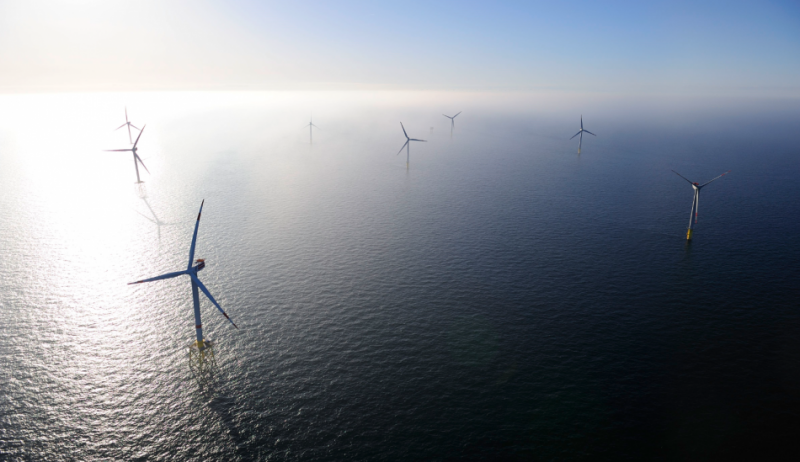
German offshore wind

Germany has announced a landmark strategy to break its near-total dependence on Chinese-made components for offshore wind turbines, particularly the permanent magnets essential to the industry. This move, unveiled by the Economy Ministry, forms part of a broader plan to build a more resilient and geopolitically secure renewable energy infrastructure. The Resilience Roadmap aims for 30 percent of permanent magnet supply to come from alternative sources by 2030, increasing to 50 percent by 2035. China currently supplies about 90 percent of these components globally, mostly through its dominance in the rare earth metals market.

Related: China and Russia building a nuclear power plant and base on the moon

To meet its ambitious climate and energy goals, Germany is targeting an offshore wind capacity of 30 gigawatts by 2030—triple its current levels. Offshore wind already contributes around 5 percent of Germany’s electricity supply, and the government hopes renewables will account for 80 percent of national electricity production by the end of the decade. The shift away from China is not merely about energy diversification; it represents a strategic reshoring of the energy transition and a rejection of supply chains vulnerable to geopolitical risk.

This German announcement fits into a broader European trend. Across the continent, governments are accelerating investment in clean technology, aiming to secure domestic manufacturing capacity and reduce exposure to international bottlenecks. The global cleantech market, valued at approximately $916 billion in 2024, is projected to double to $1.84 trillion by 2030, with an annual growth rate of nearly 13 percent. In the European Union alone, clean energy investments are expected to reach nearly $390 billion in 2025.

Related: Chinese submarine finds rare life in deepest ocean trench

Venture capital trends in the EU’s cleantech sector reflect the momentum. After a slow start to the year, venture funding rebounded in the second quarter of 2025, reaching €2.5 billion—the strongest quarterly performance since early 2024. The average deal size has also grown, reflecting increasing investor confidence in scale-up technologies and manufacturing. While early-stage funding remains cautious, the appetite for industrial decarbonization and infrastructure-linked technologies is clearly rising.

Policymakers are backing this momentum with sweeping industrial legislation. Under the EU’s Net-Zero Industry Act, passed in June 2024, the bloc aims to produce at least 40 percent of its annual net-zero technology needs domestically by 2030. The act also sets a target for Europe to produce 15 percent of the world’s clean-tech equipment by 2040. However, this ambition comes in response to a stark reality: Europe’s share of global wind turbine manufacturing fell from 58 percent in 2017 to just 30 percent in 2022. Solar panel manufacturing remains even more concentrated outside the continent, despite EU efforts to reshore production.

In terms of deployment, Europe is making strong progress. In 2024, renewables supplied nearly half of the EU’s electricity, with wind and solar leading the charge. Solar photovoltaic capacity alone reached around 269 gigawatts by the end of 2023, and the EU is targeting 600 gigawatts by 2030. The Clean Industrial Deal, launched earlier this year, promises to push 100 gigawatts of new renewable energy capacity annually through 2030, while also funding green innovation and supporting the transition of energy-intensive industries.

Germany’s strategy to secure its wind industry against supply shocks highlights a key shift in clean-tech policy. While markets once favored the cheapest global supplier—often China—the future is likely to reward regional resilience, strategic partnerships, and closed-loop value chains. Germany is already in talks with Japan and Australia to source rare earths more sustainably and with less environmental and political risk.

As the EU mobilizes hundreds of billions of euros to decarbonize its economy, challenges remain. Permitting delays, rising material costs, and global competition for critical minerals could still slow the pace of change. Yet Germany’s move to de-risk its offshore wind supply chain is an unmistakable signal: in the energy transition, security and sustainability must go hand in hand.

Karin Kloosterman
Karin Kloostermanhttp://www.greenprophet.com
Karin Kloosterman is an award-winning journalist, innovation strategist, and founder of Green Prophet, one of the Middle East’s pioneering sustainability platforms. She has ranked in the Top 10 of Verizon innovation competitions, participated in NASA-linked challenges, and spoken worldwide on climate, food security, and future resilience. With an IoT technology patent, features in Canada’s National Post, and leadership inside teams building next-generation agricultural and planetary systems — including Mars-farming concepts — Karin operates at the intersection of storytelling, science, and systems change. She doesn’t report on the future – she helps design it. Reach out directly to [email protected]

TRENDING

Ancient Chinese medicine might heal spinal cord injuries

In the study, the scientists didn’t just test one plant compound at a time. They tested two traditional Chinese medicine compounds together — luteolin (from flowers like honeysuckle and chrysanthemum) and astragaloside IV (from astragalus root, Huang Qi). These plants have been combined in Chinese herbal formulas for centuries to help the body recover from injury and inflammation.

Leading Through a Dual-Energy Transition: Balancing Decarbonisation with Energy Security

Experience in one area of the energy industry isn't enough to guarantee readiness across all the others. That's where a structured program like an MBA in energy can come in. Today's advanced curricula explore energy economics, finance, policy, and strategic management alongside the technical subjects. And when pursuing an energy MBA online, professionals can skill up and retrain without having to step out of the labor market -- an important perk at a time when skilled professionals are already in short supply.

China is one step closer to making artificial sun

Nuclear fusion is often described as the holy grail of clean energy: a process that could one day provide abundant power without carbon emissions or long-lived radioactive waste. It has so much promise, but it's difficult. This article on fusion explains why. But turning fusion into a practical energy source depends on solving a set of extremely difficult physics problems. One of the most important is how to keep plasma — a super-hot, electrically charged gas — dense, stable, and confined long enough to produce useful energy.

Global Emissions Keep Rising, But Scientists Say Peak is in Sight

At COP30 in Belém, Brazil, scientists delivered another stark...

Dubai overfishing: 13 years after Tafline’s warning

In 2012, Green Prophet sounded the alarm about depleted Gulf fish stocks and weak enforcement in Dubai. Revisit Tafline Laylin’s original piece here: Dubai Finally Gets Serious About Overfishing.

Turning Your Energy Consultancy into an LLC: 4 Legal Steps for Founders in Texas

If you are starting a renewable energy business in Texas, learn how to start an LLC by the books.

Tracking the Impacts of a Hydroelectric Dam Along the Tigris River

For the next two months, I'll be taking a break from my usual Green Prophet posts to report on a transnational environmental issue: the Ilısu Dam currently under construction in Turkey, and the ways it will transform life along the Tigris River.

6 Payment Processors With the Fastest Onboarding for SMBs

Get your SMB up and running fast with these 6 payment processors. Compare the quickest onboarding options to start accepting customer payments without delay.

Qatar’s climate hypocrisy rides the London Underground

Qatar remains a master of doublethink—burning gas by the megaton while selling “sustainability” to a world desperate for clean air. Wake up from your slumber people.

How Quality of Hire Shapes Modern Recruitment

A 2024 survey by Deloitte found that 76% of talent leaders now consider long-term retention and workforce contribution among their most important hiring success metrics—far surpassing time-to-fill or cost-per-hire. As the expectations for new hires deepen, companies must also confront the inherent challenges in redefining and accurately measuring hiring quality.

8 Team-Building Exercises to Start the Week Off 

Team building to change the world! The best renewable energy companies are ones that function.

Thank you, LinkedIn — and what your Jobs on the Rise report means for sustainable careers

While “green jobs” aren’t always labeled as such, many of the fastest-growing roles are directly enabling the energy transition, climate resilience, and lower-carbon systems: Number one on their list is Artificial Intelligence engineers. But what does that mean? Vibe coding Claude? 

Somali pirates steal oil tankers

The pirates often stage their heists out of Somalia, a lawless country, with a weak central government that is grappling with a violent Islamist insurgency. Using speedboats that swarm the targets, the machine-gun-toting pirates take control of merchant ships and then hold the vessels, crew and cargo for ransom.

Related Articles

Popular Categories