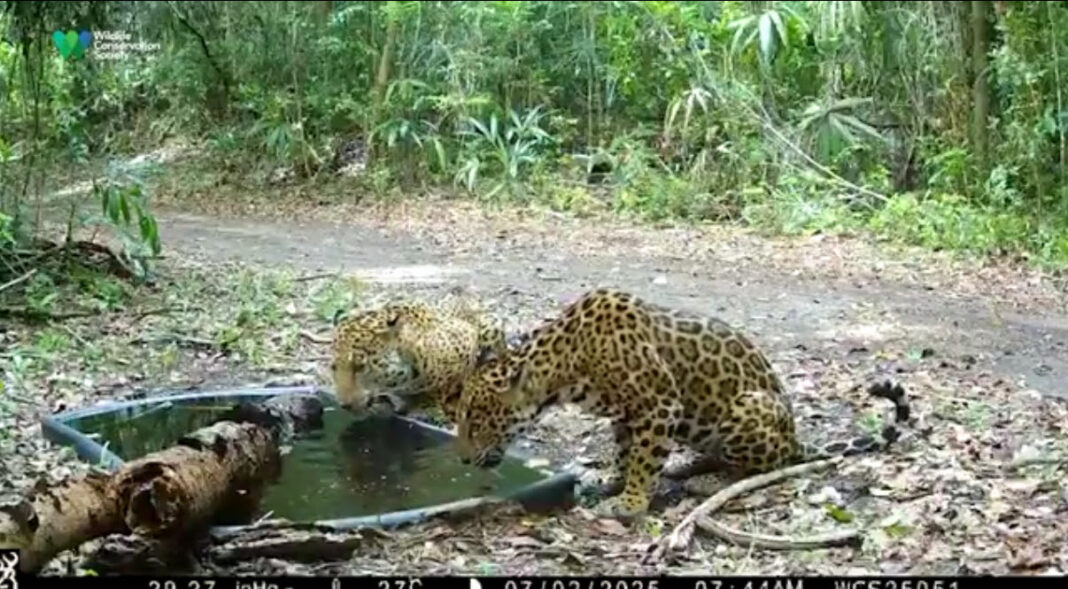


As drought tightens its grip across northern Guatemala, a surprising solution is helping jaguars, tapirs, and other wildlife survive in the parched jungles of the Maya Forest: artificial watering holes.
Faced with shrinking water sources in Laguna del Tigre and Mirador-Río Azul National Parks, conservationists have begun installing durable, man-made water points in remote locations. Built to withstand extreme weather and difficult access, these oases are now attracting a remarkable cast of wild visitors.
Camera traps have captured thirsty jaguars, pumas, snakes, and rare margays stopping in for a drink. Scientists say this glimpse into animal behavior under heat stress is invaluable.
“During the dry season, many natural watering holes dry up completely,” says Rony García-Anleu of the Wildlife Conservation Society in Guatemala. But what surprised researchers most: animals are using the waterholes even during the rainy season—suggesting that the land is drying out faster than expected, and wildlife is adapting in real time.
The project, backed by groups including WCS, WWF, FUNDAECO, and CECON-USAC, highlights how low-tech, science-guided fixes can offer real lifelines in the face of escalating climate extremes. Still, experts warn these artificial waterholes are a stopgap, not a cure.
But for now, they may be the only thing standing between life and death for some of the Maya Forest’s most elusive creatures.