How Eco-Friendly Playgrounds Are Reshaping Community Green Spaces

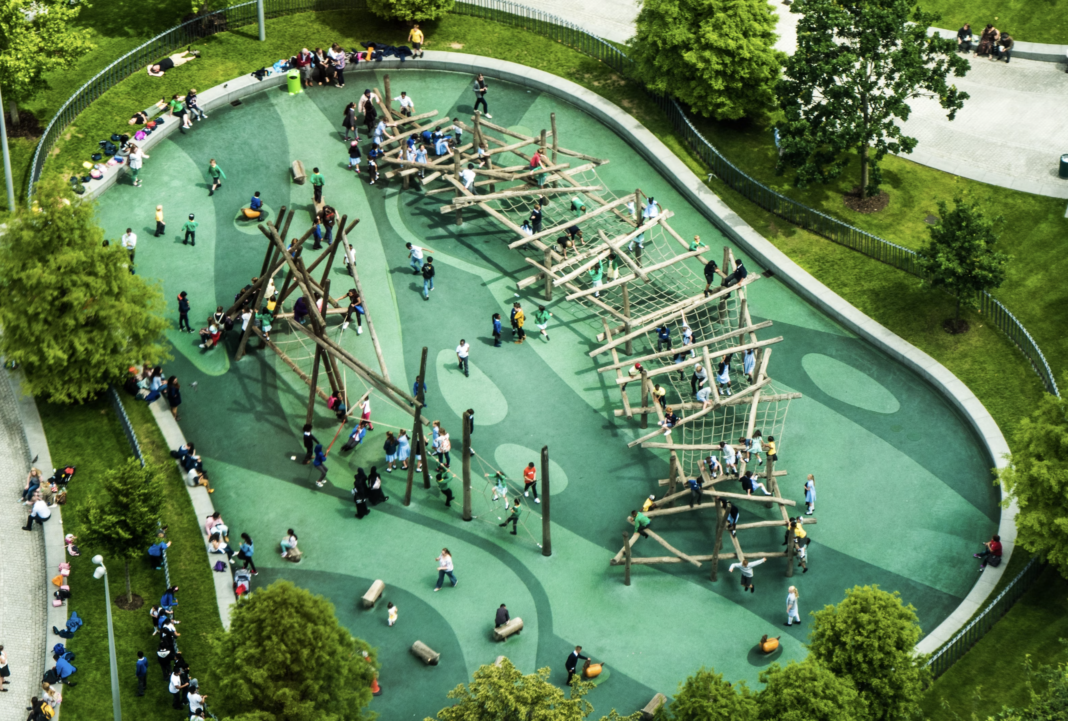
Vrouwenhof an eco playground in Holland

Playgrounds have long acted as social hubs for both adults and children. They bring people from all walks of life together, and they promote health in many ways. Now, however, they are advancing into the future as the environment demands. More citizens are insisting their parks are clean, green, sustainable spaces. And of course, eco-friendly playgrounds have a huge role to play in this movement. Here are the top ways in which these playgrounds are reshaping community green spaces for the better. 

They Act as Outdoor Classrooms

Children are struggling to learn more now than ever. More children are diagnosed with learning disabilities, and many others find it difficult to sit still. Much of the reason for that has to do with being stuck inside a classroom. For thousands of years, human children ran and played in their early years. It makes sense that they would learn better in spaces that encourage this kind of movement regularly. 

One of the most obvious ways in which these eco-friendly playgrounds transform green spaces is by acting as learning hubs. Because the playground equipment is typically made from recycled rubber, plastic, and wood, it integrates well into the natural environment. There, children can learn about the ways their playgrounds are good for the earth and what recycling looks like in real-time. And they can run, jump, and play all the while. 

Sustainable Materials Minimize Costs

The next, and perhaps most obvious way eco-friendly playgrounds impact community spaces is through cost savings. Many cities are on tight budgets and are even under-resourced. They can barely make ends meet when it comes to roads, streetlights, and emergency services. They’re unlikely to be able to spring for a brand new, state of the art playground plus the surrounding park trails, plants, and water features. 

An eco-friendly playground goes a long way toward saving the city money. This is obviously also true for schools and churches that want to create new play spaces for the kids. The equipment can come in at a lower cost because the materials have been repurposed. They’re also usually cheaper to maintain because the equipment is designed to last in a natural environment over time. Thus, the entire green space ends up being a good investment for the community. 

Energy Efficient Materials Reduce the Carbon Footprint

Sadly, landfills and trash have become overwhelming on the planet to the point of microplastics running through virtually every space. This includes in our water and even in our bodies. There are islands of floating trash in virtually every ocean, and humans continue to buy and dispose of items every day. The best move municipalities can make is to encourage citizens to reduce, reuse, and recycle, And the best way to do that is by example. 

That’s where recycled materials for playgrounds come in. When eco-friendly playgrounds are made from recycled tires, old wood, bamboo, and hemp, the spaces have a much lower carbon footprint. They last much longer, manufacturing them doesn’t harm the environment, and even when they do end up outliving their purpose, they can be recycled and reused again for a new product. The carbon footprint of a playground like this is incredibly low. 

Eco-Friendly Practices Conserve Natural Resources

The cost of a playground is only one way in which it impacts the community. It also has a lasting effect on the surrounding environment. Maintaining the park’s lights after dark is a hefty cost. Running water to splash pads and restrooms also takes its toll on natural resources. Oh, and the plants need to be watered regularly as well. While most communities have long considered playgrounds and parks worth the drain on the environment, there’s no defying their carbon footprint. 

Until now. Eco-friendly playgrounds can provide myriad solutions to stressed resources. Cities can install sun shades that act as surfaces for solar panels. Any energy used to run the entire park can be provided by those panels. The Parks and Recreation Department can also practice rainwater harvesting and recycling. That way, splash pads, fountains, and features never waste water. And the sprinkler system can run on harvested and stored rainwater to water drought-resistant plants when necessary. 

Increased Interaction with Nature Promotes Health

Finally, the entire purpose of these eco-friendly playgrounds is to be green. If there’s anything Americans need more of, it’s time in green space. People in the United States of all ages are more stressed out, more depressed, and more anxious than ever. It’s no coincidence that those same citizens spend less time outside, less time exercising, and less time in social settings than ever before. 

These playgrounds encourage people to spend more time in nature. Kids can get ample exercise scaling wooden structures, building forts, rolling in the grass, and climbing trees. Meanwhile, parents can walk around a pond, play pickleball on a court, or just relax on a bench while their kids play. And those without kids can meet new friends, have a picnic date, and more. All of these activities and more promote mental, physical, and emotional health of everyone involved. 

In the end, eco-friendly playgrounds are an ideal answer to the problems of climate change and exhausted resources. They both reduce their cities’ carbon footprint and save the cities money, and promote the health and well-being of the members of the community who visit.  And as a bonus, they offer an opportunity for kids of all ages to start learning about the important role of environmental stewardship. They’re heartwarming, welcoming spaces that serve the greater good.


Bhok Thompson
Bhok Thompsonhttp://www.greenprophet.com
Bhok Thompson is an “eco-tinkerer” who thrives at the intersection of sustainability, business, and cutting-edge technology. With a background in mechanical engineering and a deep fascination with renewable energy, Bhok has dedicated his career to developing innovative solutions that bridge environmental consciousness with profitability. A frequent contributor to Green Prophet, Bhok writes about futuristic green tech, urban sustainability, and the latest trends in eco-friendly startups. His passion for engineering meets his love for business as he mentors young entrepreneurs looking to create scalable, impact-driven companies. Beyond his work, Bhok is an avid collector of vintage mechanical watches, believing they represent an era of precision and craftsmanship that modern technology often overlooks. Reach out: [email protected]

LEAVE A REPLY

Please enter your comment!
Please enter your name here

TRENDING

What is the Jewish Climate Trust?

Jewish Climate Trust has quickly attracted the attention and support of some of the most influential voices in Jewish philanthropy, drawing backing from prominent family foundations and business leaders connected to the Bronfman and Schusterman philanthropic networks, alongside climate-focused investors and community builders aligned with founding leader Nigel Savage. Together, these donors have committed many millions of dollars to build a serious, long-term climate platform for the Jewish world — not as a symbolic gesture, but as a strategic intervention in one of the defining challenges of this generation.

Which Occupational Therapy Activities Are Best for Toddlers’ Development?

There are plenty of art skills from Montessori schooling that are helpful in occupational therapy settings

Microplastics Are Becoming Superbug Highways — New Study Warns Beachgoers to Wear Gloves

Prof. Pennie Lindeque added that microplastics “act as carriers for antimicrobial-resistant bacteria, enhancing their survival and spread… each particle becomes a tiny vehicle capable of transporting pathogens from sewage works to beaches, swimming areas and shellfish-growing sites.”

Toxic sea otters and the pollution they collect at sea

When otters become sick or die, entire marine ecosystems begin to unravel. Their contamination is not a side note. It is a warning.

Fine-particle pollution is now directly tied to Lewy body dementia

A new peer-reviewed study in Science connects long-term exposure to fine particulate matter (PM2.5) with higher risk of Lewy body dementia (LBD) in a dataset of 56.5 million US Medicare records, and backs it up with animal experiments that show PM2.5 triggers toxic α-synuclein clumps — the protein aggregates that define LBD. 

Qatar’s climate hypocrisy rides the London Underground

Qatar remains a master of doublethink—burning gas by the megaton while selling “sustainability” to a world desperate for clean air. Wake up from your slumber people.

How Quality of Hire Shapes Modern Recruitment

A 2024 survey by Deloitte found that 76% of talent leaders now consider long-term retention and workforce contribution among their most important hiring success metrics—far surpassing time-to-fill or cost-per-hire. As the expectations for new hires deepen, companies must also confront the inherent challenges in redefining and accurately measuring hiring quality.

8 Team-Building Exercises to Start the Week Off 

Team building to change the world! The best renewable energy companies are ones that function.

Thank you, LinkedIn — and what your Jobs on the Rise report means for sustainable careers

While “green jobs” aren’t always labeled as such, many of the fastest-growing roles are directly enabling the energy transition, climate resilience, and lower-carbon systems: Number one on their list is Artificial Intelligence engineers. But what does that mean? Vibe coding Claude? 

Somali pirates steal oil tankers

The pirates often stage their heists out of Somalia, a lawless country, with a weak central government that is grappling with a violent Islamist insurgency. Using speedboats that swarm the targets, the machine-gun-toting pirates take control of merchant ships and then hold the vessels, crew and cargo for ransom.

Leopoldo Alejandro Betancourt López Turned Ocean Plastic Into Profitable Sunglasses

Few fashion accessories carry the environmental burden of sunglasses. Most frames are constructed from petroleum-based plastics and acrylic polymers that linger in landfills for centuries, shedding microplastics into soil and waterways long after they've been discarded. Leopoldo Alejandro Betancourt López, president of the Spanish eyewear brand Hawkers, saw this problem differently than most industry executives.

Why Dr. Tony Jacob Sees Texas Business Egos as Warning Signs

Everything's bigger in Texas. Except business egos.  Dr. Tony Jacob figured...

Israel and America Sign Renewable Energy Cooperation Deal

Other announcements made at the conference include the Timna Renewable Energy Park, which will be a center for R&D, and the AORA Solar Thermal Module at Kibbutz Samar, the world's first commercial hybrid solar gas-turbine power plant that is already nearing completion. Solel Solar Systems announced it was beginning construction of a 50 MW solar field in Lebrija, Spain, and Brightsource Energy made a pre-conference announcement that it had inked the world's largest solar deal to date with Southern California Edison (SCE).

Related Articles

Popular Categories