SpotitEarly and Snoopy helps labs detect small lung, breast, prostate, and colorectal cancers
They say dogs are a man’s best friend and now a new startup is hoping dogs will help sniff out cancer at early stages when it’s treatable. SpotitEarly has created a unique, patented method capable of detecting four types of cancer—lung, breast, prostate, and colorectal—which together represent approximately 50% of all new cancer cases.
In the future, the company intends to expand its capabilities to include additional types of cancer. To date, over $8 million has been invested in the company, including funds from the Menomadin Foundation and Hanko Ventures.
The technology of using dogs to sniff out cancer which we reported on in 2013 is being tested out in a hospital and combines advanced artificial intelligence (AI) technology with the highly developed olfactory capabilities of specially trained dogs, achieving remarkable accuracy.
The test demonstrated high early-stage sensitivity across all tested cancer types:
- Breast cancer: 94%
- Lung cancer: 97%
- Prostate cancer: 97%
- Colorectal cancer: 86%
The test has also shown efficacy in identifying other cancers as well.
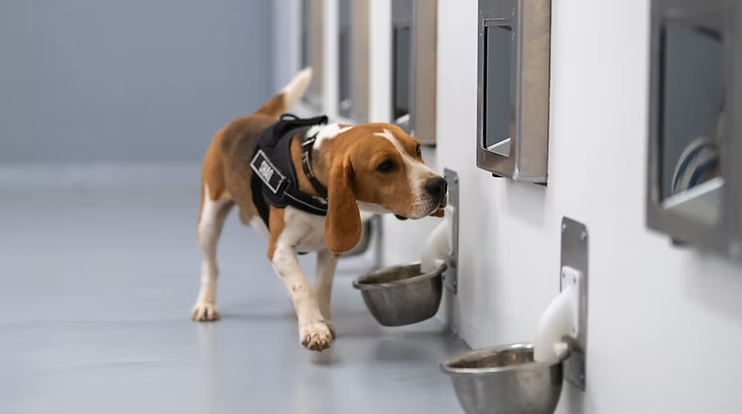
How it works: Patients breathe into a specially designed face mask for three minutes. The mask is then sent to the company’s laboratory, where trained beagles “analyze” the sample under the supervision of an AI system. Each sample undergoes 3 to 5 examinations to ensure high accuracy.
To date, more than 1,400 participants—primarily aged 40 to 70—have taken the test, which has demonstrated an impressive accuracy rate of 94%.
Human breath contains over 1,000 Volatile Organic Compounds or VOCs. Science has shown that VOCs represent rich sources of biomarkers associated with metabolic processes and diseases in the body, each identified by a significant odor signature, including cancer. SpotitEarly harnesses the science of scent to detect cancerous VOCs in exhaled breath samples.
Partners include the University of Pennsylvania.