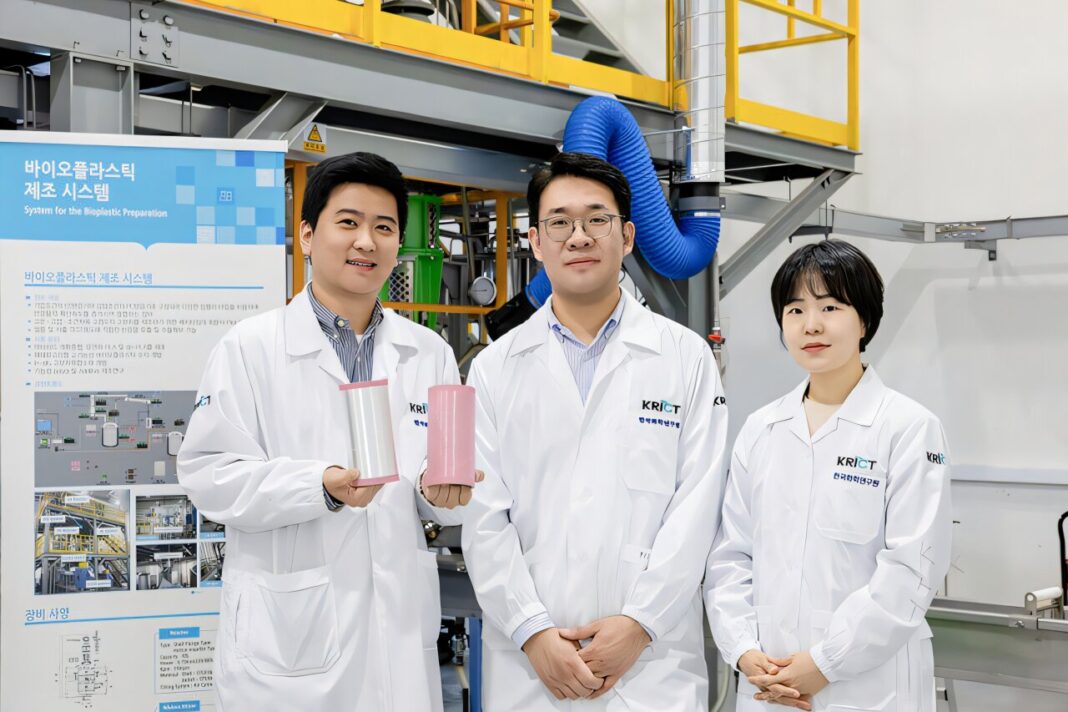

Nylon’s dirty little secret? It sticks around. From fishing nets to yoga pants, nylon takes decades to degrade—especially in oceans—choking marine life and clogging ecosystems. But a Korean research team has just pulled off a sustainability moonshot: a new polyester-amide (PEA) plastic that acts like nylon, but disappears like magic—breaking down 92% in real ocean water within a year.
Developed by a powerhouse team from KRICT, Inha University, and Sogang University, the new PEA is built for the real world: flexible, strong, heat-resistant, and ready for mass production. You can iron it at 150°C, use it to lift 10 kg, and make everything from fishing nets to food wrap—and then let it quietly decompose when it’s done.
Related: This plastic packaging is made from corn
What makes this different from the “biodegradable” hype you’ve heard before? Most so-called green plastics fall apart too soon or not at all. PLA, for example, barely degrades in marine water (0.1%). The new PEA? 92.1%. That’s not a typo.
And it’s not just smart science—it’s smart supply chain. The polymer is made using castor oil (a non-edible crop) and recycled nylon waste, slashing carbon emissions to about one-third that of virgin nylon 6. No toxic solvents required, and it can be cooked up in standard polyester factories with just minor tweaks.
The results were published in the March 2025 issue of Advanced Materials and are already turning heads. Expect industrial adoption within two years.
“This material does what no other biodegradable plastic could,” said Dr. Sungbae Park, co-lead on the project. “It’s tough, it’s scalable, and it knows when to vanish.”
Finally, a plastic that knows when to leave the party.