In the misty folds of the French Pyrenees, something quietly extraordinary is happening.
At a remote site called Comminges in France, Mantle8, a pioneering natural hydrogen exploration company, has unearthed a breakthrough that could shift the balance of Europe’s energy landscape. Their soil-gas readings, peaking at 2,500 parts per million (ppm), have stunned the industry—seven times higher than the standard threshold needed to suggest serious hydrogen potential. If proven on a larger scale, this isn’t just a good day for the company. It’s a potential tipping point for how Europe powers its future.
“The Comminges block represents the perfect combo: an ideal pilot zone to validate our technologies, with a geological setting offering maximum hydrogen potential,” said Mantle8’s Founder and CEO, Emmanuel Masini. “With these highly encouraging early results, we are well on our way to make $0.80/kg hydrogen a reality by 2030.”
It’s not just the numbers that impress— Mantle8’s approach is different. Where traditional explorers search for hydrogen like needles in haystacks, Mantle8 has built what it calls a “hydrogen-generating system” model. Think of it as going beyond the treasure map to understanding the entire geology of the treasure chest, the locks, the keys, and even the pirates who buried it.
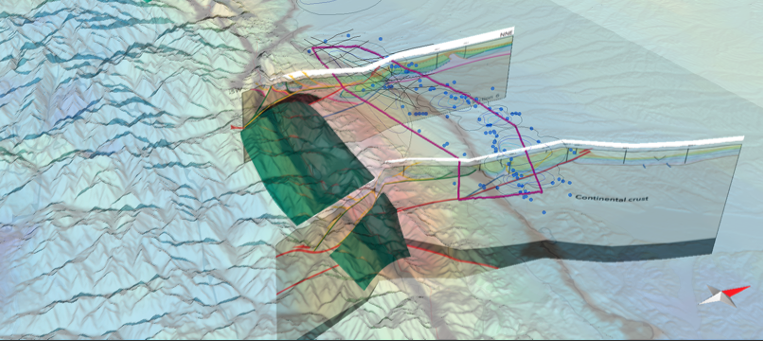
Their proprietary method fuses geology, geophysics, geochemistry, and cutting-edge numerical modeling—a first of its kind in the industry. This system doesn’t just find hydrogen; it traces its birth, movement, and entrapment deep underground. The company claims it can predict hydrogen volumes and quality with unprecedented precision, which could save millions in exploration costs and halve development time.
Mantle8 is operating in a space with companies like HyTerra, Natural Hydrogen Energy, and Gold Hydrogen who have made early strides in the race for natural (or “white”) hydrogen. Mantle8’s system-wide exploration model might just put them in pole position.
And the timing couldn’t be more urgent.
Europe, still reeling from geopolitical energy shocks and racing against climate deadlines, and the shutting down of Germany’s nuclear power plants, is hungry for cleaner homegrown alternatives to fossil fuels. Hydrogen—especially natural hydrogen, which occurs underground and requires minimal processing—could be a powerful answer. No electrolysis, no carbon byproducts, just natural H₂, ready to be tapped.

The potential is enormous.The potential is enormous. Natural hydrogen could reshape global energy systems with clean, abundant fuel sourced directly from the Earth. And Mantle8 is building the tools to unlock it at scale.
Currently awaiting the Permit Exclusif de Recherche (PER)—expected by the end of this year —Mantle8 plans to deepen its study of the Comminges block using low-impact exploration tools. The team aims to map entire subsurface hydrogen systems, from source rock to reservoirs, selecting optimal drill sites with surgical precision.
- The first, GeoLogix, is a proprietary algorithm founded in decades of Geology that helps us identify the places worldwide where an active hydrogen system could be present (which is what we are looking for). GeoLogix can be automated and enhanced using Neural Networks, but the algorithm itself has not been generated or regenerated by AI.
- The Second and the third do not use AI at all.
Mantle8, founded in 2024 and based in Grenoble, France, is redefining natural hydrogen exploration through a unique fusion of earth science and artificial intelligence. Led by geoscientist Emmanuel Masini, the company uses proprietary models to analyze and interpret vast layers of geological, geochemical, and geophysical data. Instead of relying on surface clues or isolated drilling, Mantle8’s system maps complete subsurface hydrogen-generating systems—tracing the journey of hydrogen from deep source rocks to trapped reservoirs.
Their tools simulate underground processes, predict where hydrogen is being generated in real time, and assess the volume and quality of potential reserves with unprecedented accuracy. The simulation of underground processes is performed by the third tool, which does not incorporate AI components, a rep from the company tells Green Prophet: Predicting where hydrogen is being generated in real time is the result of the core algorithm – the neural networks are used to accelerate processing and enable analysis across more potential sites, but they are not themselves making those predictions,” he notes.
Relying on experts in their field, “Assessing the volume and quality of reserves is also not done by AI – this too is handled by proprietary modelling tools without any neural network component.”
Backed by €3.4 million in seed funding from Breakthrough Energy Ventures Europe (BEV-E) and Kiko Ventures, Mantle8 is targeting hydrogen production costs as low as €0.77/kg. With competitors like Gold Hydrogen, Natural Hydrogen Energy, and HyTerra in the mix, Mantle8’s tech-led, predictive approach could make it a dominant force in Europe’s race for clean, local energy.
::Mantle8