Houthis missiles backfired and hit Sanaa
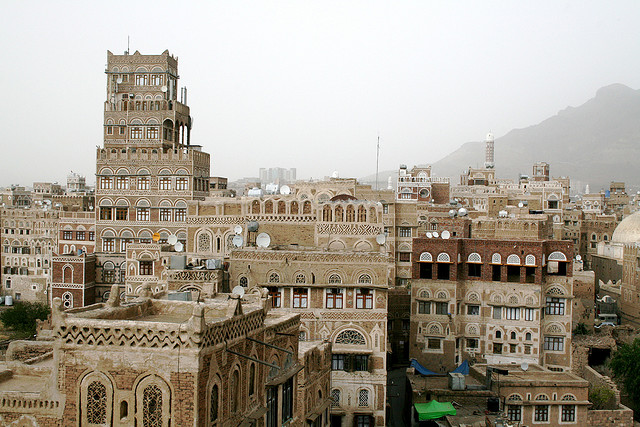
On Sunday, April 21st, a deadly blast rocked the historic heart of Sanaa, Yemen—steps away from its ancient Old City, a UNESCO World Heritage site celebrated for its multi-story tower houses built from rammed earth and adorned with white gypsum. The Houthi-run health ministry claimed a U.S. airstrike killed 12 civilians. Yet, U.S. Central Command insists the explosion was the result of a misfired Houthi air defense missile. The blame game continues, but what remains clear is this: civilians are dying, history is eroding, and extremism is winning.
History Bombed
This isn’t the first time war has torn through our shared cultural fabric. In recent decades, militant groups—from ISIS in Iraq and Syria to the Taliban in Afghanistan—have turned historical and archaeological treasures into battlegrounds. Ancient ruins like Palmyra, Nineveh, and Bamiyan’s giant Buddhas were deliberately demolished in acts of ideological warfare meant to erase memory and rewrite history through the lens of extremism. Islamists wanted to erase all history before the religion of Islam began.
In one Green Prophet piece we reported how ISIS blew up Palmyra in Syria, reducing statues and relics dating back to the Roman Empire.These were not just Syrian artifacts, they were were humanity’s.
The attack on Sanaa is part of this disturbing trend, where entire civilizations are held hostage by politics, religion, and power. In Yemen, it’s compounded by relentless proxy wars, foreign interventions, and internal strife.
Who Are the Houthis?
The Houthis, officially known as Ansar Allah, are a Zaidi Shia Muslim group originating from northern Yemen. Their grievances—decades of political and economic marginalization—led them to rise up against Yemen’s central government in 2004. But it was during the Arab Spring in 2011 that the group capitalized on growing instability.
By 2014, they had seized the capital, Sanaa. Soon after, a Saudi-led coalition—armed and supported by the U.S.—intervened militarily, fearing Iran’s influence through the Houthis. The result has been a catastrophic conflict that has killed hundreds of thousands and left 80% of Yemen’s population reliant on humanitarian aid.
Despite ceasefire talks and intermittent negotiations, violence continues to erupt. And since November 2023, the Houthis have launched drone and missile attacks on Red Sea vessels they claim are connected to Israel, in “solidarity” with Palestinians in Gaza.
The Red Sea, Gaza, and the Bigger Picture
The Houthis’ recent alignment with the Palestinian cause has raised both support and scrutiny. While some hail them as defenders of an oppressed people, others view their actions as cynical, destabilizing, and deeply dangerous—particularly to maritime security and regional peace.
These Israelis have written a song for the Houthis in return.
The United States has responded with intensified airstrikes aimed at degrading Houthi military capabilities. But these campaigns, as with so many others in modern Middle Eastern conflicts, carry devastating costs for civilians.
According to human rights advocates, these attacks—whether carried out by the U.S. or others—have not adequately distinguished between militants and civilians. Democratic senators have demanded accountability for the mounting civilian toll.
Sanaa and Its Silent Witnesses
The Old City of Sanaa, continuously inhabited for more than 2,500 years, is not just a place of prayer or residence. Its narrow alleyways, intricately patterned facades, and stone carvings tell the story of Yemen’s vibrant Islamic and pre-Islamic heritage. They stand as silent witnesses to civilizations that predate today’s politics by millennia.
But each blast and each shattered home chips away at that heritage. In 2015, UNESCO condemned the Saudi-led airstrikes on Sanaa that damaged historic homes. Today, the pattern continues, despite global warnings.
What do the Houthis want? Depending on who you ask, the answer varies: some say autonomy, others say revolution, others claim it’s purely power. They are undeniably embedded within regional power dynamics, bolstered by Iran and fought by Saudi Arabia and the U.S.
But amid all these high-level chess moves, ordinary Yemenis continue to suffer. Children die of preventable diseases, women give birth in bombed-out clinics, and ancient structures crumble under missile fire.
And for what?
While the military debates over who launched what continue, Yemen’s cultural and human history is being erased in real-time. It’s time for the international community to prioritize preservation—not only of life, but of the collective heritage that connects us all.
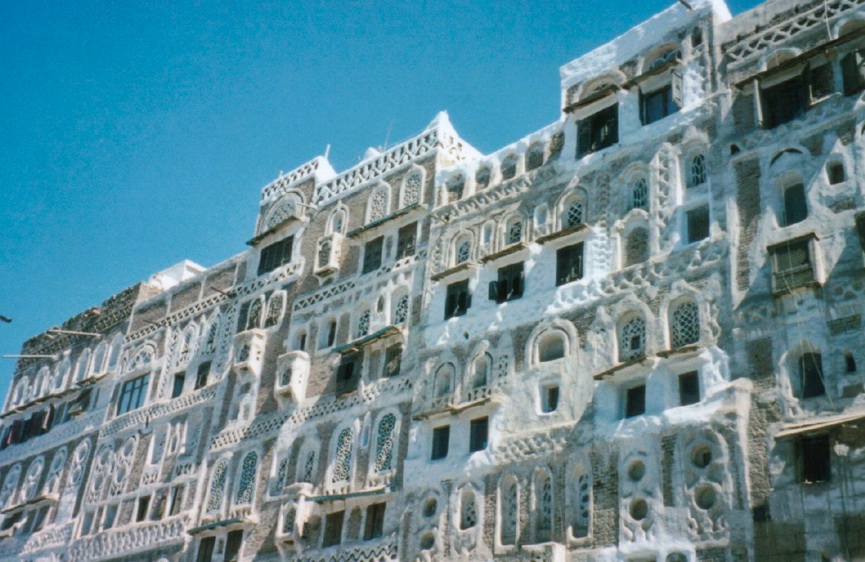
There must be accountability for attacks on civilians, regardless of the perpetrator. And there must be global recognition that a destroyed minaret in Sanaa or obliterated statue in Nineveh is a loss not only for Yemen or Iraq, but for humanity.
Let’s not wait until all that remains of these sites are photos in textbooks or ashes in the wind.