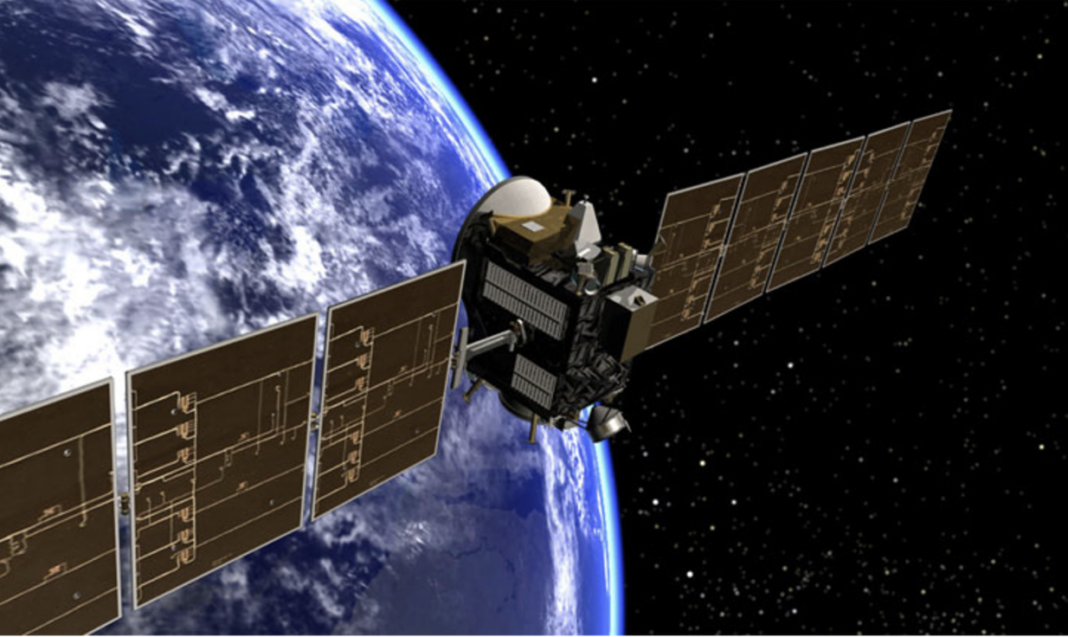


CubeSats have emerged as a university project, and, originally, this tech was used for educational missions – primarily because of its affordability. Today, with the rapid private space sector development, these compact, easily scalable mini-satellites are actively used for a wide range of commercial purposes and are steadily securing their positions in missions from international space agencies.
Thanks to advances in private-made CubeSat components, such as these https://dragonflyaerospace.com/components/, CubeSats are becoming increasingly more advanced and versatile. At the same time, they retain their uniform design, measuring 10x10x10 cm per unit (1U) while increasing scalability. Modern CubeSats can measure up to 27U, but that is still very compact compared to previous-generation space tech!
Below, we will explain the main CubeSat structures and mechanisms that make these satellites work, explaining the importance of CubeSat components in modern satellite missions. But first, we need to understand what today’s space missions are usually about, so let’s start with that.
What are the objectives of the CubeSat mission?

Right now, every launched CubeSat focuses on its own mission, but the range of applications has evolved far beyond education. Currently, the most common CubeSat missions include:
- Earth Observation: EO is an extremely vast industry segment – in fact, most spacecraft in our planet’s orbit are EO tech, and many of those satellites are CubeSat. Depending on the components they carry, actual applications may include environment monitoring of pollution levels in waters or air; urban planning; tracking illegal mining, fishing, or poaching activities, etc.
- Cosmic research: advances in CubeSat components, especially in imagers they carry, have made it possible to apply them in deep space exploration missions. For example, NASA’s HaloSat recently surveyed the Milky Way’s circumgalactic medium.
- Technology demonstration: most new space tech is tested and demonstrated with CubeSats because, if something goes wrong, the cost of losing a CubeSat is lesser than it could have been with a larger satellite. But that does not mean CubeSat technology is unreliable. In fact, these satellites successfully coped with most demonstration missions – including testing for NASA’s upcoming Mars landing.
- Internet of Things: most IoT devices remotely controlled from our smartphones are backed up by CubeSat constellations, so every time you turn up home heating while still at work, you can thank advances in CubeSat components.
Clearly, such a range of applications requires a series of advanced equipment to carry out designated missions. So, let’s take a better look at the CubeSat component’s functions and variations.
What are the main components of a CubeSat?
Even though the actual CubeSat components list may vary slightly depending on mission goals, some components are an absolute must-have for a CubeSat to operate:
- Structure is a component that holds all other pieces together; it is normally made of highly durable materials to withstand harsh space environments;
- Power component supplies electricity to all other CubeSat components – usually through built-in batteries or by generating power via solar panels;
- Communication component is a series of antennae and receivers that transmit data back to Earth and receive new commands from ground stations;
- Computer component is exactly what you may think – a powerful processor that oversees all CubeSat operations;
- Attitude Determination and Control System, or ADCS component, is a complex mix of sensors that measure CubeSat position in space and make sure it is pointing in the right direction, i.e., to take images of designated areas of interest – on Earth or in deep space.
- Payload may be one of the most important CubeSat components because it is the equipment a CubeSat needs to carry out its mission goals. Obviously, that’s where the differences begin because satellites are made for different missions, so the equipment necessary to fulfil them will also be different!
Besides, there have been major advances in CubeSat propulsion systems – normally, this component was reserved for pricier space tech. In a nutshell, propulsion is a series of thrusters and engines allowing satellites to adjust their position in orbit or even move to entirely new orbital destinations when initial mission objectives are complete, and it’s time to move on to a new stage.
Today, many CubeSats can do the same, but those aren’t the only impressive advances in CubeSat components and applications. So, let’s see what space agencies have in mind.
Space agency missions: what is the importance of CubeSat?
Even though most CubeSats, along with their components, are manufactured by private companies, NASA and other space agencies understand the amazing potential of this tech. For example, mini-satellites play a huge part in NASA’s upcoming lunar mission, Artemis. Its first phase, which began in 2022, launched ten CubeSats that provided a wealth of information on our Moon, including its ice layer composition.
ESA also holds CubeSat components and their potential in high regard. Its upcoming Hera mission should study the Didymos asteroid system and check how NASA’s DART mission went – that’s when the US agency crashed its impactor tech into the asteroid to see if we could deflect asteroids from their course to avoid future collisions with our planet. So, heads up for HERA because it finally looks like our space tech is on its way to helping the planet – and advances in CubeSat components will prove useful in this process.