
Germany, one of the world’s leading producers of clean, renewable energy has officially shut down its last nuclear reactor last month. On the flip-side, Turkey, the world’s most liberal Muslim country, has fired up its first. What does this say about where the Middle East is heading?
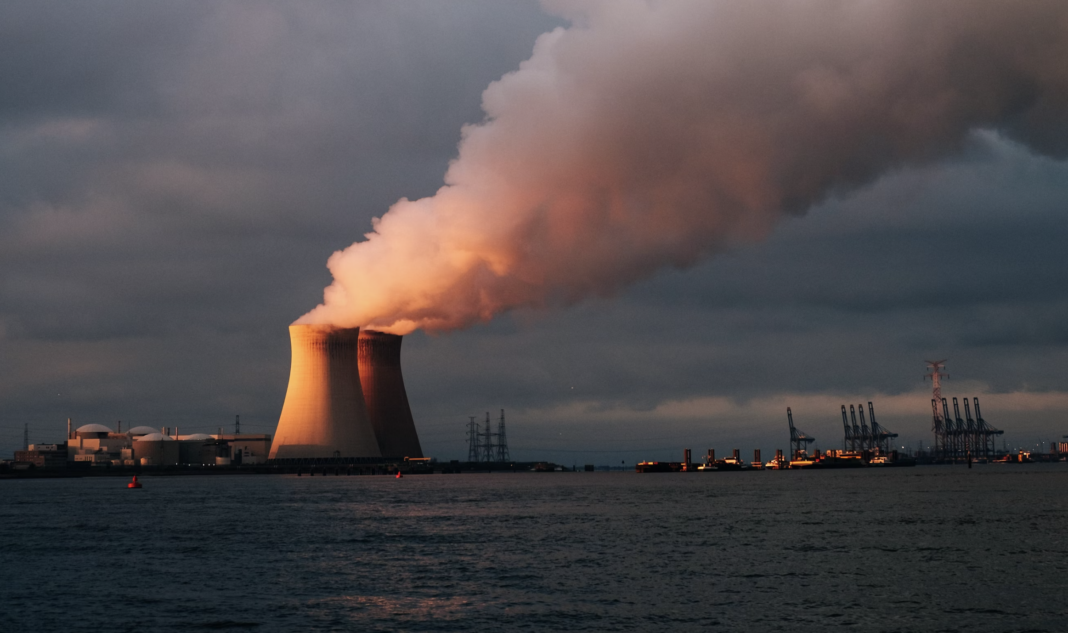
On April 16 this year, commercial power generation by nuclear energy in Germany came to an end with the separation of the Isar 2, Neckarwestheim and Emsland nuclear power plants from the power grid. Germany is leading the way when it comes to renewable energy production: in 2022 renewable energy sources provided 254 billion kilowatt-hours of electricity and accounted for 46.2 percent of Germany’s electricity demand. With wind power being the most important energy source in the German electricity mix.
Where does Germany compare to the world on renewables? Albania, Iceland, and Paraguay obtain essentially all of their electricity from renewable sources (Albania and Paraguay 100% from hydroelectricity, Iceland 72% hydro and 28% geothermal). Norway obtains nearly all of its electricity from renewable sources (97 percent from hydropower).
Germany knows that nuclear power is dangerous and unsustainable. I know this too because the fear of nuclear was raised into me as a Canadian; Canada is one of 30 countries that uses nuclear energy, with operating plants in Ontario and New Brunswick. Some 4% of Canada’s energy comes from nuclear.
Thousands of years can go by before spent nuclear rods will no longer be a radiation hazard to humans, plant and animal life. Nuclear explosions and leaks pose an enormous threat to human life and health on a daily basis.
And accidents do happen: Of course there is Chernobyl, and Three Mile Island in the US but in more recent history in 2011 we saw what happens when a developed country like Japan suffers an explosion –– see the Fukushima Disaster. We also saw how unprepared Turkey was when it dealt with its lack of oversight and management of construction after a massive earthquake a couple of months ago.
Critics have long described nuclear energy source as dangerous and unsustainable. After years of contentious debates, Germany has shut down its last three remaining nuclear power plants. Greenpeace has consistently been demanding that Germany shut down its nuclear reactors, and over the years documented leaks.
Greenpeace research
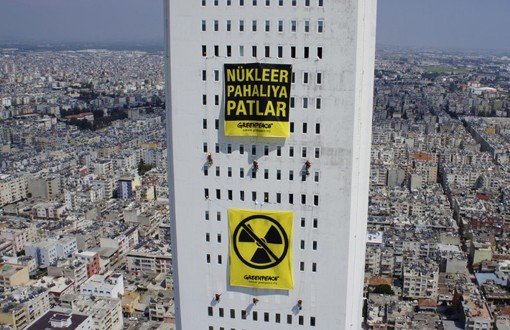
Greenpeace has repeatedly protested against the transport of nuclear waste from German nuclear power plants to the reprocessing plants in Sellafield (England) and La Hague (France) and was also able to prove that these plants are anything but harmless.
Greenpeace measurements from 1998, for instance, showed that soil samples from the vicinity of the Sellafield nuclear plant were comparable to radioactively contaminated samples taken from the 30-kilometer exclusion zone around the Chernobyl reactor.
By around the year 2000, in the North Sea off La Hague Greenpeace found radiation levels well above regulatory limits, revealing routine illegal discharges of radioactive waste water.
The latest major milestone of the anti-nuclear movement led by Greenpeace was the decision against the Gorleben repository: the dilapidated salt dome was found unsuitable for storing radioactive waste, which must be kept safe for hundreds of thousands of years.
Advocates of nuclear power want to pass on their problems to future generations: there is not one safe repository for nuclear waste anywhere in the world. Germany will now no longer produce any more nuclear waste.
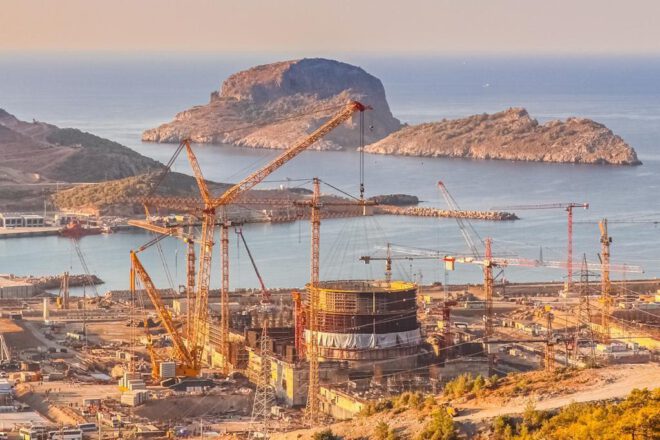
Activists have been protesting against the Turkish nuclear reactor for about 10 years, to no avail. Turkey has been snubbed by the EU and looks to align with Russia which has financed the nuclear power plant under its state-owned company Rosatom. The Akkuyu Nuclear Power Plant is located in Turkey’s southern Mersin province.
Russian President Vladimir Putin hailed Moscow’s economic ties with Ankara as he and Turkish President Tayyip Erdogan took part virtually in a ceremony inaugurating Turkey’s first nuclear power plant.
“This is a flagship project,” Putin said via video. “It brings both mutual economic benefits and, of course, helps to strengthen the multi-faceted partnership between our two states.”
Buying into Russia’s cheap energy
Putin described Akkuyu as “the largest nuclear construction project in the world” and said that it would mean Turkey having to import less Russian natural gas in the future.
“But Turkey will enjoy the advantage of a country that has its own nuclear energy, and nuclear energy, as you know, is one of the cheapest,” Putin added.
Turkey’s Akkuyu Nuclear Power Plant was not damaged in any way by the major earthquake that struck central Turkey and northwest Syria earlier this year, said an official from the Russian company building the plant. The chance of an earthquake affecting it are one in every 10,000 years, according to estimates.
The Russian-designed VVER-1200 reactors in the power plant, which cost $20 billion USD to build, are expected to be fully operational by 2026. The reactor will produce about 10% of Turkey’s energy needs. Despite European sanctions on Russia, Turkey moved ahead with its decision to go nuclear thus sending a clear message to the world where Turkey stands on unsustainable energy and its future ties with Europe.