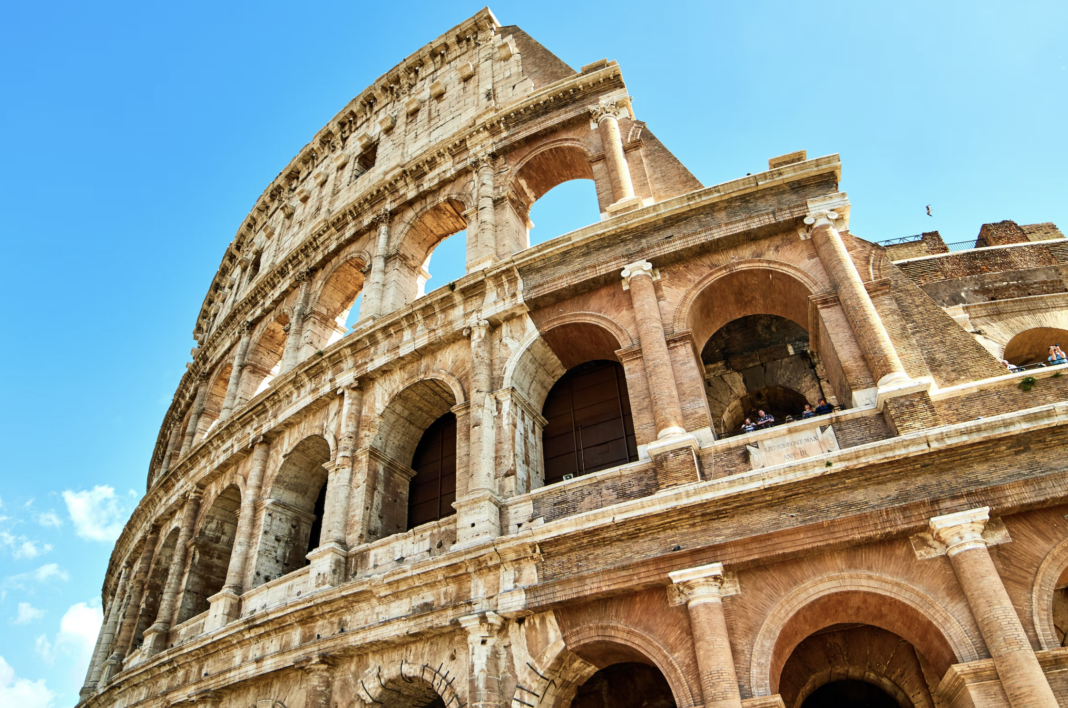
Self-healing concrete is reason how the Romans built sustainable structures

Caesaria National Park
This structure is an ancient Roman-built aqueduct in Israel

There is a breakwall at the ancient port of Caesarea in Israel that’s been standing against waves for 2000 years. Meanwhile the break-walls in Jaffa down the coast are being fortified once again after a couple of decades. Ancient concrete used by the Romans to build aqueducts and Rome itself, it turns out, was made to be self-healing concrete, and it can repair itself over time, surmise researchers from MIT. And this is important when you consider the built mass of concrete and our planet

The new study on ancient concrete shows that while ancients didn’t know exactly why the concrete they used worked chemically, even though it was a recipe they perfected, it may be a recipe for reducing climate change. Current concrete mixtures create unnecessary greenhouses gases in their production, and as a circular material are not able to withstand the test of time.
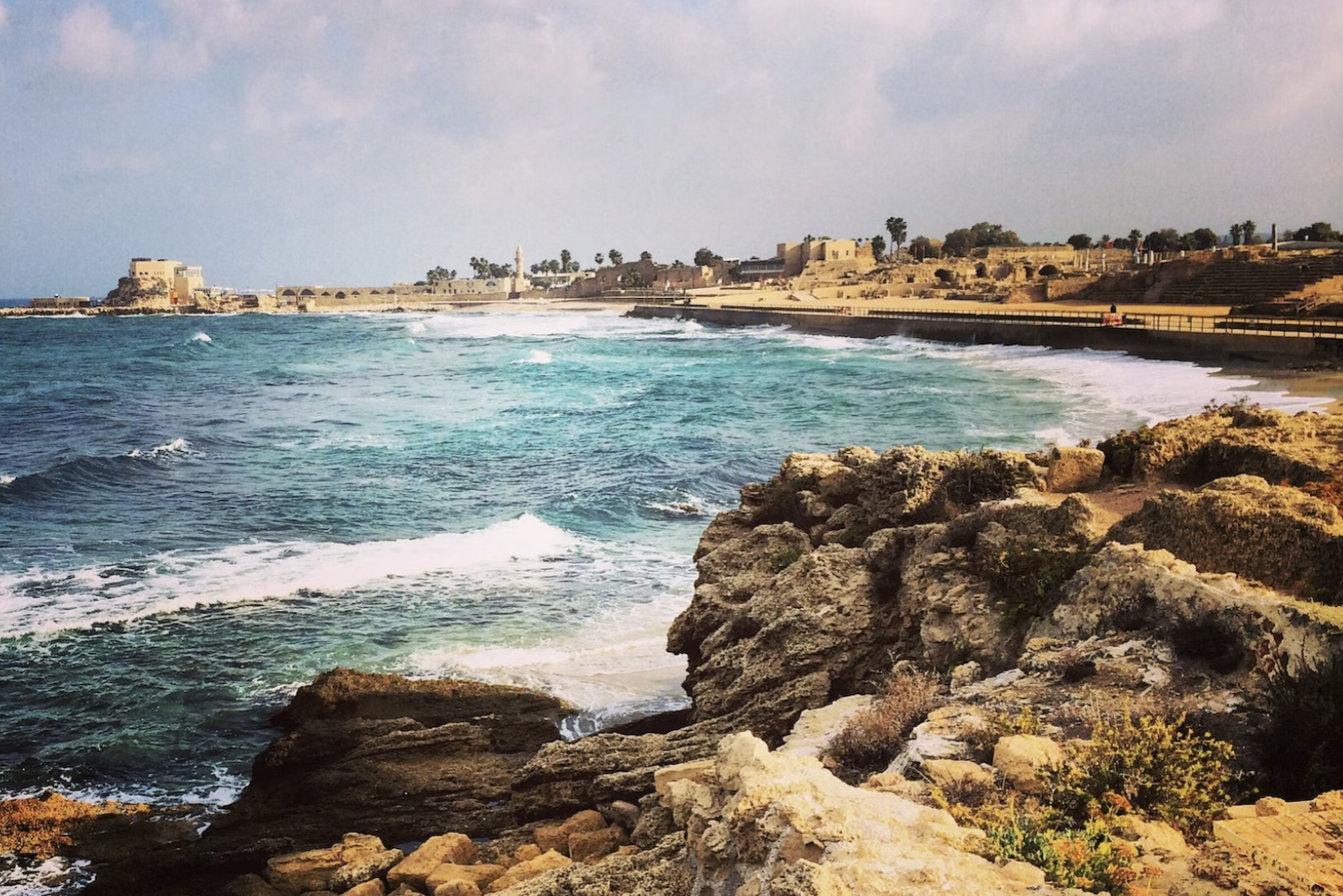
Ancient roman breakwall, mortar is self-healing
Caesaria National Park: Built by Herod in honor of Caesar Augustus. Historians claim that Pontius Pilate lived there. Now ruins and located in one of Israel’s National Parks.

The research was led by Admir Masic from MIT and was published in a journal Science Advances and explores the process of hot mixing and how the ancient Romans made plaster to last. MIT is the same wonderful design, engineering and science school to hire Julia Watson who wrote the book every architecture student should own called Lo-Tek Design by Radical Indiginism. The book focuses more on primitive culture but it’s really a wonderful collection of building by nature. The best I have ever read. Plus it’s a glory to behold.

As for the self-healing plaster research: “The Romans employed hot mixing, using quicklime in conjunction with, or instead of, slaked lime, to create an environment where high surface area aggregate-scale lime clasts are retained within the mortar matrix,” writes Masic. 

Rome colosseum, self-healing mortar
Romans mastered self-healing mortar, which works well in wet environments

“Inspired by these findings, we propose that these macroscopic inclusions might serve as critical sources of reactive calcium for long-term pore and crack-filling or post-pozzolanic reactivity within the cementitious constructs. The subsequent development and testing of modern lime clast–containing cementitious mixtures demonstrate their self-healing potential, thus paving the way for the development of more durable, resilient, and sustainable concrete formulations.”

This is some news we can use. Now architects and design students: start experimenting. 


Karin Kloosterman
Karin Kloostermanhttp://www.greenprophet.com
Karin Kloosterman is an award-winning journalist, innovation strategist, and founder of Green Prophet, one of the Middle East’s pioneering sustainability platforms. She has ranked in the Top 10 of Verizon innovation competitions, participated in NASA-linked challenges, and spoken worldwide on climate, food security, and future resilience. With an IoT technology patent, features in Canada’s National Post, and leadership inside teams building next-generation agricultural and planetary systems — including Mars-farming concepts — Karin operates at the intersection of storytelling, science, and systems change. She doesn’t report on the future – she helps design it. Reach out directly to [email protected]

LEAVE A REPLY

Please enter your comment!
Please enter your name here

TRENDING

Astro uses AI to help procure land for renewable energy

For oil-rich, environmentally vigilant Gulf states, Astro isn’t just another startup story. It is a blueprint for accelerating an energy transition that is now existential, not optional.

How you create green steel on a blockchain

The thing about raw materials is that once they are melted down, you can't prove the source of the material. Same is true with gold, cucumbers and even forged products that look the same as the real thing. When it comes to steel, and how we produce it, it has a massive carbon problem. What's happening in Japan right now could change how we think about heavy industry and climate action.

Make moss graffiti

Express your green views for all to see - right on the walls of your house, restaurant or office. Moss grafitti is the hottest trend in urban agriculture, after hydroponics and vertical farming.

Going green with Saint Patrick’s Day iconography

? BEER:  Spirulina, a blue-green algae superfood packed with protein, copper, and B vitamins, is growing in popularity among international brewers. RedDot Brewhouse, located next to the Singapore Botanical Gardens, offers a spirulina-infused lager.

BIG Palliative Care: Denmark’s Nature and Spirituality in Dignified End-of-Life Care

Bjarke Ingels Group has won the competition to design the new Sankt Lukas Hospice and Lukashuset, a 8,500 m² palliative care center envisioned as a village nestled within nature. Building on the legacy of the Sankt Lukas Foundation, established in the 1930s, this project will significantly expand Denmark's palliative care capacity, tripling its current facilities to serve approximately 2,100 patients each year.

Qatar’s climate hypocrisy rides the London Underground

Qatar remains a master of doublethink—burning gas by the megaton while selling “sustainability” to a world desperate for clean air. Wake up from your slumber people.

How Quality of Hire Shapes Modern Recruitment

A 2024 survey by Deloitte found that 76% of talent leaders now consider long-term retention and workforce contribution among their most important hiring success metrics—far surpassing time-to-fill or cost-per-hire. As the expectations for new hires deepen, companies must also confront the inherent challenges in redefining and accurately measuring hiring quality.

8 Team-Building Exercises to Start the Week Off 

Team building to change the world! The best renewable energy companies are ones that function.

Thank you, LinkedIn — and what your Jobs on the Rise report means for sustainable careers

While “green jobs” aren’t always labeled as such, many of the fastest-growing roles are directly enabling the energy transition, climate resilience, and lower-carbon systems: Number one on their list is Artificial Intelligence engineers. But what does that mean? Vibe coding Claude? 

Somali pirates steal oil tankers

The pirates often stage their heists out of Somalia, a lawless country, with a weak central government that is grappling with a violent Islamist insurgency. Using speedboats that swarm the targets, the machine-gun-toting pirates take control of merchant ships and then hold the vessels, crew and cargo for ransom.

Leopoldo Alejandro Betancourt López Turned Ocean Plastic Into Profitable Sunglasses

Few fashion accessories carry the environmental burden of sunglasses. Most frames are constructed from petroleum-based plastics and acrylic polymers that linger in landfills for centuries, shedding microplastics into soil and waterways long after they've been discarded. Leopoldo Alejandro Betancourt López, president of the Spanish eyewear brand Hawkers, saw this problem differently than most industry executives.

Why Dr. Tony Jacob Sees Texas Business Egos as Warning Signs

Everything's bigger in Texas. Except business egos.  Dr. Tony Jacob figured...

Israel and America Sign Renewable Energy Cooperation Deal

Other announcements made at the conference include the Timna Renewable Energy Park, which will be a center for R&D, and the AORA Solar Thermal Module at Kibbutz Samar, the world's first commercial hybrid solar gas-turbine power plant that is already nearing completion. Solel Solar Systems announced it was beginning construction of a 50 MW solar field in Lebrija, Spain, and Brightsource Energy made a pre-conference announcement that it had inked the world's largest solar deal to date with Southern California Edison (SCE).

Related Articles

Popular Categories