As COP26 politicians continue to debate methane – with the US And EU having pledged to reduce agricultural methane outputs from ruminant livestock by upwards of 30% by 2030 – scientists at Queen’s University Belfast are to feed seaweed to farm animals in a bid to slash methane by at least 30%.
Seaweed has long been hailed a ‘superfood’ for humans but adding it to animal feed to reduce methane gas released into the atmosphere by ruminants’ burping and flatulence is a relatively new idea. Early laboratory research at Queens has shown promising results using native Irish and UK seaweeds.
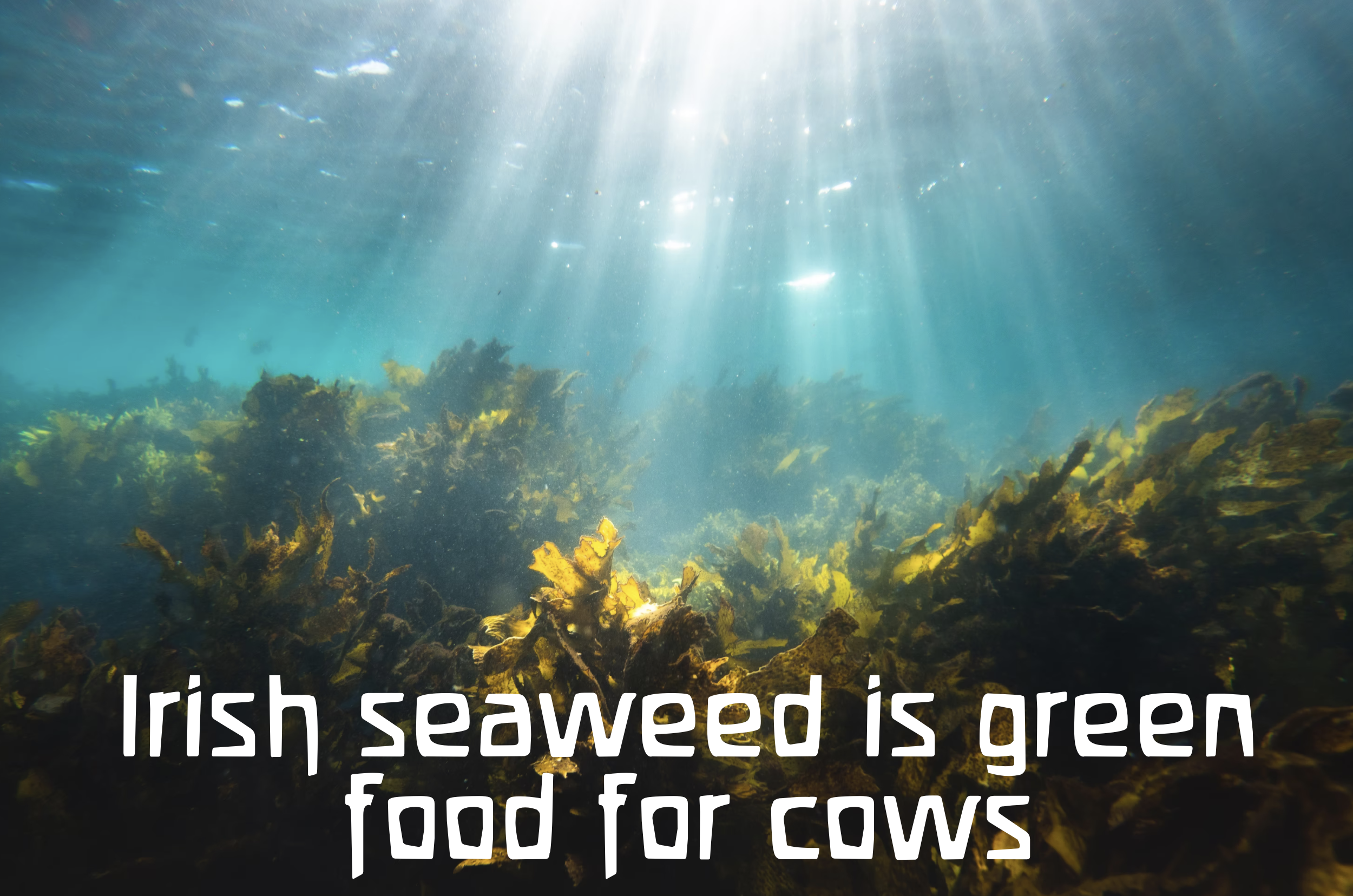
Previous research in Australia and the USA generated headline results – up to 80% reductions in methane emissions from cattle given supplements from a red seaweed variety. These red seaweeds grow abundantly in warmer climates; however, they also contain high levels of bromoform – known to be damaging to the ozone layer. Seaweed indigenous to the UK and Ireland tends to be brown or green and does not contain bromoform.
UK and Irish seaweeds are also rich in active compounds called phlorotannins, found in red wine and berries, which are anti-bacterial and improve immunity so could have additional health benefits for animals.
Now the science is moving into the field, with trials on UK farms about to begin, using seaweed sourced from the Irish and North Seas as a feed supplement for cattle.
One 3-year project is in partnership with the UK supermarket Morrisons and its network of British beef farmers who will facilitate farm trials. The project also includes the Agrifood and Biosciences Institute (AFBI), in Northern Ireland, as a partner.
A second project sees to monitor the effects of seaweed in the diet of pasture-based livestock. Seaweed will be added to grass-based silage on farm trials involving dairy cows from early 2022.
As well as assessing methane emissions of the beef and dairy cattle, these projects will assess the nutritional value of a variety of homegrown seaweeds, their effects on animal productivity and meat quality.
Scientist Sharon Huws, Professor of Animal Science and Microbiology within the School of Biological Sciences, said she expected the combined research to evidence a reduction in GHG emissions of at least 30%.
She said: “The science is there. It’s simply a matter of providing the necessary data and then implementing it. Using seaweed is a natural, sustainable way of reducing emissions and has great potential to be scaled up. There is no reason why we can’t be farming seaweed – this would also protect the biodiversity of our shorelines.
Agriculture accounts for around 10% of all UK GHG emissions. Within this, beef farming is the most carbon-intensive, with methane, which cows produce as they digest, a major component. Methane accounts for almost a quarter of GHG emissions, with 80% of that from agriculture.
Morrisons supermarket plans to be completely supplied by net-zero-carbon British farms by 2030. Sophie Throup, Head of Agriculture at Morrisons said: “As British farming’s biggest customer, we’re very mindful of our role in supporting and inspiring the farmers we work with to help them achieve goals in sustainable farming.
“By supporting this research at Queen’s and AFBI, we are trialling this natural approach to reducing environmental emissions and improving the quality of beef products.