Light pollution on animals

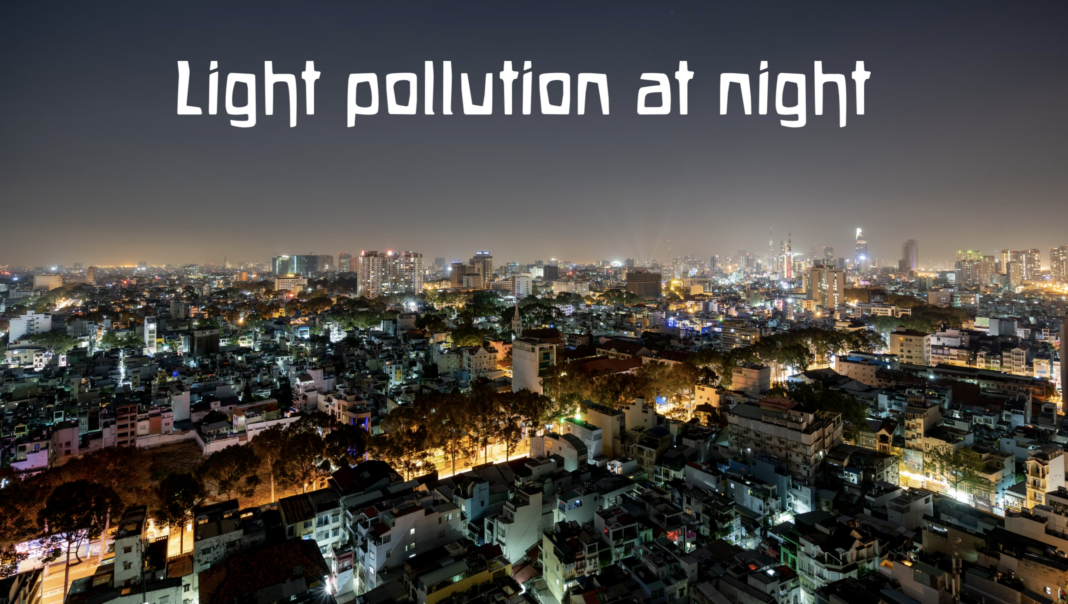
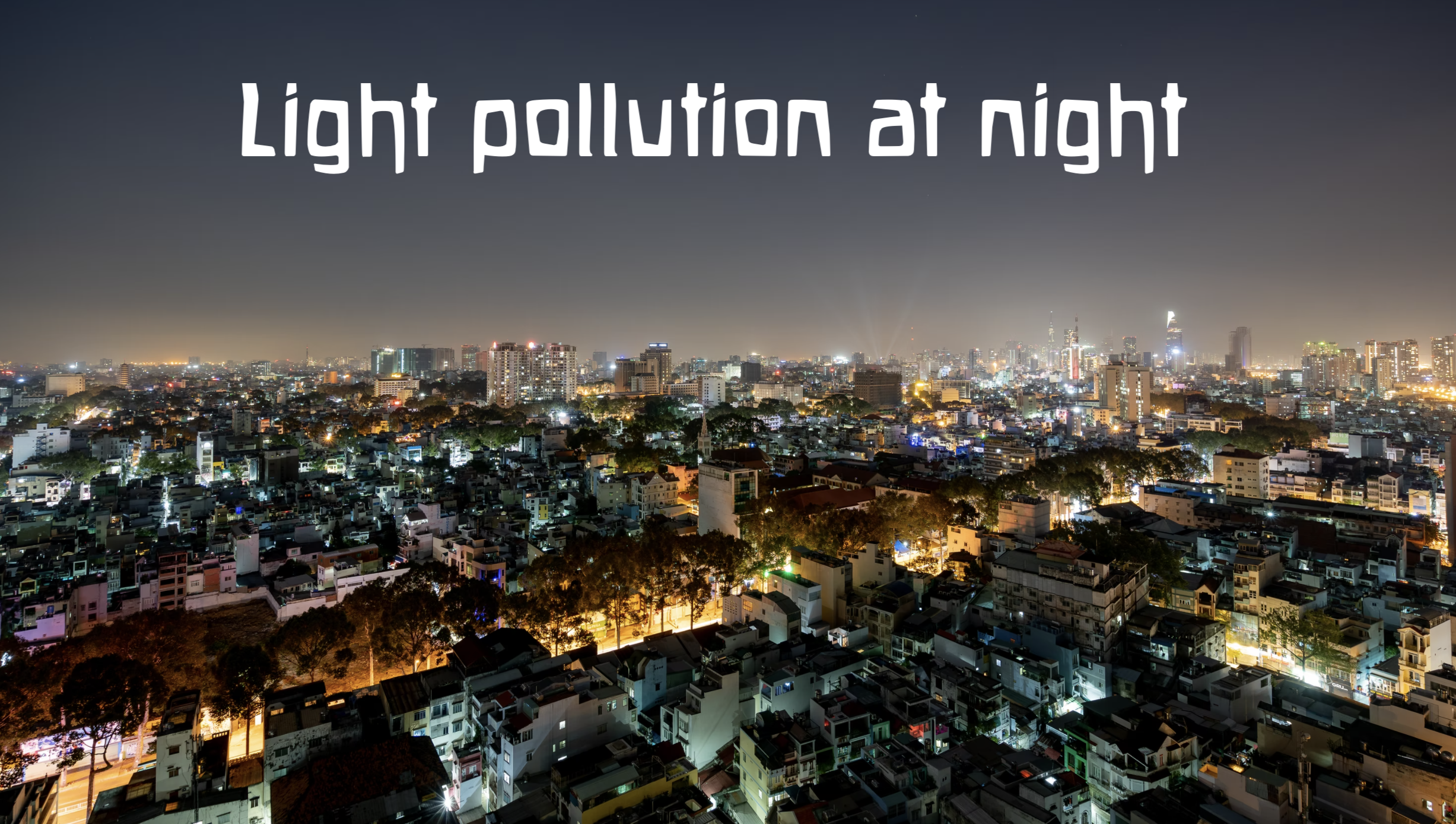
night pollution at night
Animals are losing sight of the Milky Way… crickets don’t know when to chirp. For the love of god, turn out your lights 

Sleeping with the lights on? A new study has found that artificial lights at night caused crickets to chirp in the daytime in cities. So what’s artificial light doing to us and other animals? We’ve talked about the way light disrupts our hormones. But it’s not just hurting us. We are freaking out the entire animal kingdom. Crickets don’t know when to chirp. Beetles can’t see the Milky Way; hatched turtles can’t find the sea.

Researchers from Tel Aviv University found that exposing male crickets to artificial light at night can mess up their biological rhythms. Nocturnal chirping is the male’s way of calling females to come and mate with him, and its disruption can interfere with reproduction processes and even endanger the entire species.

Previous studies worldwide have shown that light pollution is harmful to many species of animals and plants. The researchers call for reducing night light pollution as possible to enable coexistence of animals and us. 

The bigger finding might be that artificial lights are also hurting us. But let’s start with the crickets. 

Keren Levy, one of the researchers explains that the distinction between day and night, light and darkness, is a major foundation of life on earth. But humans, as creatures of the day who fear the dark, disrupt this natural order: they produce artificial light that drives away the darkness and allows them to continue their activities at night.

Animals led astray by night pollution

She explains: Today more than 80% of the world’s population lives under light pollution, and the overall extent rises by 5% every year.

For example, dung beetles, that navigate using the Milky Way, lose their way when light pollution increases; sea turtles hatchlings seek the brightest surface in sight – supposedly the sea, and reach the nearby promenade instead.

The researchers monitored dozens of crickets exposed lifelong (from egg to adult stage), to four types of light conditions. They found that crickets exposed to 12 hours of light followed by 12 hours of darkness exhibited cyclic activity rhythms of 24h:  they began to chirp when the lights went out and stopped when the lights were turned on again. 

See related: A GPS system to save wildlife

Crickets that experienced partial lighting in the dark periods lost their natural rhythms and their synchronization with their environment: 80% followed an individual inner cycle, and 5% lost all rhythm.

Crickets exposed to constant light 24/7 developed their own cycles (71%) or lost all rhythm (29%). The findings indicated that increase of artificial light at night – also known as ALAN-  in the laboratory induces loss of rhythmicity at both the individual and population levels.

Keren Levy: “Our study demonstrates that crickets whose light-dark cycle is disrupted behave like teenagers on vacation: active or asleep according to their own inner clock or lacking any rhythm whatsoever. 

In fact, light pollution induced by humankind impacts the field cricket and evokes loss of synchronization within the individual, on the population level, and between the population and the environment.

Our findings on ALAN-induced changes in calling song patterns may possibly impair female attraction and reproduction in this species. Our results are in accord with many other studies demonstrating the severe impacts of low levels of ALAN on nature.

“We ask, you, therefore, to help protect our environment and surroundings by turning off the lights in your backyards, on the terrace, in parking lots, and wherever possible. Help us bring the night and the milky way back into our lives and enable nightly coexistence with the creatures around us.”


Karin Kloosterman
Karin Kloostermanhttp://www.greenprophet.com
Karin Kloosterman is an award-winning journalist, innovation strategist, and founder of Green Prophet, one of the Middle East’s pioneering sustainability platforms. She has ranked in the Top 10 of Verizon innovation competitions, participated in NASA-linked challenges, and spoken worldwide on climate, food security, and future resilience. With an IoT technology patent, features in Canada’s National Post, and leadership inside teams building next-generation agricultural and planetary systems — including Mars-farming concepts — Karin operates at the intersection of storytelling, science, and systems change. She doesn’t report on the future – she helps design it. Reach out directly to [email protected]

Hot this week

How Renewable Energy is Revolutionizing the Way We Power Our World

Solar has become the star of the transition thanks to modular hardware and straightforward installation. It fits dense cities and remote towns alike. Many companies are turning to rooftop arrays and carport systems - and exploring commercial solar installation as a practical way to lock in future savings.

How does one start prepping?

Faced with an extreme winter storm this year, Americans wonder how to be prepared for catastrophe. Miriam has lived through wars in the Middle East - so she's prepared on giving you a guide to prepping.

Fishermen sue tire manufacturers on behalf of the salmon

A federal trial in San Francisco has brought US tire manufacturers, fishing groups, and environmental scientists into court over a chemical most drivers have never heard of — but which scientists say may be silently reshaping aquatic ecosystems.

Listening to Water: Tarek Atoui’s Next Work for Tate Modern

Born in Beirut, Lebanon in 1980 and now living in Paris, Atoui has spent years building instruments that don’t sit comfortably in concert halls. Many of them involve water, glass, and ceramics — materials that react to sound instead of simply producing it.

Leading Through a Dual-Energy Transition: Balancing Decarbonisation with Energy Security

Experience in one area of the energy industry isn't enough to guarantee readiness across all the others. That's where a structured program like an MBA in energy can come in. Today's advanced curricula explore energy economics, finance, policy, and strategic management alongside the technical subjects. And when pursuing an energy MBA online, professionals can skill up and retrain without having to step out of the labor market -- an important perk at a time when skilled professionals are already in short supply.

Topics

How Renewable Energy is Revolutionizing the Way We Power Our World

Solar has become the star of the transition thanks to modular hardware and straightforward installation. It fits dense cities and remote towns alike. Many companies are turning to rooftop arrays and carport systems - and exploring commercial solar installation as a practical way to lock in future savings.

How does one start prepping?

Faced with an extreme winter storm this year, Americans wonder how to be prepared for catastrophe. Miriam has lived through wars in the Middle East - so she's prepared on giving you a guide to prepping.

Fishermen sue tire manufacturers on behalf of the salmon

A federal trial in San Francisco has brought US tire manufacturers, fishing groups, and environmental scientists into court over a chemical most drivers have never heard of — but which scientists say may be silently reshaping aquatic ecosystems.

Listening to Water: Tarek Atoui’s Next Work for Tate Modern

Born in Beirut, Lebanon in 1980 and now living in Paris, Atoui has spent years building instruments that don’t sit comfortably in concert halls. Many of them involve water, glass, and ceramics — materials that react to sound instead of simply producing it.

Leading Through a Dual-Energy Transition: Balancing Decarbonisation with Energy Security

Experience in one area of the energy industry isn't enough to guarantee readiness across all the others. That's where a structured program like an MBA in energy can come in. Today's advanced curricula explore energy economics, finance, policy, and strategic management alongside the technical subjects. And when pursuing an energy MBA online, professionals can skill up and retrain without having to step out of the labor market -- an important perk at a time when skilled professionals are already in short supply.

From Green Energy to Healthy Societies: Why old systems thinking is becoming relevant again

Across the Middle East and North Africa, large investments are being made in green hydrogen, renewable energy, water infrastructure and sustainability. Most of these efforts are discussed in the context of climate change, decarbonization and economic diversification. That framing is important, but it may not capture their full value.

We saw peace – an interreligious encounter deep in our eyes

They came from Israel, Palestine, Jordan, Iraq, Yemen, Morocco, Tunisia, Lebanon, Egypt… There are Sunni Muslims, Shiite Muslims, Jews (Orthodox and Reform), Orthodox Christians, Coptic Christians, Protestant Christians, Druze, Baha'is, a Scientologist.

Can biochar reduce ‘Forever Chemicals’ in food if it’s used in farms?

Biochar is produced by heating organic material in a low-oxygen environment so it does not burn. This process, known as pyrolysis, transforms plant matter into a stable, carbon-rich material.

Related Articles

Popular Categories