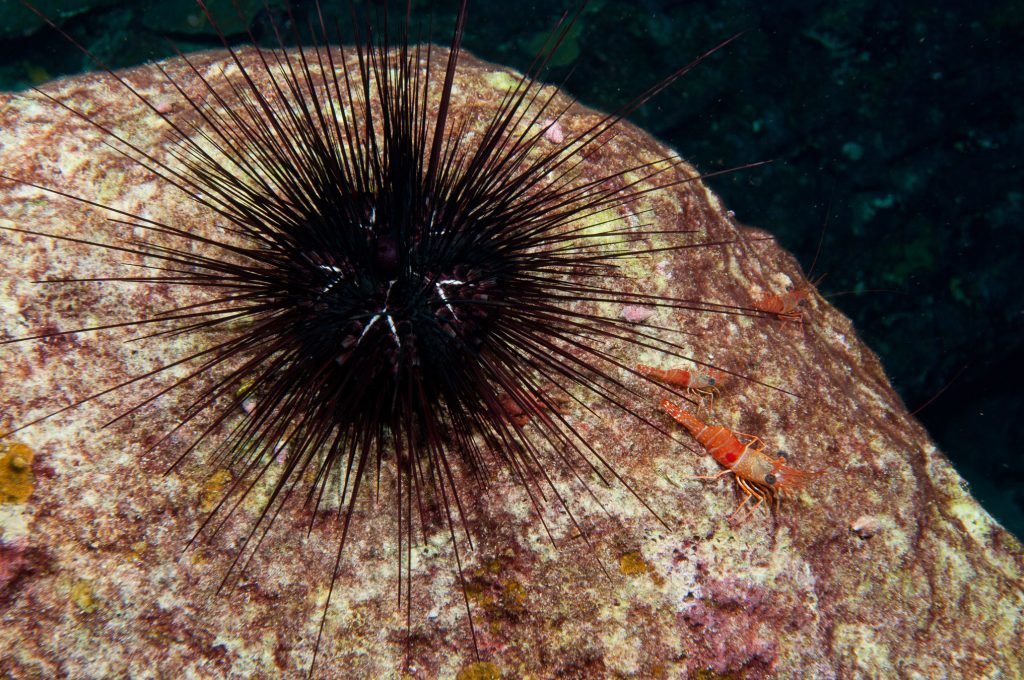
The Black Long-Spine Sea Urchin – a familiar creature from the Indian and Southern Pacific Oceans –is appearing the Mediterranean, with some serious implications for people and the ecosystem.
Those who dive, snorkel or even just paddle in the coastal waters of the Red Sea, the Indian Ocean or the Southern Pacific Ocean, are well familiar with the sight of the Black Long-Spine Sea Urchin. The species is now on the verge of colonizing the Mediterranean according to a comparative genetic research led by an Israeli scientist.
The sea urchin species (taxonomically known as Diadema setosum) is one of the most widespread species of sea urchins. Most people know better to avoid them; the urchins’ sting, while not lethal to humans, is painful and the toxins in its spines could cause inflammation or swelling.
Dr. Omri Bronstein is a researcher at the Geological-Paleontological Department in the Natural History Museum of Vienna and an expert on Echinoderm, the super-class of marine organisms that include sea cucumbers, starfishes, sea lilies, and sea urchins. Dr Bronstein expects the black sea urchin to become established in the Mediterranean in the near future. “These urchins, widespread in tropical waters are an invasive species in the Mediterranean where they are increasing in numbers,” he says. “The first specimen was discovered in 2006 near the coast of Turkey. This individual sample is now stored in the collections at the Steinhardt Museum of Natural History in Tel Aviv University, and since then, the species was observed multiple times around the Mediterranean basin.”
Bronstein is confident that even though a documented sighting of the urchin is yet to be made around the coast of Israel it is only a matter of time before this happens, and it is more than a gut feeling. In a recent research, published last November in the journal Marine Ecology Progress Series, Dr. Bronstein and his colleagues studied the expected dispersal of the species around the Mediterranean Basin. “We collected all available information about the global distribution of the species and created a model predicting its spreading like an invasive species in the Mediterranean. We discovered that it is highly likely that the species will become prevalent near the shores of Israel and indeed around the Eastern Mediterranean.”
Dr. Bronstein warns that in this event “it will be very problematic. We now know that the urchin species is a permanent resident in the Mediterranean at least since 2006. Indeed it disperses very slowly, but such is the nature of biological invasions; there is an interval between the initial invasion and the establishment of the species in the new location.” But this implies that the window of opportunity to respond to the looming invasion is narrowing: “once the population of urchins will reach a critical mass, the actual outbreak will happen quite rapidly. It is possible that one summer we will find our beaches filled with these urchins. Unless something is done, we could face a problem similar to that of the Nomad Jellyfish, the infamous creature that changed our sea-bathing habits considerably.”
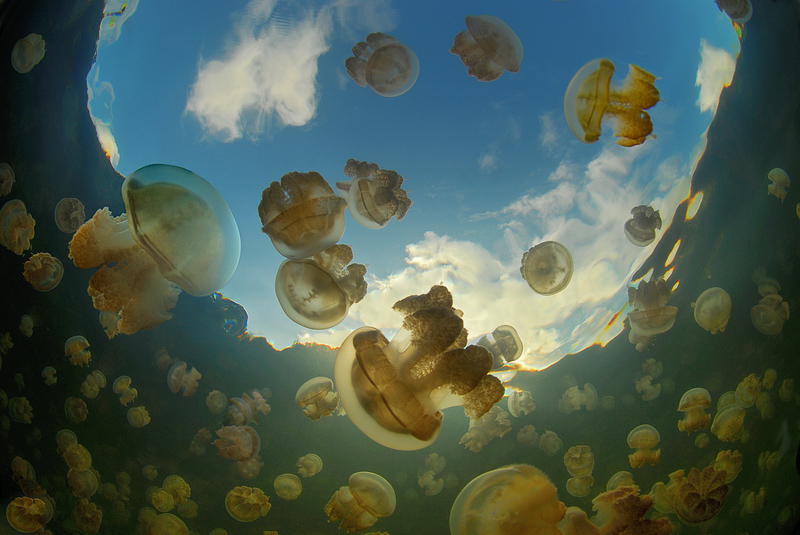
As many people know, the Nomad Jellyfish (Rhopilema nomadica) is also an indigenous species of the tropical Indian and Pacific oceans, migrated to the Levantine Basin through the Suez Canal in the 1970s. The serious economic and environmental impact the jellyfish inflicted led to its classification among the 100 worst invasive species in the European Union.

While it seems one species cannot destabilize an entire ecosystem, Dr. Bronstein stresses that it could dramatically disrupt a delicate balance and harmfully alter its environment. He gives an example from the shores of East Africa where intensive fishing activity removed virtually all of the species’ natural predators leading to a population outbreak: “they became so widespread that in some places there are scores of urchins per square meter – it’s like a blanket of black spines stretching for kilometers – it is impossible to put one’s foot in the sand.” In sites where sea urchin populations exploded and the economy depends on coastal tourism and recreation, workers from nearby villages are recruited to physically remove the urchins from the shallow waters each morning; something that needs to be repeated every day. “This is an example of how bad things could get. If no natural enemies exist in the Mediterranean things could go very wrong.”
There are local sea urchins species in the Eastern Mediterranean, the most common is the purple sea urchin (Paracentrotus lividus), a species very different from its black relative: it is smaller, with shorter blunted spines, and it finds cover in rocky habitats away from those engaged in leisure activities. Also unlike the black sea urchin, the purple urchin seems to be slowly disappearing. It is assumed that rising sea temperature – expected to further increase with climate change – is the possible explanation. While the purple urchin prefers temperatures of up to 30C, the black sea urchin thrives in warming sea water. “The black urchin habitats are in the Indian Ocean, the Red Sea and the Persian Gulf where temperatures are higher than the Mediterranean” explains Dr. Bronstein. “As the Mediterranean Sea temperature increase, it will only boost the species’ capacity to establish itself. Additionally, since it is adapted to very shallow waters – it is abundant in waters 20 centimeters deep – it would be a problem for any beachgoer.”
So how did the black urchin migrate to the Med? Dr. Bronstein explains that “if we consider the possibility that the species migrated via the Suez Canal – like many other invasive species into the Mediterranean – you can expect to find them along the coasts of Egypt and Israel. But although an extensive monitoring program is in place – led by the Israel Nature and Parks Authority – this species is yet to be documented in the region. We currently assume that it was actively transferred by human activity and not by an independent migration northward through the canal. One possibility is that larvae – the juvenile form of the species – were transported in ship ballast water which was released in a Mediterranean port. An alternative explanation is that the species, grown in aquaria around the world, might have been – intentionally or accidentally – released to the open sea.
What could be done? Dr. Bronstein would like raising public awareness to urge policymakers to act before the black urchins colonize the eastern Mediterranean. An investment in monitoring, and reaching an understanding where the urchins come from, will assist in developing policy measures to address the issue: “if decision makers would understand that the likely economic damages far exceed any investment in early prevention or elimination, it might help at least to mitigate future negative outcomes” he concludes.
Thanks to Zavit!