All over the world, farmers are grappling with increasingly harsher weather conditions, pests, pollutants, and soil depletion in the face of ever-growing product demand.
Food shortages will likely become worse as phenomena such as desertification and natural disasters intensify. This topic was at the core of a recent scientific conference at the School of Sustainability at the Interdisciplinary Center in Herzliya, in cooperation with the Manna Center for Food & Security at Tel Aviv University, entitled “How to feed 9 billion in an era of climate change?”
Israel is situated in a region that is greatly impacted by climate change and therefore, serves as a kind of research incubator to examine the effects of shifting weather conditions on agriculture.
According to Avner Forshpan, director of the Climate Change Division of the Israel Meteorological Service, the past 15 years in Israel were the hottest since national records began. In terms of precipitation, those years have seen a decline, especially noticeable during spring. For the most part, rainfall decrease is not uncommon for the Middle Eastern region – an overview of the data shows that in the past, during the 1920s and 1930s, Israel experienced prolonged dry periods.
However, according to Forshpan, there has been an increase in the frequency of extreme weather events in recent years, which are also reflected in the meteorological data. “In terms of heat waves, which lasted three days or more, we find a significant increase,” Forhspan says.
Due to the sensitivity of agriculture to climatic changes, a 30 degrees Celsius temperature threshold is already critical. Any deviation from this threshold could cause adverse effects on the quantity and quality of the production.
The success of Israeli agriculture
“Israel has become a fertile ground for agricultural technologies because of the combination of unique needs and challenges that stem from the circumstance of the country,” says Alon Ben-Gal of the Institute of Soil, Water and Environmental Sciences at the Gilat Research Center. “Decisions as to what to grow and what not to grow are made according to an economic approach, and not based on the caloric value of the crops – and this is part of the background to the success of Israeli agriculture.”
In Israel, drip irrigation is practiced in 80 percent of the crops while in other parts of the world it accounts for only 25 percent of the irrigation practices, while the rest is irrigated by flooding. “Drip irrigation has the advantage that you can irrigate frequently and thus provide optimal water and fertilizer needs, whereas, in traditional methods, such as flooding, the fields receive water only once every few days,” says Ben-Gal.
Moreover, traditional irrigation practices separate between watering and fertilization, while in drip irrigation both applications are made simultaneously. It is an effective means of saving water, but in many areas of the world, the severe shortage of water forces farmers to use “marginal” water – brackish water, which has a higher salinity than drinking water, or effluent – purified sewage, which also has a higher salt content than drinking water. The disadvantage of marginal water is that prolonged use can lead to soil salination and crop damage.
According to FAO, the United Nations Food and Agriculture Organization (FAO), the salinity surplus in agricultural land is a severe problem and is affecting about 20 percent of the irrigated areas.
Growing on depleted soil
With an average agricultural GDP of $965 million between 2000 and 2018, Israel has created a competitive and tech-oriented market. However, due to limited resources, small landmass, and an arid climate, Israel is still not self-sufficient in its food production and relies on imports, which accounted for $6.1 billion of its entire expenditures in 2017.
But what the country lacks in arable land it makes up for in the production of sophisticated farming equipment and materials. In 2016 alone, 204 Israeli companies exported $9.1 billion worth in agricultural technologies. Among those exports were irrigation systems, equipment for the dairy and poultry sectors as well as seed and propagation materials.
The unique challenges Israel is facing in the agricultural sector have encouraged the creation of dozens of ambitious startups aiming to revolutionize the farming industry. Of the $1.5 billion investment made into the international agri-tech field in 2017, $185 million were invested exclusively in Israeli businesses. Many of those businesses have developed methods for crop yield improvement in arid or harsh conditions.
Salicrop, for instance, is a company that developed a seed treatment allowing crops to survive in saline soil or with brackish water irrigation.

“Salinity makes it harder for the crop to absorb water, and the salt may also destroy the plant cells. Each plant has a salinity threshold, beyond which it sustains damage. Salicrop has created a chemical treatment in which the plant seeds are soaked in a special solution. Subsequently, they are dried and returned to the company that produces them. Thereby we can allow the crop to produce more yields even when salt levels increase,” says Dotan Burstein, director of Salicrop.
So far, the company’s treatments have been carried out in crops such as corn, rice, wheat, tomatoes, peppers, and spinach. Yield improvement, according to Burstein, may potentially reach up to 70 percent. One of the experimental trial locations of the company was in India, in fields adjacent to salt pans. “In plants that grew from treated seeds we’ve observed a 32 percent higher volume of seeds and a 63 percent increase in plant weight,” says Burstein.
Another Israeli startup called PlantArcBio strives to improve crop resistance through gene discovery. Last year, the company raised $3 million from private investors and struck up a collaboration with the University of Wisconsin-Madison. According to Dr. Dror Shalitin, founder and CEO of PlantArcBio, arid conditions can easily damage the quality of the yield. An increase of 4°C, for instance, could slash the entire US corn harvest by 50 percent.

The company’s activity focuses on discovering genes which might help the crops cope with environmental stresses. In this context, PlantArcBio is working with genes that are extracted from plants native to the desert and Dead Sea region. Apparently, in such “ecological niches,” there is a high probability of discovering hidden genes which have a high resistance to aridity. “We use plants and microorganisms that we believe contain genes we can use for our purposes. By transferring certain genes to tobacco plants, for example, which were used to develop our technology, we were able to double plant weight.” says Shalitin.”
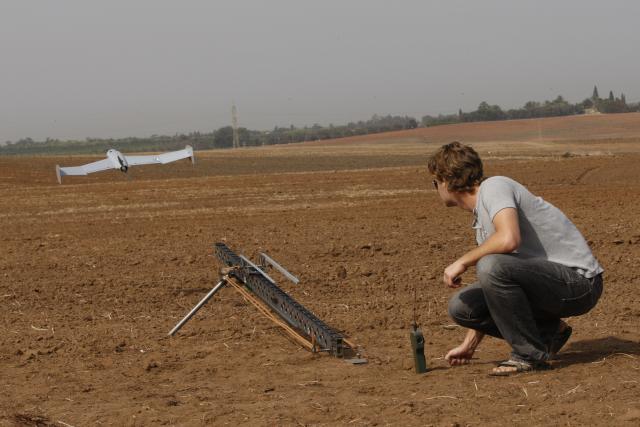
Yet another young Israeli startup named Taranis has developed an analytics engine helping farmers to monitor their fields effectively, determine the right time and location for applying agro-chemicals and preempt crop issues, diseases, and weather-related damage. So far, Taranis has raised $30 million since its launch in 2014, mainly from American and Israeli ventures, and it provides its services to large farmers all over the world, in countries such as the US, Canada, Brazil, Argentina, Russia, Ukraine, and Australia.
Evidentially, the challenges of the food supply in the age of a global climate crisis and rapid population increase requires thorough contributions from various fields such as water, plant sciences, genetics, and chemistry. Alongside the improvements these technologies offer to agriculture, they also help promote the science behind them.
However, it is important to remember that these technologies merely treat the symptoms of a more far-reaching problem. In order to slow down climate change, it is imperative to reduce greenhouse gas emissions, not by applying technology but through full-scale reforms in the policy-making of nations, public awareness campaigns and a shift in the consumption habits of the citizens of the world.