


 Scandinavian saunas are so yesterday. UAE trendsetters can now literally chillax in indoor “snow rooms” that create real snow using a snow-making system like that used for the interior ski slopes in Dubai’s Mall of the Emirates. It’s costly to be cool, prices start at $109,000. But our planet pays the real bill.
The rooms are purpose-built to fit into any address and produce constant chilling between -18°C to -10°C which purports to offer tangible health benefits ranging from increased fat burning to cellulite reduction. Shivering to stay warm does burn calories – but does cold really prevent wrinkles? So says a paid press release describing the AreaSauna.
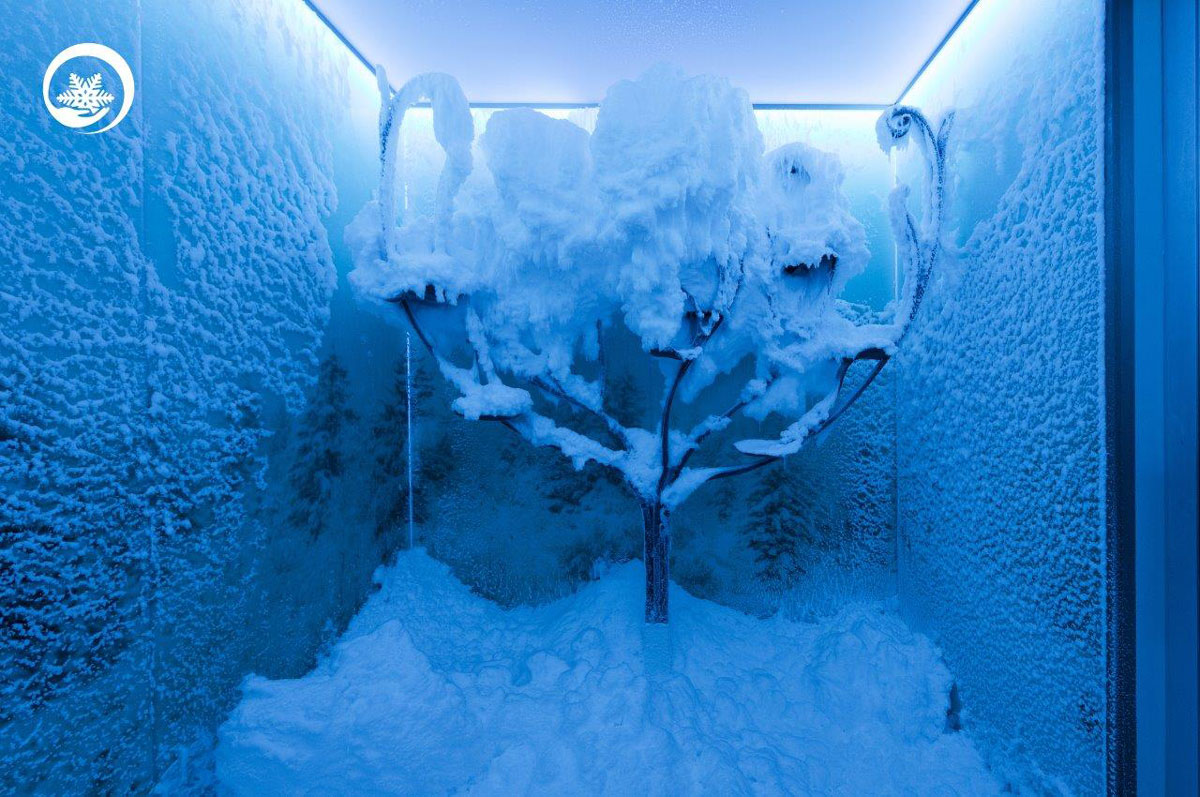 The icy space comes as a simple glass room or customized to fit into existing architecture. Currently, you can test drive the walk-in freezer experience before calling in your order at the Ottoman Spa in Jumeirah’s Zabeel Saray, which boasts two snow rooms, and at Le Meridien.
It’s the brainchild of German company TechnoAlpin Germany GmbH, a leading provider of snow-making equipment for ski resorts. Dubai-based Desert Snow, self-billed as the region’s only specialist in “winter solutions”, is an authorized distributor for the snow rooms in the UAE, offering both sales and technical support there and in Qatar, Oman, Kuwait, Bahrain and Egypt..
They suggest that customers follow a specific procedure in the lead-up to room use that includes rubbing hands and feet to get blood circulating, then jumping into a hot sauna before entering the snow room. Donning a ski jacket and thick socks might also do the trick.

For those needing a break from Gulf heat but not willing to commit to an indoor Alaska, Desert Snow offers one-off snow-making services for corporate events, weddings and children’s birthday parties. They can create falling snow, snowboarding slopes, set a stage for snowball fights, and devise special effects for film sets and photo shoots.
“We can produce up to 1,000 cubic meters of snow in any location and at any temperature within 24 hours. We either transport the snow made at our facility in insulated boxes or produce the snow on site just before it’s needed so it can be enjoyed for longer periods of time,” managing director Ben Elliott Scott told XPRESS.
The chemical-free snow is produced year-round since snow generation is unaffected by ambient temperatures, and it’s safe, as refrigerants are contained within a closed loop inside the snow-making system. A 20 square foot insulated box of the snow costs about $800 plus delivery charges.
Interestingly, the company does have an environmental policy which states that, “Where ever possible the company will…try to reduce its carbon emissions. Where that isn’t possible with current technology we will look towards off-setting those emissions here in the UAE with accredited schemes that we can directly monitor ourselves. Our long-term aim for the company is to attain carbon neutrality.”
Carbon-neutral snow-making in a scorching hot region where almost all water comes from desalination?
Dubai sources 98.8% of it’s fresh water from desalination. In September, 2013, speaking at the Arabian Water and Power Forum, Saeed Mohammed Al Tayer, chief executive officer of the state-owned utility Dubai Electricity and Water Authority, declared that producing desalinated water is so energy-consuming that future water and energy plans must aim for a more sustainable balance. This was before the dramatic drop in oil prices, which now threatens to lift the generous (and some would say, unsustainable) subsidies on UAE water and electricity. What happens when/if consumers pay the true production costs for these resources?
A frequent UAE visitor, I’m guilty of enjoying a few runs at shopping mall skiing. And who wouldn’t like to dance a hot Dubai night away under a festive snowfall? But while some might afford to ship in snow for a kiddies’ party, we need to take a hard look at what the real price is to us all.
Images from Desert Snow



[…] Alaskans to Emiratis: we’ll all pay for UAE snow […]