
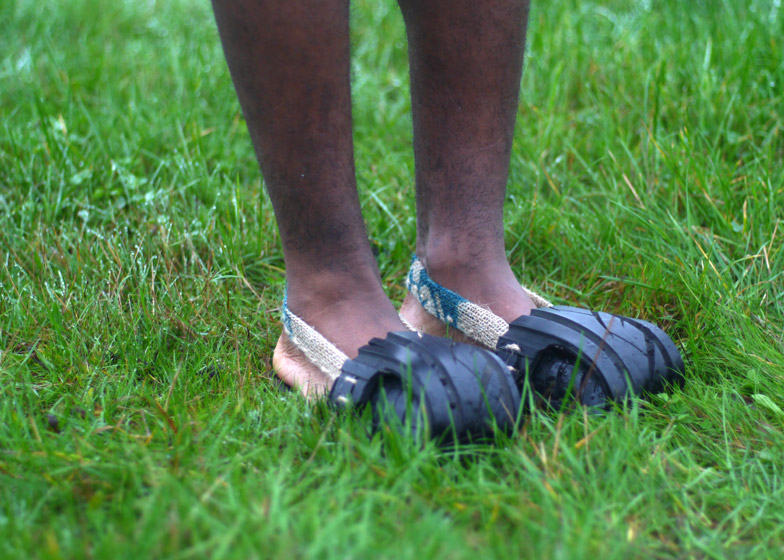

 The tire industry is one of the largest users of virgin rubber, blending it with sulfur and heating the mix to create ‘vulcanized rubber’. It’s a highly durable material that is notoriously difficult to recycle. Design schools, small rural start-ups, and major clothing manufacturers are all working to develop ecologically sound disposal options for spent tires. Some of our favorites turn old products that moved vehicles into new ones that move people – tires that become shoes.
Converting waste into a revenue stream solves two problems with one idea. If the idea brings environmental and socio-economic benefits, make that four problems solved.
A trio of students from U.K.’s Ravensbourne University recently teamed up on a product design to solve a developing world challenge. Jena Kitley, Alani Fadzil and Lauren Joseph looked to Rwanda for inspiration, an African country where 90 per cent of the population works in (mostly subsistence) agriculture. They learned that a lack of affordable footwear was leading to the spread of diseases caught through bare feet.
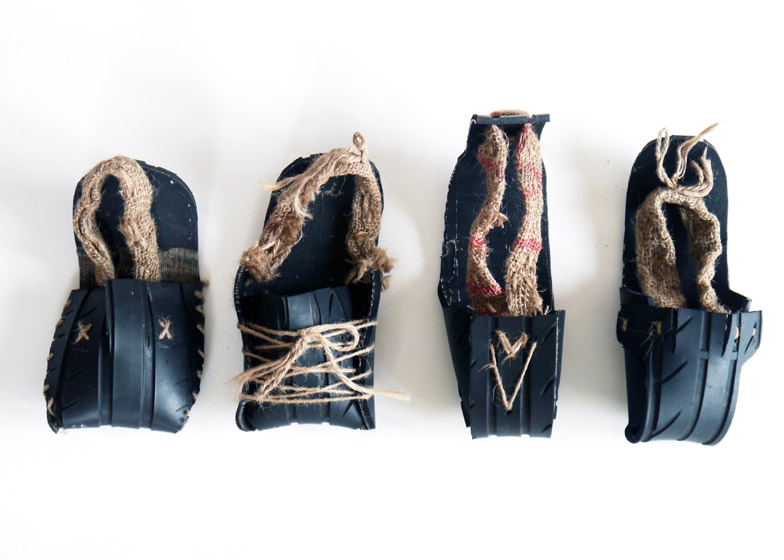
Their project, called ‘Soled’, devised a method that rural people could use to create their own footwear from locally found waste materials including tires, burlap sacks and rope.
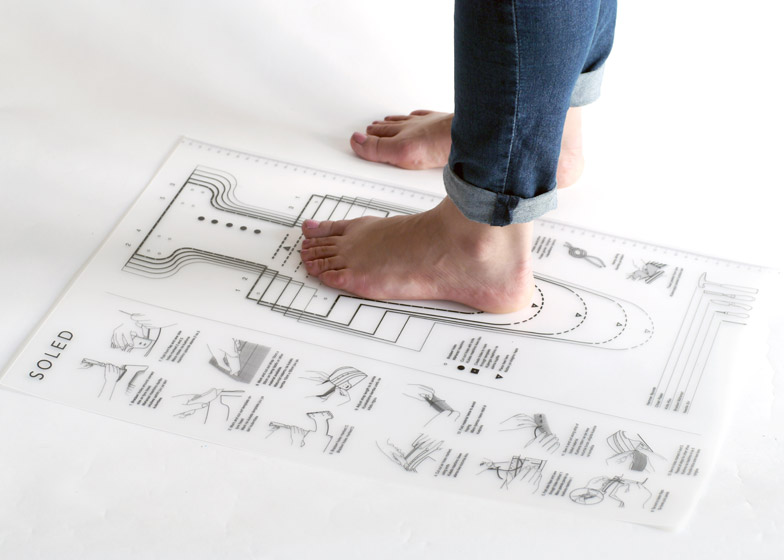
Rubber treads are used to form both the sole and outer shoe. A template made from recyclable polypropylene guides the user in cutting out the correct shoe shape in a range of sizes. It includes illustrations showing how to bend the rubber sole into shape and attach a burlap ankle strap. All sewing uses simple hemp rope.
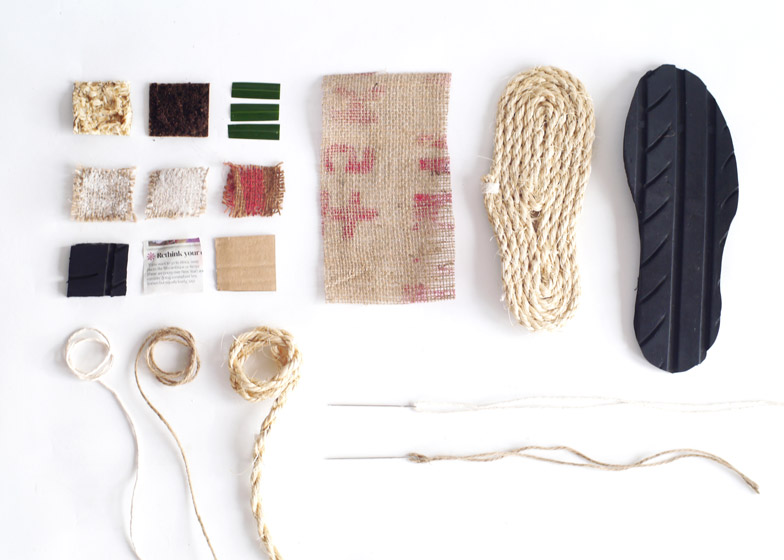
“Rwanda has an abundance of tires, a durable, flexible, waterproof material, which was suitable to be used for the sole of the shoe. Burlap sacks – used to import and export their produce – and hemp rope were other accessible materials that would be used to complete the footwear,” Kitley told Dezeen.
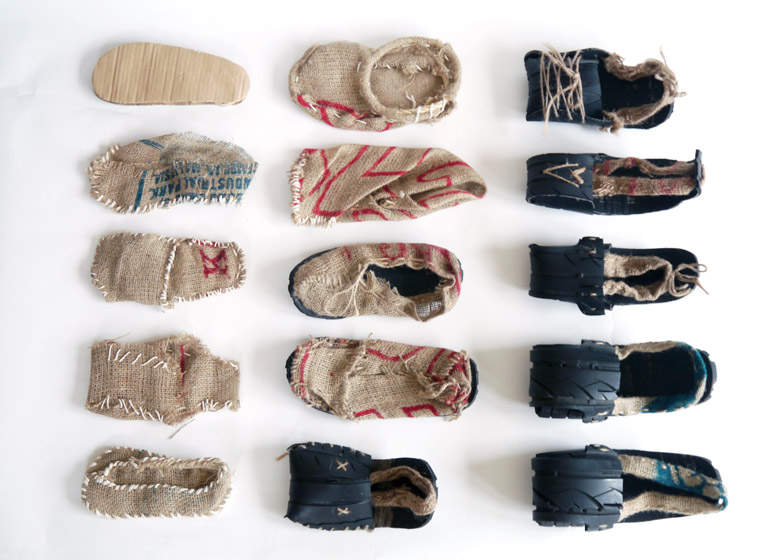
“The template would be sent out and distributed through a charity, the concept is open source and has the ability to be transferred online as well as being a physical product,” said Kitley.
 Shoes made from tires also appeal to well-heeled consumers. Consider soleRebels, an Ethiopian footwear company founded in 2004 as an idea that shoemaking could “make the world a better place… one step at a time.”
Founder Bethlehem Tilahun Alemu employs highly marginalized villagers of from her Zenabwork community. Using recycled, organic and bio-based materials, soleRebels riffs off traditional Ethiopian “selate” and “barabasso” (types of recycled car-tire-sole shoes) making vibrant new styles, all by hand.
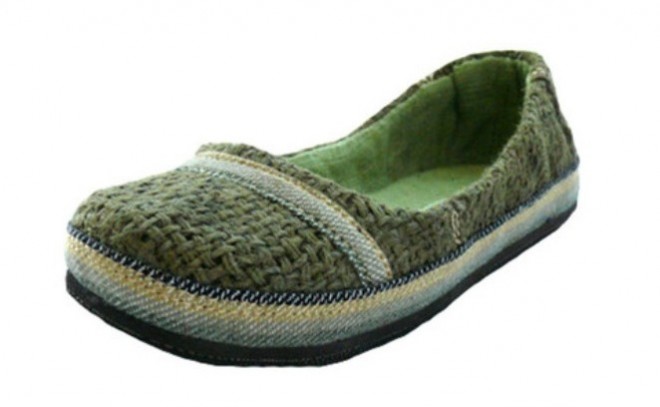
Their locally made shoes appeal to fashionistas, eco-warriors, vegans and vegetarians, available for worldwide export at reasonable Western prices. The fastest growing brand of African-made shoes, last year they opened a flagship retail store in California’s Silicon Valley. The tire-soled slip-on shown below features an upper made from woven Abyssinian jute lined with soft handspun and hand-loomed cotton lining (retails for $70).
Big players are also getting in the game. Last year, iconic American fashion brand Timberland announced a partnership with tire maker Omni United to create the first line of tires to be purposely designed – at the onset – for a second life as shoes.
The two companies established an industry-first chain-of-custody process to make sure the tires go directly to dedicated North American recycling facilities, where they will be sorted for special processing before being retooled into shoes and boots. The first lot of returned Timberland Tires will be ready for recycling in late 2017. Learn more in the video clip below:
[youtube]http://youtu.be/j1vsym4PQaQ[/youtube]
Pneumatic rubber tires have been around for more than a century, and over a billion new tires are now sold each year. Re-purposing worn tires is something the industry has worked on for decades. More than 75 percent of the scrap tires are now recycled or beneficially reused for fuel, for engineering applications such as rubberized asphalt and as sub-fill for highway ramps, embankments, shoulder construction, according to the Rubber Manufacturers Association. Whole tires often feature as a building block in emergency housing solutions, and shredded tires are often used in place of gravel in playgrounds and as filters in septic system drain fields.
The takeaway from this tale? Fix a problem by making it a solution to other problems. It’s environmentalist Bill McKibbon’s “cradle-to-cradle'” in action, and the simplest supply chain recipe for arriving at a zero-waste world.
First five images from Dezeen, sixth from soleRebels website




[…] Let’s bounce! on tires upcycled into rubber-soled shoes – Some of our favorites turn old products that moved vehicles into new ones that move people – tires that become shoes. Converting waste into a revenue stream solves two problems with one idea. If the idea brings environmental and socio-economic … […]