
The night before the Israel Defense Forces’ 1976 mission rescuing over 200 hostages from hijackers in Entebbe, Uganda, Tel Aviv University’s Prof. Pinhas Alpert, then head of an Israel Air Force base forecasting unit, provided intelligence that was critical to the success of the operation — the weather conditions commandos were likely to encounter en route and on the ground. Had his information been incorrect, the mission might have ended quite differently.
Related: Pinhas Alpert shows how cell phone towers predict the next big flood
The inaccuracy of forecasts also has personal implications for people around the world, leaving them stranded without umbrellas, snowed in, or stuck in airports. But considering the technology available today, why do meteorologists continue to miss the mark?
New research published in the journal Land by Prof. Alpert of the Department of Geosciences at TAU’s Faculty of Exact Sciences prioritizes, for the first time, reasons for forecast failures across different regions of the world. Using multi-regression-based statistics on data collected between 1979-1993 on tens of thousands of forecast points, Prof. Alpert and his team were able to quantify the causes — man-made and natural — for weather prediction inaccuracies.
Studying geographic and topographic changes
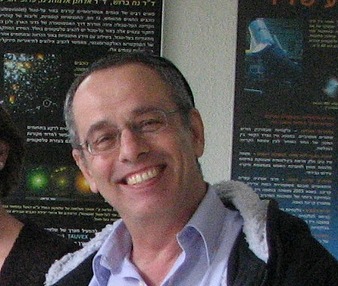 “Considering my background in forecasting, weather prediction fallacies bothered me for a long time,” said Prof. Alpert. “Since joining TAU in 1982, I have been looking for a way to quantify the dominant factors that cause errors in forecasting. Until now, there has been no comprehensive analysis of these factors. They have been studied separately, but not in combination. I decided to quantify and prioritize the dominant factors for different regions, and provide this valuable information to the world scientific community.”
Using statistical analysis of meteorological data over thousands of locations and the course of 15 years, Prof. Alpert identified unique factors affecting forecasts in Europe, North Africa, the Mediterranean, Asia, and East Asia. The researchers found the dominant factors clouding the accuracy of predictions comprised land-use changes (i.e. an area that had been covered in forest is suddenly bare), topography, particles in the atmosphere and population density.
“For example, when Israel’s national water pipeline crossed the northern Negev in June 1964, it changed the lay of the land,” said Prof. Alpert. “After a relatively short period of time, the desert was blooming, affecting the generation of clouds, precipitation, and temperature extremes. It is difficult for forecasters to incorporate changes like this. In effect, this single land-cover change altered the entire local climate over the Northern Negev, and existing forecast models had difficulty accommodating this, leading to erroneous predictions.”
Weather forecasting with grades
The researchers incorporated the dominant factors within a single equation and then monitored the model’s ability to accurately predict monthly weather conditions in different regions over 15 years. Prof. Alpert and his team also created a table of “factor prioritization” — gold, silver, and bronze labels to identify dominant and less dominant factors for different regions in the world. For example, they found that in the eastern Mediterranean, particles in the atmosphere were the most important cause of forecast fallacies, followed by land cover change. They also found topography to be the most influential factor affecting weather around the world.
“The only tool the weather forecaster has is his model, and the only choice he or she has is to look at different models, each of which has strengths and weaknesses,” said Prof. Alpert. “Several hundred research groups are trying to improve forecasting models all the time. These groups also seek to improve predictions of climate change and global warming. Our study provides them with information about the right topics of research to address for each region.”
Prof. Alpert is continuing to investigate factors that damage the quality of forecasts, hoping to devise new methods of improving weather and climate models.
Image of woman weatherman from Shutterstock