
Will Israeli cars roll on alternatives by 2025?

skyTran_Cityscape-003.jpg.824x0_q85_crop-scale

Despite Israel’s dead electric car company Better Place and its venture to create an electric alternative to fossil fuel driven cars,  the Israeli government is still interested in  weaning most of its cars and other vehicles away from oil by the year 2025. With hanging Skypod’s in the wing, here’s the plan.

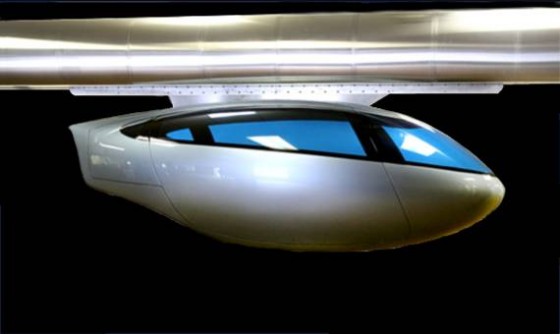
Project ideas to accomplish this dream include above ground  magnetic air driven  pods (photos above and below); and creating various kinds of biofuel from algae and other plentiful plant based material.
SkyTrans-commuter-pod-560x334

For a country that imports most of its oil, often at high “spot market” prices (this week it’s more than $2 a liter), an ambitious 10-year plan to create alternative energy sources and the vehicles  that will operate on them seems a little far fetched.

But this is a country known as the “startup nation”; and as such, a plan like this may not be an impossible dream after all.  In 2010, the Prime Minister’s Office launched a project known as the Fuel Choices Initiative, in which Israel would become known as a “center of knowledge, industrial best practices and alternative transportation.”

skyTran-Interior-015-1

Since then, this project has registered more than 800 entrepreneurs, more than 130 researchers and more than 100 startup companies working on a variety of projects. These projects include designing more efficient engines, better storage batteries for electric driven vehicles, better energy storage facilities; and more environmentally friendly transportation concepts.

The old electric car Better Place switch station
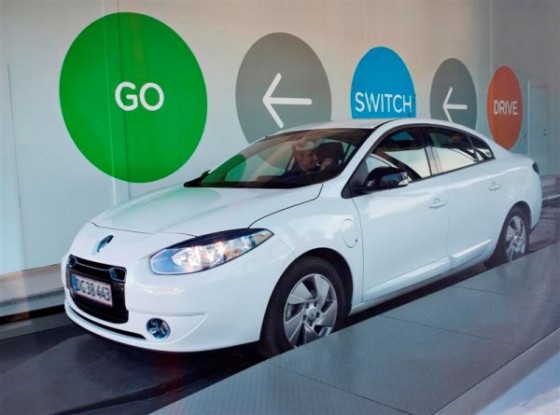
Inside battery switching station, by Better Place (Medium)Israel’s electric car experiment, innovated and carried out by Shai Agassi’s Better Place Company, began in 2007 with much fanfare in Israel as well other countries, including Australia and Denmark.

Agassi’s concept was to construct a network of battery re-chargers and battery “swapping stations”  (photo above) where Renault-made cars could recharge their car’s lithium battery pack while at work, at the shopping mall, or at home.

The battery exchange stations enabled drivers to exchange their depleted battery for a freshly charged one in
less than 5 minutes “the time it takes to wash one’s car in a drive through car wash,” according to Agassi.

More than 30 battery exchange stations were eventually constructed in Israel, with another few in Australia and Denmark.  They were often located in industrial zones and other locations some distance from the highways. The batteries themselves belonged to Better Place and were “leased” to Better Place car owners or leasees as part of a monthly service agreement.

Better Place cars had relatively short cruising ranges of around 140 km (80 miles) on a fully charged battery, depending on road conditions and whether the car was using electricity consuming accessories like air condiitoning.

All in all, less than 1,000 Renault Fluence ZE (Better Place’s only car model) cars were sold, resulting in the company acquiring huge debts which resulted in Agassi being fired and  the company finally declaring bankruptcy in May, 2013. Despite this setback, other electric car ideas have rolled into the Israeli mindset, including a small Renault electric “mini car”, and the Twizy, being approved for testing in a Tel Aviv rental-share plan.

More exotic non-fossil fuel transportation plans, including the “up in the air” SkyTran magnetic air pod project have yet to be implemented.

A more interesting and possible advancement to the current lithium-ion battery is one being developed by an Israeli company called Phinergy.

Phinergy is developing a hybrid lithium-ion and aluminum-air battery system based on technology from Ban Ilan University. The Phinergy aluminum battery concept is said to be able to give cars a much longer driving range of up to 1,100 miles between charges. This is said to be possible by a concept of using the energy released by the reaction of aluminum with oxygen to generate electric power.

At an alternative energy conference held in Israel last fall, Israeli prime minister Benjamin Netanyahu said that oil has dominated world energy markets, especially in the transportation industry- something that every Green Prophet already knows:  “It’s within our power to change the automotive industry, the way people use fuel, to have fuel choices,” Netanyahu said.

More articles on alternative energy concepts in Israel
New Renault Twizy Electric Cars Being Tested in Tel Aviv Rental-Share Plan
Better Place Bankruptcy a Sad Day for the Electric Car Industry
Proposed Tel Aviv SkyTran Project is Up in the Air
Univerv chooses Microalgae for Award Winning Biofuel Project

PHhoto of NASA Skypod by NASA

Maurice Picow
Maurice Picowhttps://www.greenprophet.com/
Maurice Picow grew up in Oklahoma City, U.S.A., where he received a B.S. Degree in Business Administration. Following graduation, Maurice embarked on a career as a real estate broker before making the decision to move to Israel. After arriving in Israel, he came involved in the insurance agency business and later in the moving and international relocation fields. Maurice became interested in writing news and commentary articles in the late 1990’s, and now writes feature articles for the The Jerusalem Post as well as being a regular contributor to Green Prophet. He has also written a non-fiction study on Islam, a two volume adventure novel, and is completing a romance novel about a forbidden love affair. Writing topics of particular interest for Green Prophet are those dealing with global warming and climate change, as well as clean technology - particularly electric cars.

Hot this week

The Christ’s thorn (sidr tree) is also a well-known folk medicine

Christ’s thorn jujube (Ziziphus spina-christi) also known as the sidr tree is a real, identifiable tree native to the Middle East, and it appears—directly or indirectly—in Islam, Judaism, and later Christian tradition. The connections between the three faiths are not theological agreements but overlapping uses, names, and symbolic associations rooted in the same landscape.

Farm To Table Israel Connects People To The Land

Farm To Table Israel is transforming the traditional dining experience into a hands-on journey.

The Lote Tree of the Utmost Boundary, explained

In Islamic tradition, there is a point where creation ends — a boundary that marks the limit of what any created being can reach. That boundary is called Sidrat al-Muntahā, often translated as “the Lote Tree of the Utmost Boundary.”

The Air Tea Kettle creates a new way to meet plants and herbalism

Air Tea is a new technology. Instead of drinking tea, you inhale herbal vapor through warm air extraction. There is no water and no combustion. The warm air releases essential oils that are often lost in hot water and digestion.

Why Health Systems Are Reaching a Turning Point

Health emerges from a continuous energy and material flow from water through food to human physiology. Technical energy systems support this cycle through water treatment, agriculture, and infrastructure.

Topics

The Christ’s thorn (sidr tree) is also a well-known folk medicine

Christ’s thorn jujube (Ziziphus spina-christi) also known as the sidr tree is a real, identifiable tree native to the Middle East, and it appears—directly or indirectly—in Islam, Judaism, and later Christian tradition. The connections between the three faiths are not theological agreements but overlapping uses, names, and symbolic associations rooted in the same landscape.

Farm To Table Israel Connects People To The Land

Farm To Table Israel is transforming the traditional dining experience into a hands-on journey.

The Lote Tree of the Utmost Boundary, explained

In Islamic tradition, there is a point where creation ends — a boundary that marks the limit of what any created being can reach. That boundary is called Sidrat al-Muntahā, often translated as “the Lote Tree of the Utmost Boundary.”

The Air Tea Kettle creates a new way to meet plants and herbalism

Air Tea is a new technology. Instead of drinking tea, you inhale herbal vapor through warm air extraction. There is no water and no combustion. The warm air releases essential oils that are often lost in hot water and digestion.

Why Health Systems Are Reaching a Turning Point

Health emerges from a continuous energy and material flow from water through food to human physiology. Technical energy systems support this cycle through water treatment, agriculture, and infrastructure.

Sustainability That Sells: How Profit and Purpose Come Together in the Hive

Whether you are a commercial grower, hobbyist beekeeper or retail equipment supplier, this system opens a new income stream with minimal environmental impact.

The Fitness App Revolution: Building the Future of Wellness Through Strategic Development

In an era where smartphones are ubiquitous and health consciousness is at an all-time high, the fitness industry has undergone a radical digital transformation. Fitness applications have moved far beyond simple pedometers, evolving into comprehensive wellness platforms that serve as personal trainers, nutritionists, and community hubs right in our pockets.

A Brief History of Basil From India to Italy

Beloved, fortunate, sweet, and royal; an herb with a long and storied history in Asia and across the world. Called by many names, basil has featured in previous Green Prophet articles, so enjoy another serving, a brief history of basil.

Related Articles

Popular Categories