

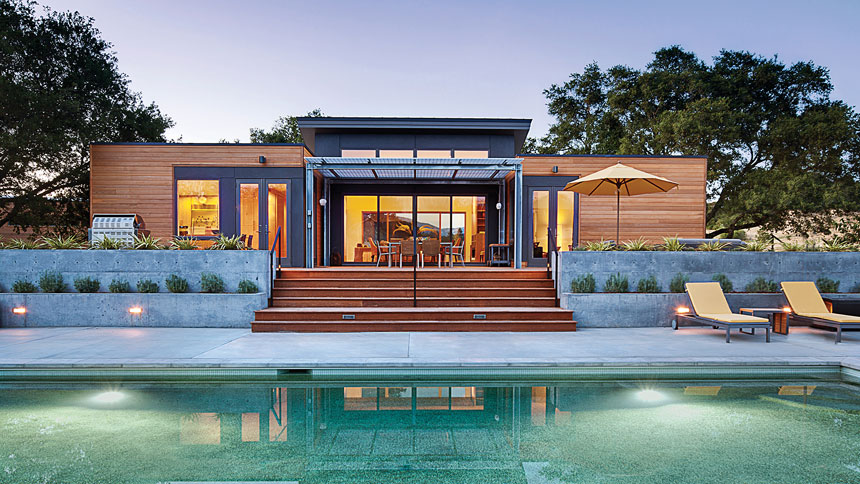
 Why should affordable Dream Homes be limited to Barbie dolls? Design your own fantasy shack from the comfort of your keyboard with California-based Blu Homes – makers of fully customizable, prefab, green housing.
Tap into their “Configurator” software (link here) and choose one of their nine basic models of 1- and 2-story buildings. Then, move through your prototype room by room, choosing built-in furnishings, finishes, and colors. All Blu Homes are LEED Silver certifiable, with most material options are made from recycled materials. Their website claims that Blu prefabs will drop household energy consumption by 50-70%.
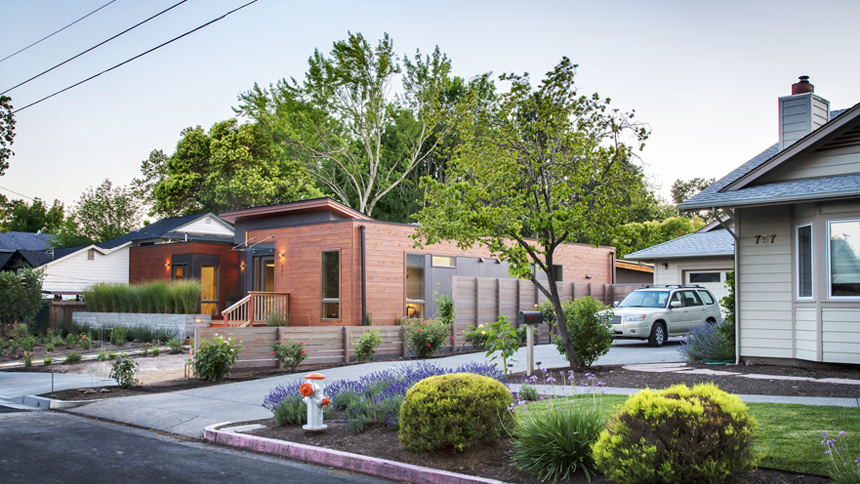 Just click to customize every detail. Add outdoor decks with built-in stereo speakers, or fireplaces and refrigerated wine cabinets – then delete them if you don’t like the look. (Use the same computer skills you’ve honed playing Sims or Club Penguin!) Developed by professional architects, the predesigned building components ironically remove the architect from the design process.
Be warned, you might lose hours playing here.
 If you stop fiddling around and really get serious, the purchase process is simple. First, set up your ideal design and complete a brief survey about your requirements. Blu will then link you with a design team which includes the people who actually factory-craft the house. On-site installation takes only two days.
[youtube]http://youtu.be/QI5kduY6gIk[/youtube]
Prices for the smallest model (1 bedroom, 461 square feet) start at $155,000.
Load up larger models with luxe add-ons and you’re quickly in the $700,000 ballpark. Factor in land costs and site prep and realize this design/build method saves time, but not much money.
But prefabs tend to be more energy efficient and easier to maintain than conventional homes, so lowered operation and maintenance costs will – in the long run – help recoup your initial investment.
Prefab buildings are inherently greener than their site-built cousins as construction within controlled factory conditions reduces waste and allows for shorter time to complete work.
Designed for sustainable certification, all Blu Homes feature:
- Structural steel framing made of up to 90% recycled content (and, in turn,100% recyclable)
- Forest Stewardship Council certified and sustainably farmed hardwood flooring options
- Maximized natural light using proper solar orientation and architectural design
- Energy-efficient lighting and appliances
- Low-flow fixtures on faucets, shower heads and sinks
- Low or no VOC paints and finishes, always formaldehyde-free
- High performance insulation made with recycled content and soy-based binders
- Hard floor surfaces with radiant heating to protect against allergens and molds
Middle East prefab manufacturers have been around for decades. Most (such as Super Fab and Extraco) are largely focused on temporary shelters, commonly used for construction site offices, labor camps – and in recent years – emergency refugee housing. Iraqi Prefab has moved into fast-food facilities,and Gulf Prefab offers prefab mosques, schools and resort applications.
But so far none have offered a fun function like Blu Homes’ “Configurator”, which may be the perfect tool to test if a lean, green living machine is the best place for you to hang your hat.
Images from Blu Homes



I love going green and I love this house too, this is actually my dream design of a house. Simple yet elegant!
[…] Design your own LEED energy efficient dream green prefab with Blu. Learn how here. […]