

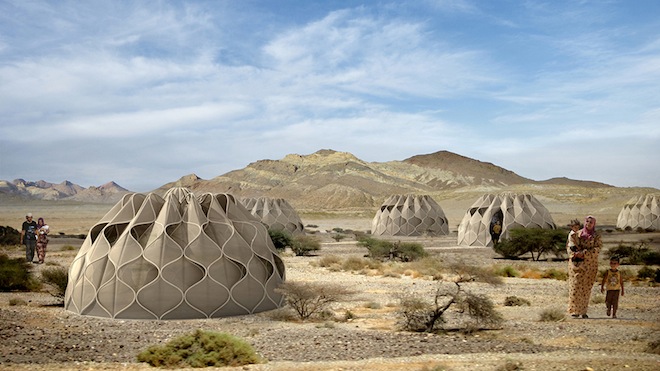
Refugees like those who have fled Syria or Sudan or… spend on average twelve years in a temporary home, which got us thinking: what makes a good shelter? With climate change creating more refugees, the answer isn’t simple:
A robust, durable structure may be costly and hard to ship, while tents that are easy to ship en masse can be shredded in rough weather. And we need to think about the ecological aspect. Join us as we weigh the pros and cons of 10 refugee shelters:
In our analysis of different refugee shelters, we have included structures that have already been used first, and then added a few interesting concepts at the end. While the latter half have yet to be proven in the “real world,” it’s worth thinking about ways to improve existing shelters in order to ensure that refugees have the best quality of life possible. They deserve to have a home, even if it is temporary, that allows them to rebuild their lives.
1. IKEA’s solar-powered flatpack prefab refugee shelter
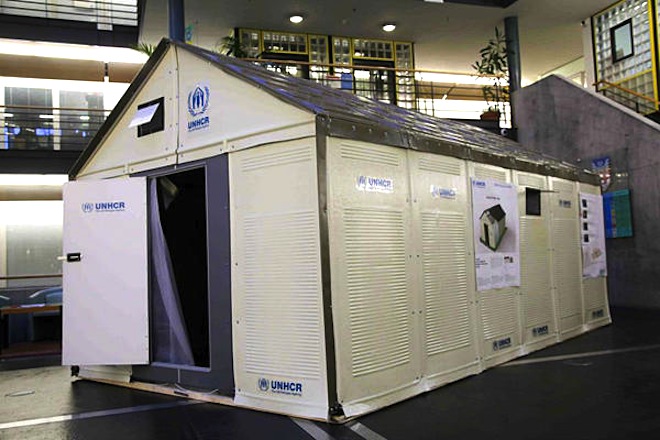
IKEA teamed up with the UNHCR to develop a solar-powered flatpack shelter that could be easily deployed to refugee camps or scenes of natural disasters. These are durable and provide ample security, as well as electricity that allow children to learn after dark and their parents to work.
Once in mass production, they should only cost $1,000 each, they house five people, and they only weigh 100kg. Downside? The shelters are only designed to last a few years (though that is common in refugee housing, which is not supposed to be a permanent solution, and also common in IKEA’s reason for being!) and aesthetically they aren’t so pleasing.
2. Stackable Exo emergency refugee shelters
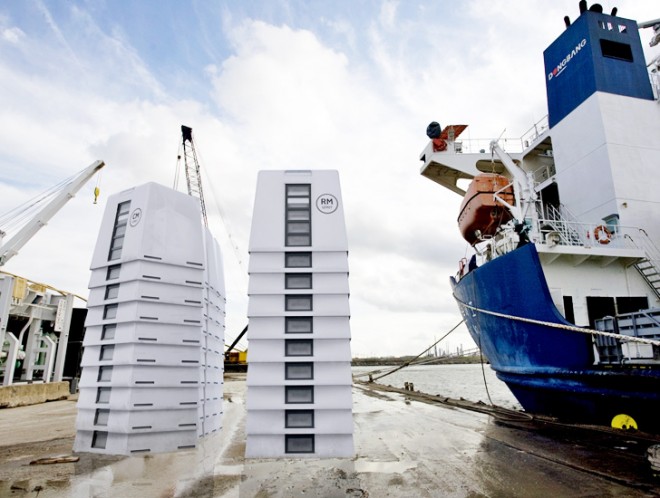
That they are stackable (like styrofoam cups, their inspiration) comprise the main benefit of Reaction Housing’s Exo emergency shelters because that allows for easy transportation. They are also solar-powered and insulated, and they are secure, which is a huge must in disaster situations.
Made of aircraft-grade aluminum, they are durable, which means they should last, and they can be reused. The main downside to this design is size. Albeit just 80 square feet, they can fit up to four people in bunk beds, but they don’t allow for much else. Plus, they are currently very costly.
3. UNHCR’s lightweight, temporary tent shelters

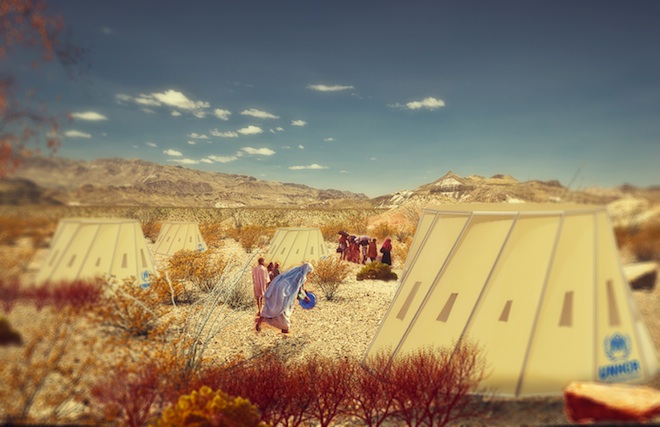
I’ve included the two kinds of shelters that are most commonly deployed in this list in order to demonstrate what is actually practical in the field. The UN refugee agency uses two kinds of refugee structures and this is the more lightweight, temporary option.
While cheap and easy to ship en masse, as you can see above, they offer very little comfort and are easily destroyed. These are very basic shelters that simply put some space between refugees and the elements.
Trouble is, with more than 40 million refugees in the world and money scarce, aid agencies can hardly be expected to procure five star housing or glamping. Even so, efforts are constantly made to rethink refugee housing design – as evidenced by the IKEA prefab.
4. UNHCR’s canvas tents

These canvas tents are designed to last quite a bit longer than the emergency refugee shelters and are the most common variety deployed in refugee camps. This particular image was taken at the Dadaab camp in Kenya.
At 4×4 meters, they provide more space than the lightweight shelters; also, given that they are made from 50 percent cotton and 50 percent polyester canvas, they are both more durable and waterproof. But they aren’t very livable, have no partitions, no electricity. UNHCR pays manufacturers in India and Pakistan about $195 for one of these.
5. Nader Khalili’s buildings fit for space

While not commonly used, Nader Khalili’s earth buildings, which were originally designed with NASA to be used in space make great emergency housing. We love Nader, as he thinks about the soul elements of the person in these structures.
Constructed with sacks of earth stacked on top of one another in a circular plan and then covered in earth. These shelters rely on local materials, local labor, are quick and easy to construct and they are literally dirt cheap. These may not be the most suitable solution in tropical climates however – not because they won’t be cool, because they are beautifully insulated, but because it might be hard to find dry soil with which to fill them.
6. Clean Hub refugee shelter
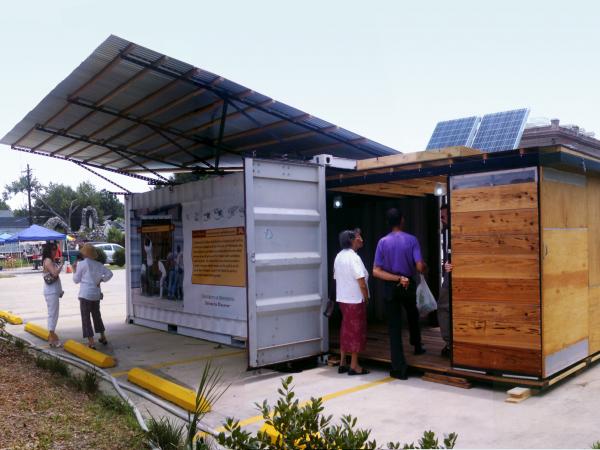
First used in New Orleans after Hurricane Katrina threw the city into absolute mayhem, the Clean Hub refugee shelter (link to organization is no longer working as of Oct., 2019) is built in part from a repurposed shipping container. At 160 square foot, the hub is a portable, self-sustaining source of clean water, electricity and sanitation, and it can be fabricated and shipped anywhere in the world within days.
But it’s very costly at $15,000. Unless they are mass produced so that the price comes right down, this is not a sustainable solution. Maybe take this defunct solution as a model on how to do it better.
7. Ex-Container for refugees
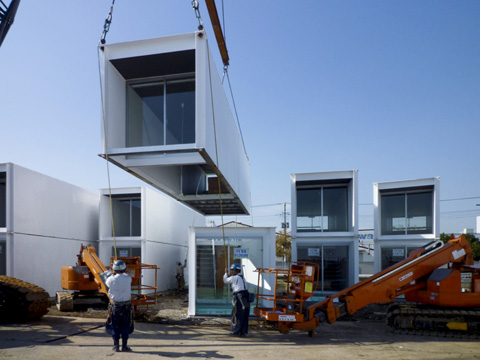
After the earthquake and tsunami hit Japan, local architects designed the Ex-Container, a double story prefabricated tiny home modeled after a 20 foot shipping container. They are rugged, and have a clean, beautiful interior. Unfortunately, the government rejected the company’s efforts to have them widely distributed; seems like another firm won the bid. It is unclear how much these costs.
And well, there are so many problems with container housing over all – read our in-house architect’s take on how terrible containers (cargotecture!) are for the environment. Time to fall out of love with the solution.
Certainly they are cheaper to build than the Clean Hub, but probably not as cheap or as convenient as IKEA’s flatpack homes.
8. Collapsible woven refugee shelters powered by the sun
The first of our conceptual designs, this collapsible woven shelter designed by Abeer Seikaly went viral. Portable and clad in a solar skin that generates electricity, this shelter also harvests and drains rainwater. Designed to give refugees a sense of ownership and dignity in addition to security and self-sufficiency, it is super lightweight.
On the downside, this design might be complicated, which could be a barrier to widespread development, and the solar skin could really amp up costs.
9. Shapeshifting shelter for refugees made by AI
Yahya Ibraheem from Jordan submitted this design Shapeshifting shelter to us. She wrote her thesis about how parametric modeling can be used to improve refugee shelters, and in so doing, generated a few really nice features that make a lot of sense. Parametric modelling uses the computer to design objects or systems that model component attributes with real world behaviour.
This refugee tent can be customized to fit different sized families and different climate conditions and the interior can be partitioned to make different rooms, such as bedrooms, bathrooms or kitchens.
Still very much in its infancy stage (Ibraheem has yet to address the materials that might be used or what it might cost to produce this design), it is unlikely to be used in real-world applications, but it does make some very serious thought breakthroughs that could be useful to aid agencies.
10. Life Box for refugee shelter
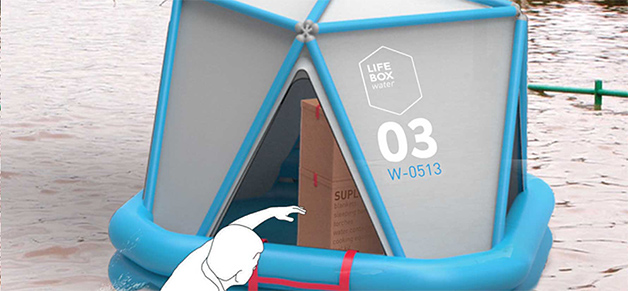
We really love the idea of the Life Box in part because it is suits different needs in different situations. There are three kinds – ‘air’, ‘land’ and ‘water,’ and just like it sounds, they all come right out of a box.
The ‘air’ type refugee box is used for disaster areas that can be only reached by aircraft, and the outer layer is used as parachute during airdropping.
The ‘land’ type refugee box can be used in areas that are reachable by road, but its outer layer is placed inside the box.
The ‘water’ life box is designed specifically for flood-affected areas, and can be used on land and water. The Life Box has won a Red Dot Design award two years running and it’s easy to see why.
In addition to being easy to ship, lightweight, the four-person shelter even contains provisions! It’s a great short term solution, but it wouldn’t be great to live in this for more than a couple of days.


Just really so tired of all these refugees. What are their beleifs? If its islam, they signed up for hell anyway. Hand out birth control. Wtf else is there to do with brainwashed cultists?
Thank you for publishing this comparison. Very helpful.