Middle East Deserts as Seen From Space: Far-Out Photos!

Middle East sand dunes The European Space Agency (ESA) publishes satellite photos of Earth (and photos of space taken from Earth) in an incredible archive that’s updated weekly. Each image is paired with a brief explanation about what you’re looking at. Check out this selection – if the Middle East and North Africa (MENA) could take “selfies”, these would definitely be on its Facebook page.

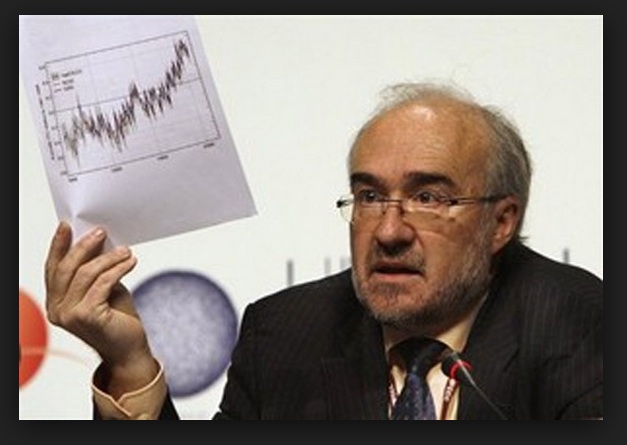
The curving clays and sand soils of Iran’s salt desert,  Dasht-e Kavir, can be seen in this shot (above) from the Ikonos-2 satellite. According to the ESA, satellites can directly identify different minerals and recognize large-scale geological structures related to mineral deposits that are undetectable by ground-based surveys. Iran is one of the world’s most important mineral producers.
Libya Al Jawf oasis

The Sahara Desert comprises most of Libya, leaving only 6% of its land suitable for agriculture. Libya has no permanent rivers or natural inland water bodie. For fresh water, the country relies upon its vast fossil aquifers which formed 10,000 years ago in a very different climate when ancient rivers and lakes were regularly replenished with heavy rains. Water saturated subsurface sandstone, penetrating as deep as 4 km, forming the enormous underground water basins that now supply Libya’s water.

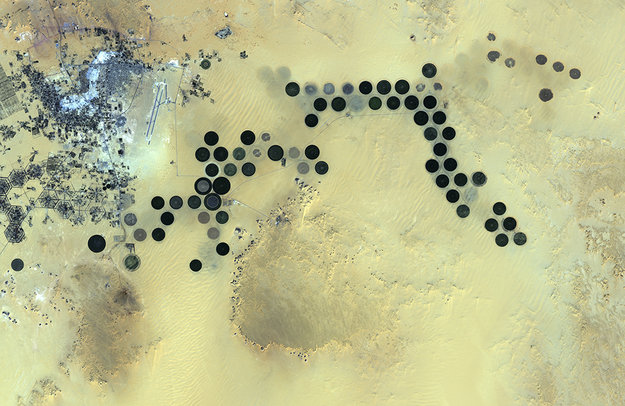
The Al Jawf oasis (pictured above) in southeastern Libya lies deep in the Sahara. The city appears in the upper left corner, and the Braille-like dots are irrigated agricultural plots often a kilometer-wide.  Their circular shapes result from central-pivot irrigation systems, where a long water pipe rotates around a well at the center of each farm. The area receives almost no rainfall, and relies solely on fossil water pumped from deep underground.

Japan’s Advanced Land Observing Satellite (ALOS) captured this image with its Advanced Visible and Near Infrared Radiometer type-2, which charts land cover and vegetation in the visible and near-infrared spectral bands at a resolution of 10 m.
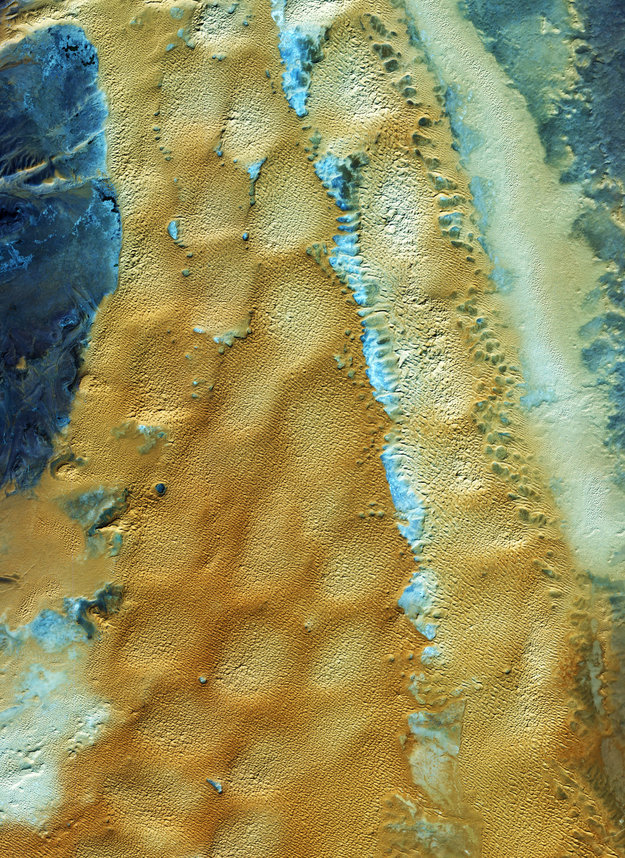
Algerian sand dunesThis image from the Ikonos-2 satellite shows the sandy and rocky terrain of the Sahara desert in western Algeria, Africa’s largest country. Major oil and natural gas deposits lie beneath the desert, which comprises 90% of the nation’s landmass, underpinning Algeria’s position as one of Africa’s wealthiest countries.

The closest town to the area pictured above is Taghit in the province of Béchar. The town’s economy is built on tourism, with travelers drawn to the area’s large sand dunes – the main feature of the Sahara’s Grand Erg Occidental, a enormous sea of rolling sand formations.

Taghit National Park was established in 2007 to curb advancing desertification and protect wildlife. The project seeks to guard grasslands, restore palm groves, and reforest degraded land. The region receives less than 25 cm of rainfall per year.

This image was acquired at a spatial resolution of 4 m by the commercial Ikonos-2 satellite.

Check out the ESA archives for more stunning photography, but be warned, it’s addictive.

All images from the European Space Agency

1 COMMENT

LEAVE A REPLY

Please enter your comment!
Please enter your name here

TRENDING

This stunning ancient citadel in the Sahara Desert Has a mysterious past

Today, the Rock Round Palace stands as a historical site, a reminder of the diverse cultural heritage that once thrived in the region. Videos circulating on Youtube suggest that anyone off the street can wander inside and around the citadel suggesting it's not being protected well for future generations.

What is Land “COP” in Saudi Arabia and why should we care?

The UN COP events aren't only about climate change. There is a COP for the land and the meeting is happening now in Saudi Arabia.

Holding back the deserts with a saxaul tree

Africa is getting its Great Green Wall, meanwhile Saudi Arabia is also suffering from climate change-induced draught and is starting to do something about it by planting more local trees that love the desert.

Africa’s Great Green Wall works!

Africa’s Great Green Wall (GGW) programme to combat desertification in the Sahel region is not only crucial to the battle against climate change but also makes commercial sense for investors, a new study led by the Food and Agriculture Organization of the United Nations (FAO) and published in Nature Sustainability shows.

UN applies agricultural tech innovation to improve drought resilience for farmers

Today is World Day to Combat Desertification and Drought celebrations, and the FAO's Graziano da Silva said:  "It is quite impossible to avoid a drought from happening, but we can avoid a drought turning into famine or displacement of people."

Qatar’s climate hypocrisy rides the London Underground

Qatar remains a master of doublethink—burning gas by the megaton while selling “sustainability” to a world desperate for clean air. Wake up from your slumber people.

How Quality of Hire Shapes Modern Recruitment

A 2024 survey by Deloitte found that 76% of talent leaders now consider long-term retention and workforce contribution among their most important hiring success metrics—far surpassing time-to-fill or cost-per-hire. As the expectations for new hires deepen, companies must also confront the inherent challenges in redefining and accurately measuring hiring quality.

8 Team-Building Exercises to Start the Week Off 

Team building to change the world! The best renewable energy companies are ones that function.

Thank you, LinkedIn — and what your Jobs on the Rise report means for sustainable careers

While “green jobs” aren’t always labeled as such, many of the fastest-growing roles are directly enabling the energy transition, climate resilience, and lower-carbon systems: Number one on their list is Artificial Intelligence engineers. But what does that mean? Vibe coding Claude? 

Somali pirates steal oil tankers

The pirates often stage their heists out of Somalia, a lawless country, with a weak central government that is grappling with a violent Islamist insurgency. Using speedboats that swarm the targets, the machine-gun-toting pirates take control of merchant ships and then hold the vessels, crew and cargo for ransom.

Leopoldo Alejandro Betancourt López Turned Ocean Plastic Into Profitable Sunglasses

Few fashion accessories carry the environmental burden of sunglasses. Most frames are constructed from petroleum-based plastics and acrylic polymers that linger in landfills for centuries, shedding microplastics into soil and waterways long after they've been discarded. Leopoldo Alejandro Betancourt López, president of the Spanish eyewear brand Hawkers, saw this problem differently than most industry executives.

Why Dr. Tony Jacob Sees Texas Business Egos as Warning Signs

Everything's bigger in Texas. Except business egos.  Dr. Tony Jacob figured...

Israel and America Sign Renewable Energy Cooperation Deal

Other announcements made at the conference include the Timna Renewable Energy Park, which will be a center for R&D, and the AORA Solar Thermal Module at Kibbutz Samar, the world's first commercial hybrid solar gas-turbine power plant that is already nearing completion. Solel Solar Systems announced it was beginning construction of a 50 MW solar field in Lebrija, Spain, and Brightsource Energy made a pre-conference announcement that it had inked the world's largest solar deal to date with Southern California Edison (SCE).

Related Articles

Popular Categories