Red Tide Blooms Threaten Gulf of Oman, Shut Down Kalba Desalinization Plants

dead fish on beach red tideIs red tide a man-made pollutant or a natural phenomenon? Is it a plant, animal or chemical? The answer is all of the above.

The United Arab Emirates Ministry of Environment and Water indicates that red tide may be present in the waters of the Gulf  of Oman. As a precautionary measure, Sharjah Electricity and Water Authority (SEWA) shut down some desalinization plants in Kalba.

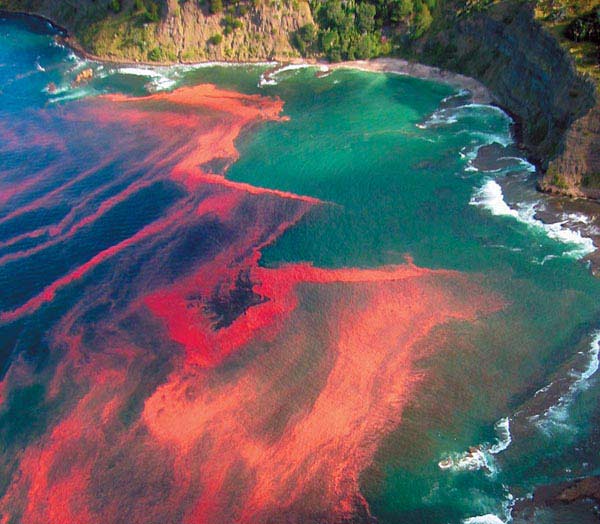
Red tide is caused by a population explosion in certain species of plankton. The poison these microorganisms produce is usually reddish or brown in color and is toxic to the nervous system of fish and many other vertebrates. Red tide outbreaks can cause large fish die-offs and impact other animals. A red tide in the Eastern Gulf of Mexico recently killed at least 174 endangered Florida Manatees by weakening their muscles so they could no longer lift their heads to breath. Red tide does not necessarily kill shrimp and other shellfish, but its toxin is concentrated in these animals and can be passed on to humans who consume them.
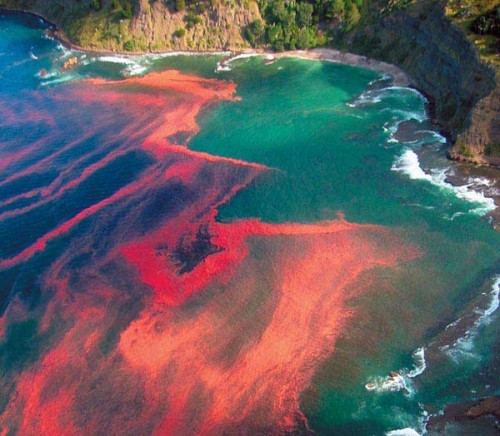
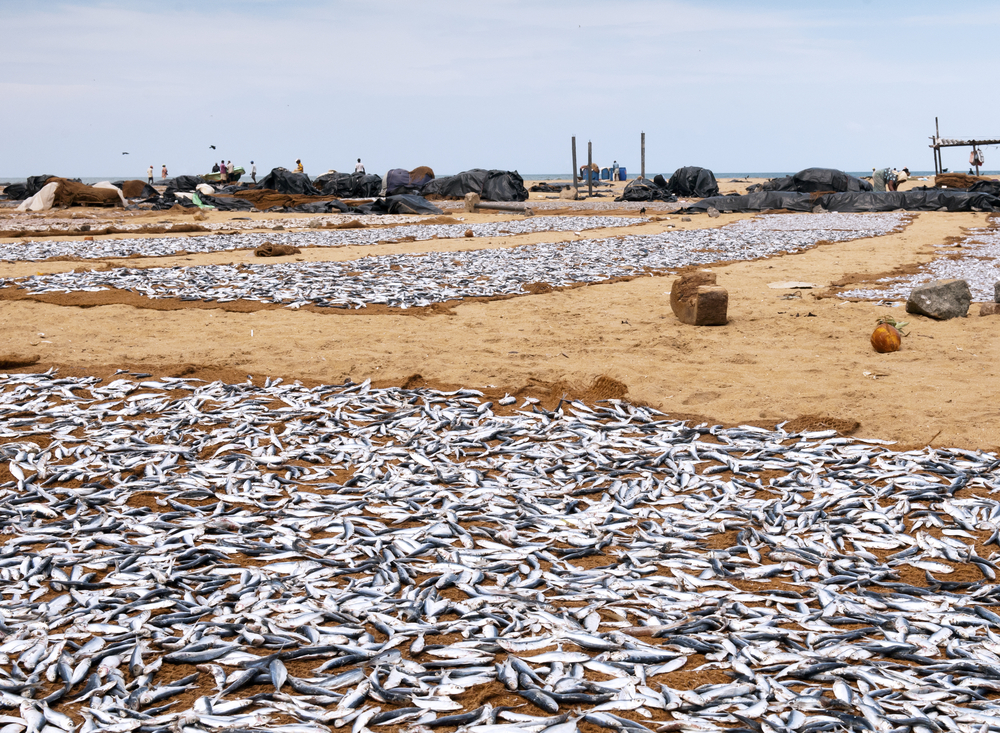
red tide iranYou might first notice red tide by the rancid smell of dead fish strewn across the beach and water. The sea turns a reddish-brown and then you begin to cough and then notice that others around you are also coughing and wheezing. You might have a wonderful shellfish meal and later succumb to a poison that may require hospitalization. Red tide kills fish, damages human health and economies.

I experienced the effects of a lingering red tide outbreak in the eastern Gulf of Mexico during the early 1990s. It infected my eyes and skin. Breaking waves would spray the toxin into the air, causing respiratory problems for people who lived near the sea. Friends wondered if red tide was a man-made pollutant or a natural phenomenon? Is it a plant, animal or chemical? The answer is all of the above.

Red tide is caused by living microorganisms known as dinoflagellates. These creatures sound like the invincible super monster of the sea. Like a plant they are capable of photosynthesis, but they can also move through the water, poison animals, capture prey, glow in the dark and go dormant for years before blooming back to life.

They can also reproduce and multiply into enormous numbers. The Red Sea may have taken its name from the red tide produced by a microorganism named Trichodesmium  erythraeum and some scholars believe red tide fits the description of the first biblical plague in Exodus where the Nile river turned to blood.

Red tide has been a part of the ocean ecosystem for millennia, but by providing dinoflagellates with the nitrogen and phosphorus fertilizer, people have tipped the balance in favor of red tide blooms. Blooms in the Middle East seem to be associated with winter storms which blow dust from the land into the sea. Nutrients from this dust spark the population explosion which leads to the red tide.

Photo of dead fish on beach via shutterstock

Red tide image credit: Carleton College


Brian Nitz
Brian Nitzhttp://www.greenprophet.com
Brian remembers when a single tear dredged up a nation's guilt. The tear belonged to an Italian-American actor known as Iron-Eyes Cody, the guilt was displaced from centuries of Native American mistreatment and redirected into a new environmental awareness. A 10-year-old Brian wondered, 'What are they... No, what are we doing to this country?' From a family of engineers, farmers and tinkerers Brian's father was a physics teacher. He remembers the day his father drove up to watch a coal power plant's new scrubbers turn smoke from dirty grey-back to steamy white. Surely technology would solve every problem. But then he noticed that breathing was difficult when the wind blew a certain way. While sailing, he often saw a yellow-brown line on the horizon. The stars were beginning to disappear. Gas mileage peaked when Reagan was still president. Solar panels installed in the 1970s were torn from roofs as they were no longer cost-effective to maintain. Racism, public policy and low oil prices transformed suburban life and cities began to sprawl out and absorb farmland. Brian only began to understand the root causes of "doughnut cities" when he moved to Ireland in 2001 and watched history repeat itself. Brian doesn't think environmentalism is 'rocket science', but understanding how to apply it within a society requires wisdom and education. In his travels through Europe, North America, Asia and the Middle East, Brian has learned that great ideas come from everywhere and that sharing mistakes is just as important as sharing ideas.
2 COMMENTS

Comments are closed.

TRENDING

Luxury meets the textile waste stream with Coach – Bank & Vogue

A new collaboration between luxury brand Coach and textile reuse pioneer Bank & Vogue attempts to stitch those two worlds together: high fashion and the global textile waste stream.

Fishermen sue tire manufacturers on behalf of the salmon

A federal trial in San Francisco has brought US tire manufacturers, fishing groups, and environmental scientists into court over a chemical most drivers have never heard of — but which scientists say may be silently reshaping aquatic ecosystems.

Factors That Determine the Payout of Asbestos Cases

Asbestos is found in eye shadow and talc. Know your rights of this deadly environmental hazard.

Your Sweat is Unlocking Toxins in Plastic—Here’s Why Natural Fibers Matter

Natural fibers like organic cotton, hemp, and wood-based fabrics such as Tencel and modal offer a safer, breathable alternative to synthetic materials. These fabrics don’t shed microplastics, don’t contain toxic flame retardants, and allow your skin to breathe without the risk of chemical exposure.

Selling your Tesla for a conventional car? Think of the silent pollutant

By choosing an electric car, you’re not just supporting a brand or a CEO. You’re making a statement about the future you want to create. A future with cleaner air, healthier communities, and less pollution. You’re helping reduce harmful brake dust, which poses a hidden health risk to millions of people. And you’re reducing the demand for fossil fuels, contributing to a broader movement toward renewable energy and environmental sustainability.

Turning Your Energy Consultancy into an LLC: 4 Legal Steps for Founders in Texas

If you are starting a renewable energy business in Texas, learn how to start an LLC by the books.

Tracking the Impacts of a Hydroelectric Dam Along the Tigris River

For the next two months, I'll be taking a break from my usual Green Prophet posts to report on a transnational environmental issue: the Ilısu Dam currently under construction in Turkey, and the ways it will transform life along the Tigris River.

6 Payment Processors With the Fastest Onboarding for SMBs

Get your SMB up and running fast with these 6 payment processors. Compare the quickest onboarding options to start accepting customer payments without delay.

Qatar’s climate hypocrisy rides the London Underground

Qatar remains a master of doublethink—burning gas by the megaton while selling “sustainability” to a world desperate for clean air. Wake up from your slumber people.

How Quality of Hire Shapes Modern Recruitment

A 2024 survey by Deloitte found that 76% of talent leaders now consider long-term retention and workforce contribution among their most important hiring success metrics—far surpassing time-to-fill or cost-per-hire. As the expectations for new hires deepen, companies must also confront the inherent challenges in redefining and accurately measuring hiring quality.

8 Team-Building Exercises to Start the Week Off 

Team building to change the world! The best renewable energy companies are ones that function.

Thank you, LinkedIn — and what your Jobs on the Rise report means for sustainable careers

While “green jobs” aren’t always labeled as such, many of the fastest-growing roles are directly enabling the energy transition, climate resilience, and lower-carbon systems: Number one on their list is Artificial Intelligence engineers. But what does that mean? Vibe coding Claude? 

Somali pirates steal oil tankers

The pirates often stage their heists out of Somalia, a lawless country, with a weak central government that is grappling with a violent Islamist insurgency. Using speedboats that swarm the targets, the machine-gun-toting pirates take control of merchant ships and then hold the vessels, crew and cargo for ransom.

Related Articles

Popular Categories