

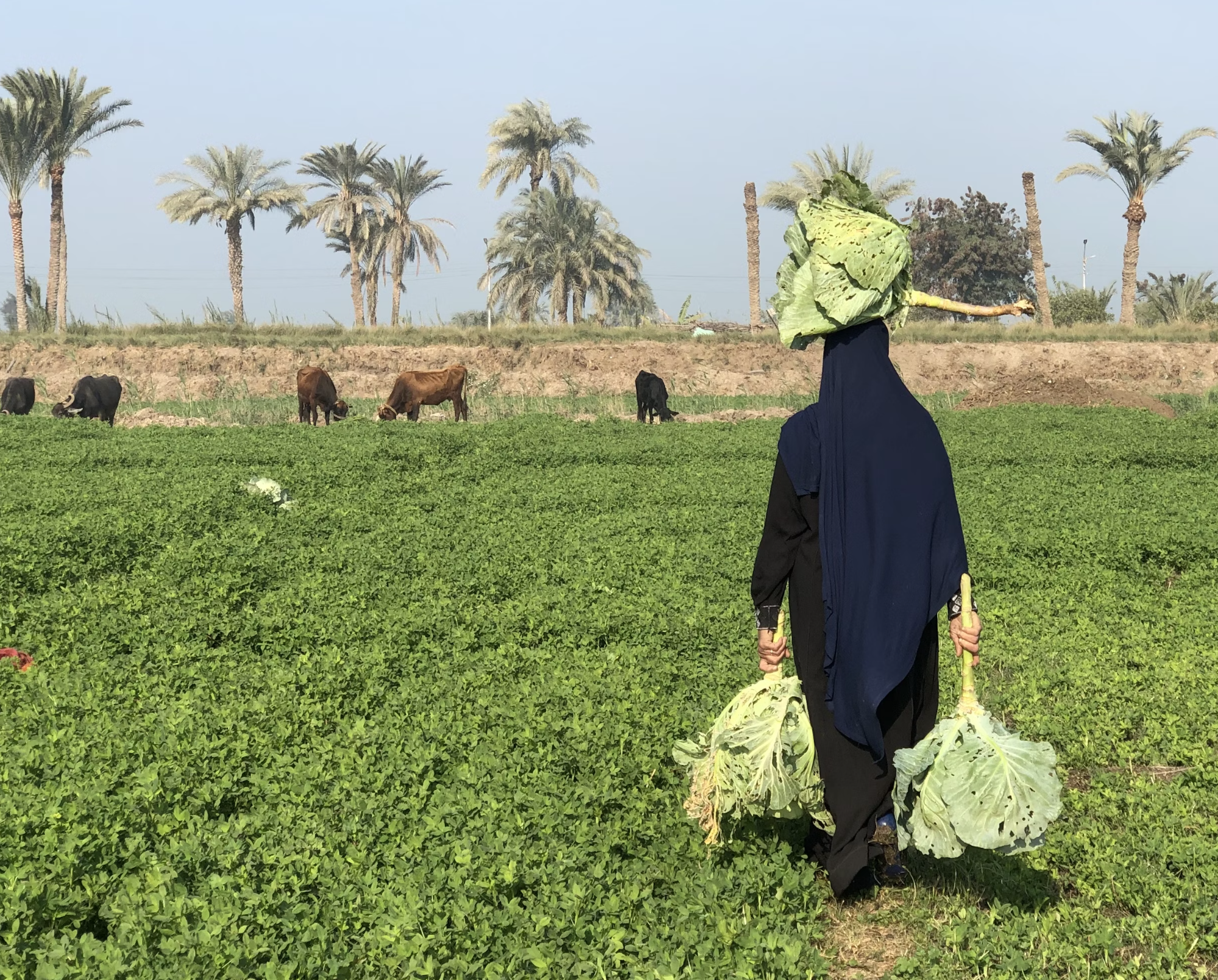
Saudi takes the Nile to feed grass-fed cows

Saudi Arabia land grab water
Saudi Arabia is taking water from the Nile to grass-feed their cows in air conditioning

Land grabs are old news, but National Geographic has taken a closer look at Saudi’s African interests in particular and the resulting story is startling. The world’s favorite nature magazine visited two massive dairy farms, including the world’s largest, that were built in one of the driest and hottest parts of earth – roughly 100 miles southeast of Riyadh. Here, Friesian cows survive amid temperatures of up to 110 degrees fahrenheit.

The cows raised at the Al Safi and Almarai farms live better than some humans in air-conditioned sheds and water misters that keep them cool. But feeding them with grain grown nearby has depleted 4/5th of the Kingdom’s ancient aquifer in the last 30 years. For milk. The farms are facing closure as a result of water shortages, but instead of giving up altogether, the Saudis are buying up land and water elsewhere – including the already vulnerable Nile.

Water is free to farmers in Saudi Arabia so they have no incentives to use less or to conserve at all.

The Nile was apportioned in 1929 by colonial powers, an issue that has created great tension among Nile River Basin countries in the last few years. Egypt relies almost entirely on this river for its population’s survival, but upstream countries feel that they have been shortchanged by that country’s monopoly.

Ethiopia has been particularly vociferous, though the main instigator of a slew of new damns and hydroelectricity projects, former Prime Minister Meles Zenawi, died in August, 2012. But not before allowing Saudi Star, owned by Sheikh Mohammed Ali Al Amoudi, to purchase large tracts of land near the headwaters of the Nile in Gambela.

Member of the local Anuak Tribe talked to National Geographic about the firm’s usurpation of land and water. At the time of writing, the company was digging a canal to drain nearby wetlands and their 24,711 acre relies on a reservoir built in the 1980s by Soviet engineers.

Tribesmen told the magazine that they intended to farm their ancestral land anyway. When they moved in to do so, gunmen shot and killed several Saudi Star workers, unleashing a vicious government crackdown in the nearby villages.

Men were killed, women were raped. Many people fled to neighboring Southern Sudan.

The Saudi government offers shiny incentives for firms to seek out arable land outside of the Kingdom. According to National Geographic, the King Abdullah Initiative for Saudi Agricultural Investment Abroad has catalyzed projects as far afield as Senegal River in West Africa and Indonesian New Guinea.

And the reason? The Saudis are concerned to secure a steady food supply in the decades to come now that their own resources are depleted as a result of chronic mismanagement. Other Gulf countries such as Abu Dhabi are pursuing a similar track.

Meanwhile, several reports show that Gulf Arabs are among the fattest people on earth, which begs the question: will Saudi, Abu Dhabi, Kuwait and Qatar purge other resources the way they destroyed their own in order to satisfy their overgrown waistlines?
 

Tafline Laylin
Tafline Laylinhttp://www.greenprophet.com
As a tour leader who led “eco-friendly” camping trips throughout North America, Tafline soon realized that she was instead leaving behind a trail of gas fumes, plastic bottles and Pringles. In fact, wherever she traveled – whether it was Viet Nam or South Africa or England – it became clear how inefficiently the mandate to re-think our consumer culture is reaching the general public. Born in Iran, raised in South Africa and the United States, she currently splits her time between Africa and the Middle East. Tafline can be reached at tafline (at) greenprophet (dot) com.
1 COMMENT
  1. I am not sure what the intent of this article is. But since you are on a roll taking about the futile ways the nile water is being used, why don’t you start will the acres of golf clubs the lawns of rich egyptians it is used for in Egypt. Certainly using the water to feed other humans is more important use of the water than golf courses and Lawn beautification.
    Also, keep in mind that any sovereign country, such as ethiopia, has a right to use its resources however it sees fit. As for the colonial treaty you seem to be enamoured about, it does not apply to us since we were never colonized and we did not agree to such a deal.
    In conclusion, we don’t need anyone sticking their noses in matters that don’t concern them. Why don’t you focus on your European problems. Leave ethiopia to the Ethiopians. Thank you very much.

LEAVE A REPLY

Please enter your comment!
Please enter your name here

TRENDING

Ethiopians are Looking to Somaliland for Red Sea Access as Global Powers Move In

Somaliland, for its part, has operated as a de facto independent state since 1991. It has its own government, elections, currency, and security forces. It’s often described as one of the more stable and democratic political systems in the region, despite never being formally recognized internationally. 

Egypt overhauls its irrigation system in anticipation of losing the Nile

Egypt’s irrigation system has roots in millennia-old techniques, from Aswan Dam regulation to historic canal networks. The current program builds on this heritage, blending tradition with pressure-based systems and digital monitoring. Watch developments on the GERD dam opening this year from Ethiopia as water volume from the Nile that goes to Egypt may drop dramatically. 

Cocoa, coffee and tea push up global food import bill for wealthy countries

The global import food import bill is expected to...

Ethiopia and Wenchi Lake nature reserve

Lake Wenchi in a nature reserve outside of Addis Ababa is paradise on earth. Things are going to change when Ethiopian Airlines opens its "eco resort". Will the villagers be able to cope with change? Will the nature?

Egypt is protecting its people and its economy from the devastating impacts of sea-level rise

Children run after each other with kites flying along...

6 Payment Processors With the Fastest Onboarding for SMBs

Get your SMB up and running fast with these 6 payment processors. Compare the quickest onboarding options to start accepting customer payments without delay.

Qatar’s climate hypocrisy rides the London Underground

Qatar remains a master of doublethink—burning gas by the megaton while selling “sustainability” to a world desperate for clean air. Wake up from your slumber people.

How Quality of Hire Shapes Modern Recruitment

A 2024 survey by Deloitte found that 76% of talent leaders now consider long-term retention and workforce contribution among their most important hiring success metrics—far surpassing time-to-fill or cost-per-hire. As the expectations for new hires deepen, companies must also confront the inherent challenges in redefining and accurately measuring hiring quality.

8 Team-Building Exercises to Start the Week Off 

Team building to change the world! The best renewable energy companies are ones that function.

Thank you, LinkedIn — and what your Jobs on the Rise report means for sustainable careers

While “green jobs” aren’t always labeled as such, many of the fastest-growing roles are directly enabling the energy transition, climate resilience, and lower-carbon systems: Number one on their list is Artificial Intelligence engineers. But what does that mean? Vibe coding Claude? 

Somali pirates steal oil tankers

The pirates often stage their heists out of Somalia, a lawless country, with a weak central government that is grappling with a violent Islamist insurgency. Using speedboats that swarm the targets, the machine-gun-toting pirates take control of merchant ships and then hold the vessels, crew and cargo for ransom.

Leopoldo Alejandro Betancourt López Turned Ocean Plastic Into Profitable Sunglasses

Few fashion accessories carry the environmental burden of sunglasses. Most frames are constructed from petroleum-based plastics and acrylic polymers that linger in landfills for centuries, shedding microplastics into soil and waterways long after they've been discarded. Leopoldo Alejandro Betancourt López, president of the Spanish eyewear brand Hawkers, saw this problem differently than most industry executives.

Why Dr. Tony Jacob Sees Texas Business Egos as Warning Signs

Everything's bigger in Texas. Except business egos.  Dr. Tony Jacob figured...

Related Articles

Popular Categories