Visualizing Migrant Workers’ Rights in Lebanon

Why and how have migrant domestic worker’s rights been violated in Lebanon?

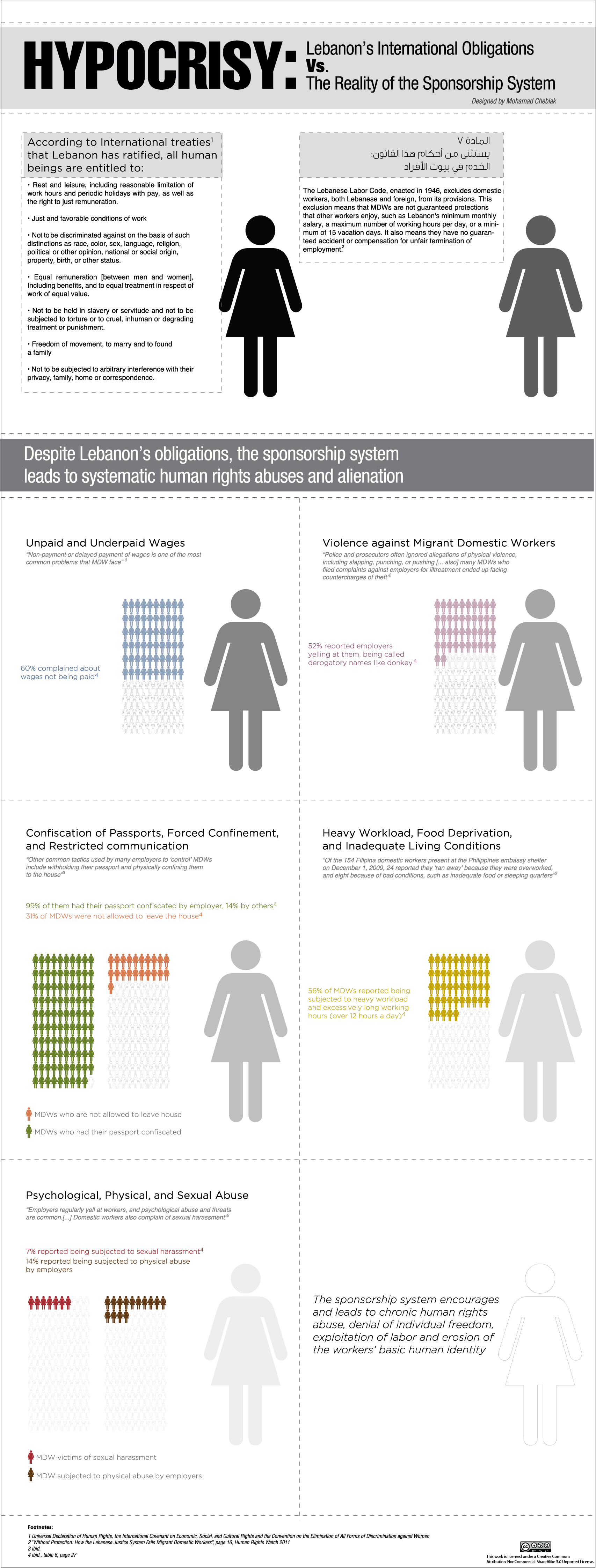
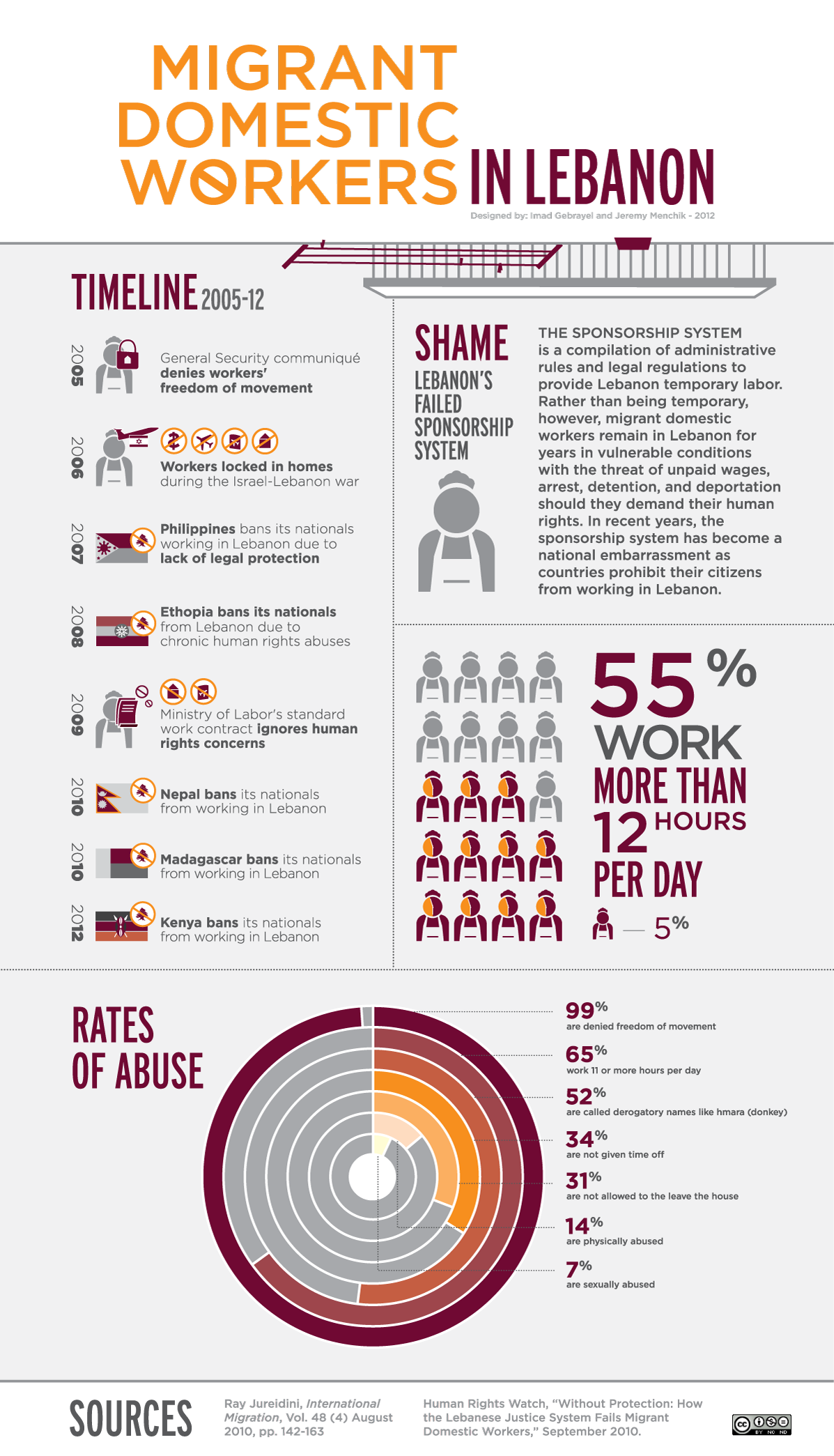
Five decades after the development of the kefala (sponsorship) system, Lebanon’s two-hundred thousand migrant domestic workers continue to be denied central human rights like the right to self-realization which is interlinked with the right to  freedom of movement, just conditions of work and the right to legal recognition.

The issue of domestic violence and the rights of migrant workers in Lebanon has already been covered by Green Prophet, but the origin of such human rights issues has never been fully deconstructed before. Here, for the very first time, the details of how the sponsorship system has brought about such abuses is revealed through a detailed infographic story board designed and researched by AltCity (Dima Saber), the Migrant Worker Task Force (Jeremy Menchik) and graphic designer Joumana Ibrahim.

The team’s work has been central to informing the public about the nitty gritty detail of the sponsorship system developed in the 1950s to provide temporary labor during economic booms, which has become the root cause of perpetuating human rights violations for migrant domestic workers in Lebanon.

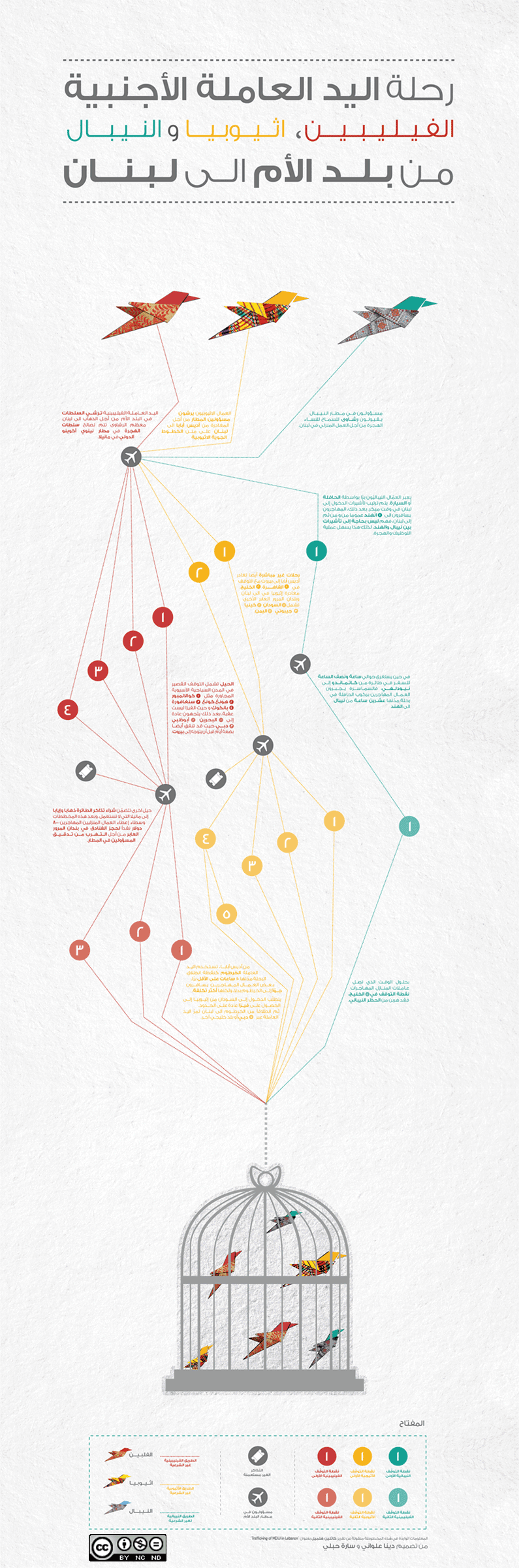
The system ensures that the immigration status of the domestic worker is essentially bound to their sponsor, therefore migrant domestic workers cannot enter the country, transfer employment, travel within the country, or leave the country without permission from their sponsor.

It is common that the sponsor confiscates the worker’s passport and travel documents, restricts their contacts outside the home, and often prevents them from leaving the home entirely.

Migrant domestic workers are thus completely dependent on their sponsor for food, housing, healthcare, wages, leisure, communications, and other basic freedoms. It is no exaggeration to say that this equates to modern day slavery.

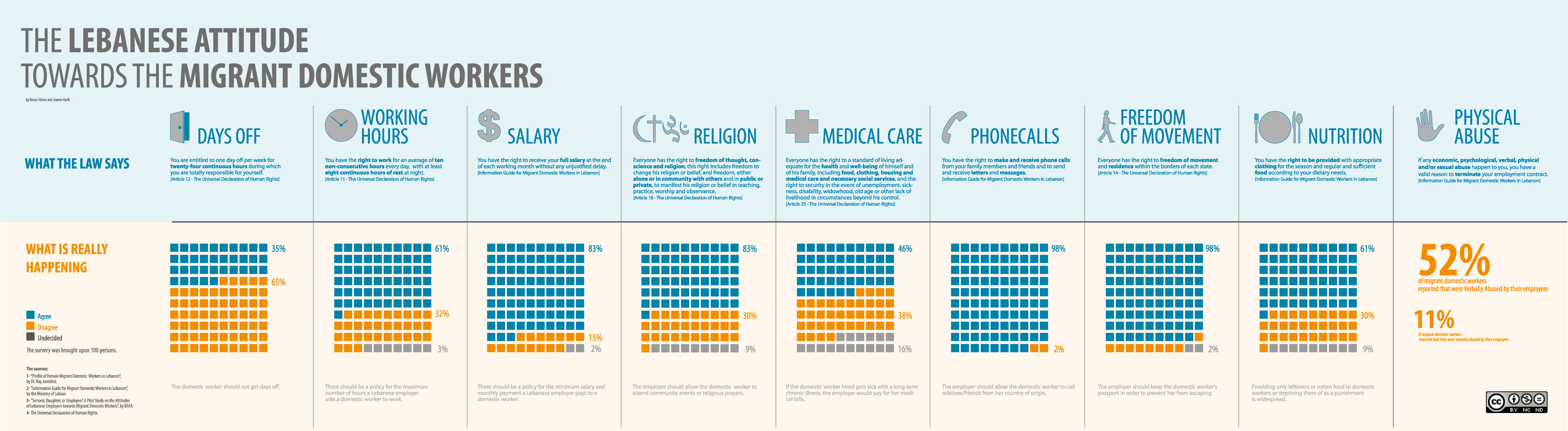
The kefala system violates basic human rights as postulated in the Lebanese constitution and the  Universal Declaration of Human Rights (English, Arabic, Farsi, Hebrew and Turkish) which declare that no one shall be held in conditions of slavery or servitude, cannot be subjected to inhuman or degrading treatment, have the right to work, the right to free choice of employment, the right to just conditions of work.

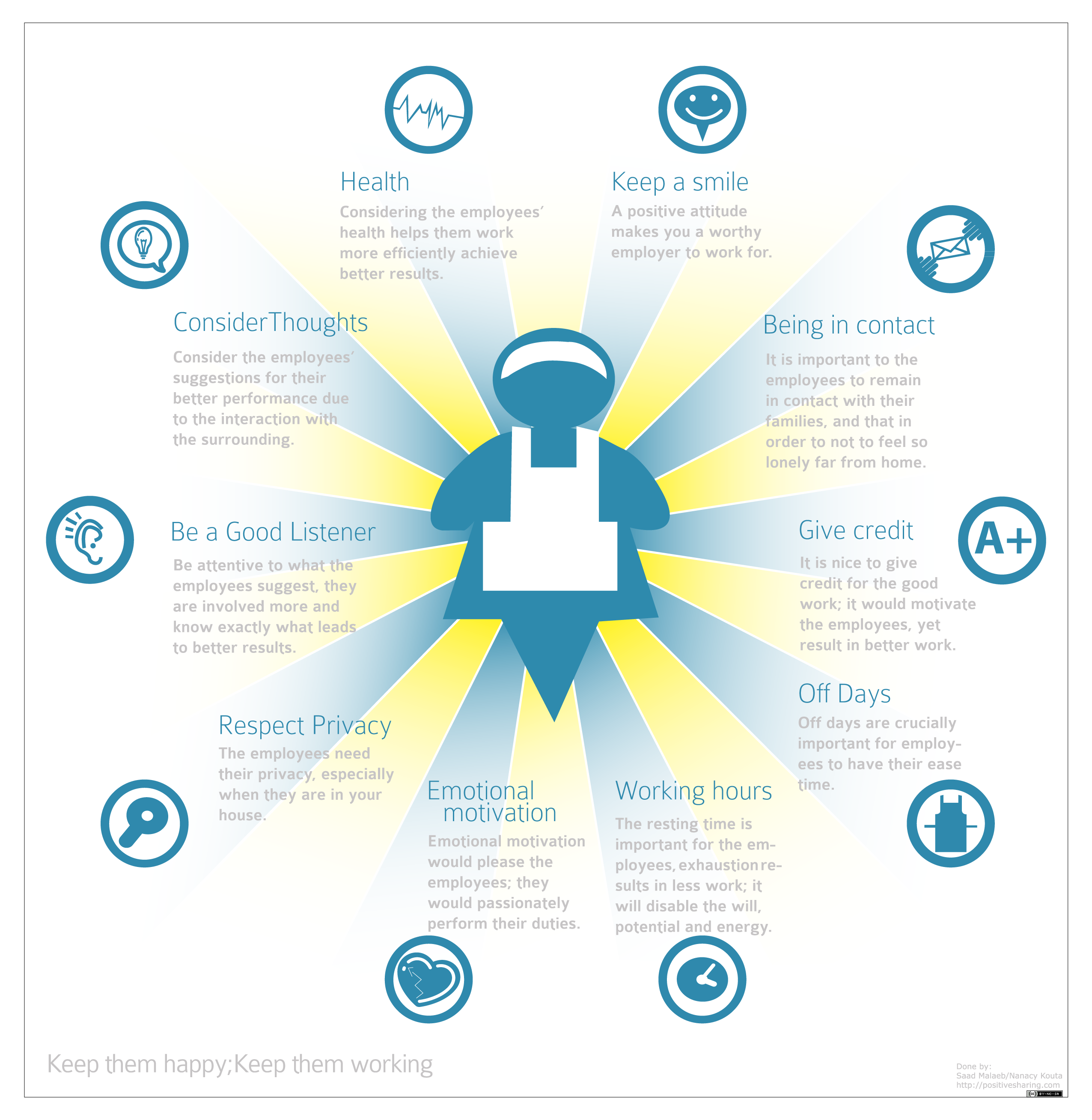
The facts, figures, trends and human rights for migrant domestic workers in Lebanon are clearly revealed through these infographics.
A recent Human Rights Watch’s report shows a justice system with inaccessible complaint mechanisms, lengthy judicial procedures, and restrictive visa policies that dissuade many workers from filing or pursuing complaints against their employers.

Daunted, many of the workers settled for a ticket home, hoping to end their nightmare. This must change.

Infographics images by Imad Gebrayel, Joseph Maalouf, Lucie Momdjian, Dina Alwani, Sarah Habli, Nashaat Jurdy, Dana Halaby, Nancy Kouta, Rita Saad, Bruna Tohme, Reem Ismail, Saad Malaeb, Jeremy Menchik, Mohamad Cheblak and Joanne Harik


Linda Pappagallo
Linda Pappagallohttps://www.greenprophet.com/
Linda's love for nature started when at the age of eight she discovered, with her dog, a magical river in the valley of a mountainous region in Lebanon. For four years Linda and her dog explored along the river, until one day she saw construction scrapers pushing rock boulders down the valley to make way for new construction sites. The rubble came crashing into the river destroying her little paradise, and her pathetic reaction was to shout at the mechanic monsters. Of course that was not enough to stop the destructive processes. As she continued to observe severe environmental degradation across the different places she lived in the Middle East and Africa, these terrible images remained impressed in her mind. However, environmental issues where not her first love. Her initial academic and career choices veered towards sustainable economic development, with particular interest in savings led microfinance schemes. Nevertheless, through experience, she soon realized a seemingly obvious but undervalued concept. While humans can somewhat defend themselves from the greed of other humans, nature cannot. Also nature, the environment, is the main “system” that humans depend on, not economics. These conclusions changed her path and she is now studying a Masters in International Affairs with a concentration in Energy and the Environment in New York. Her interests lie on ecosystems management: that is how to preserve the integrity of an Ecosystem while allowing for sustainable economic development, in particular in the Middle East and Africa.

TRENDING

A lab-created diamond for my forever love

Jewellers cannot tell the difference of origin between a mined diamond and one grown in the lab. Your choice is clear.

Cashews, the solution to methadone and the shocking facts

As with blood diamonds, now we know what blood cashews are.

The Guardian Uncovers Modern Day Slavery in Qatar

Almost as soon as Qatar won the bid to...

Egyptian Government Called to Finally Halt Sexual Assaults Against Women, Amnesty International

Two years after the revolution in Egypt, sexual assaults...

Climate Change to Worsen Migrant Workers’ Lives in Qatar

Trade unionists have used the COP18 discussions in Qatar...

Should You Invest in the Private Market?

startustartup Unlike public stock exchanges, which offer daily trading, strict...

How to build a 100-year-company

Kongō Gumi is a Japanese construction company, purportedly founded in 578 A.D., making it the world's oldest documented company. What can we learn about building sustainable businesses from them?

From Pilot Plant to Global Stage: How Aduro Clean Technologies’ 2026 Expansion Signals a Turning Point for Chemical Recycling Investors Like Yazan Al Homsi

The company's Next Generation Process (NGP) Pilot Plant in London, Ontario, has officially moved into initial operating campaigns, generating the kind of structured, repeatable data that separates laboratory promise from commercial viability.

How AI Helps SaaS Companies Reduce Repetitive Customer Support Work

SaaS products are designed for large numbers of users with different levels of experience, and also in renewable energy.

Pulling Water from the Air

Faced with water shortage in Amman, Laurie digs up...

Turning Your Energy Consultancy into an LLC: 4 Legal Steps for Founders in Texas

If you are starting a renewable energy business in Texas, learn how to start an LLC by the books.

Tracking the Impacts of a Hydroelectric Dam Along the Tigris River

For the next two months, I'll be taking a break from my usual Green Prophet posts to report on a transnational environmental issue: the Ilısu Dam currently under construction in Turkey, and the ways it will transform life along the Tigris River.

6 Payment Processors With the Fastest Onboarding for SMBs

Get your SMB up and running fast with these 6 payment processors. Compare the quickest onboarding options to start accepting customer payments without delay.

Related Articles

Popular Categories