 What role can traditional knowledge play in climate adaptation in the Arab Region? The Jordanian Royal Society for the Conservation of Nature explores…
From traditional land conservation techniques to water channels reviving arid climates, communities in the Middle East have been creatively tackling environmental problems for centuries now. Whether it was extreme weather events or water scarcity, they have faced climate problems head on and accumulated precious knowledge about how to adapt and survive in the process.
So how do we embrace that traditional knowledge and the advice it has to offer a warming world? Well, we start by acknowledging its usefulness and continued relevance. That’s exactly what the Jordanian Royal Society for the Conservation of Nature did at the recent ‘Hikma Hours’ event.
The event brought cases from Jordan, Oman, Bahrain and Qatar, that showcase community adaptation practices and explored the challenges of integrating traditional knowledge with other modern adaptation tools and approaches. The Hikma Hours event was held during the COP18 negotiations which took place in Doha, Qatar.
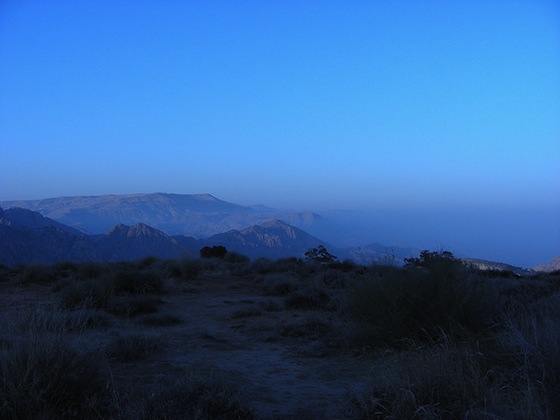 Case Study 1: Jordan’s Protected Areas
The Royal Society for Conservation of Nature (RSCN) in Jordan is in charge of eight protected areas in the country. Through four pilot sites in the protected areas of Al Yarmouk and Fifa and two in the Biosphere Reserves of Mujib and Dana.
The RSCN is conducting climate change adaptation planning oriented at finding ways and implementing measures based on traditional knowledge, to help reduce the uncertainty that climate change poses to natural ecosystems by rendering them more resilient and resistant.
This case was presented by Mr Hussien M. Kisswani, National Climate Change Officer of the RSCN, Jordan.
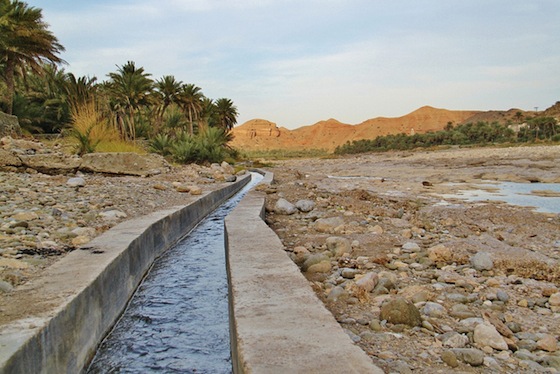 Case Study 2: Oman’s Aflaj Water Channels
The Aflaj is a water management system created in many parts of the Arab world and is still active in Oman. Today, the Aflaj system not only brings water to distant areas without power requirement and in a sustainable way, but provides for 36% of water used for agriculture in Oman, a country falling below the water poverty line due to naturally occurring, historical water scarcity.
The protection of the Aflaj system and its associated traditional knowledge and institutions is a matter of national relevance in Oman and holds universal value as it has been recognized by the World Heritage Convention. Nevertheless this system and its body of traditional knowledge require further protection and mechanisms to ensure their sustainability.
There are 3,017 remaining active Aflaj in Oman. This body of traditional knowledge can be shared with other communities and countries, even distant ones, to help them adapt to climate change, improve agriculture, etc.
This case was presented by Dr Saif Ali Al-Hajari of Friends of the Environment Centre.
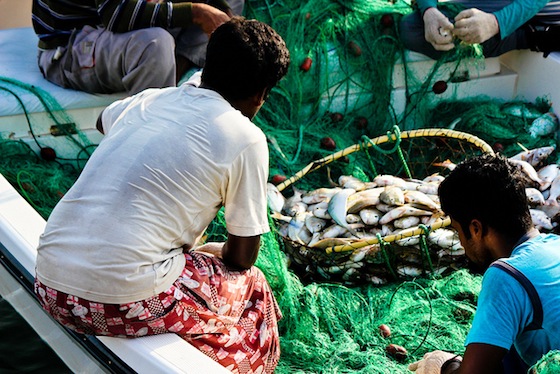 Case Study 3: Traditional Fishing in Qatar
Fishing traditions have been very important in Qatar. Marine ecosystems across the Gulf region are facing high ecological pressures with consequences on the balance of these natural systems. Ms Kaltham Al Ghanem explained how existing environmentally unsustainable behaviours and the negative impacts of economic activities, as well as social and cultural habits, are affecting terrestrial and marine environments in Qatar.
According to Dr Al Ghanem the oil discovery era dissociated people from their natural environment, which contributed to the disappearance of indigenous knowledge. There has been a decline in the use of local natural materials and their associated practices.
Furthermore, changes in fishing techniques have had an adverse effect on the marine environment and its fauna in Qatar. This case was presented by Dr Kaltham Al Ghanem, Professor of Sociology at Qatar University.
(If you need case study writing assistance you can buy a case study at AdvancedWriters.com with a few clicks.)
Mr Hussien M. Kisswani, the lead organiser of the event, explained that the key message from these case studies was that traditional knowledge and practices in the Arab world represent a valuable asset for adaptation to climate change. “There is a need to better explore how to revitalize traditions, and especially how to maintain and revitalize value and ethical systems that were strongly present in Arab cultures but have deteriorated and are rapidly disappearing due to massive and rapid change occurring in Arab societies,” he says.
Some of the suggestions that the forum came up with include effective law enforcement on matters related to the impact of industrialization on nature, better information sharing and for traditional knowledge to be included in national plans and strategies for mitigation and adaptation to climate change.
For more on traditional green techniques:
Aflaj: Ancient Channels Keep Water Flowing in The Desert
HIMA – A Traditional Arabian Conservation Concept Modernised
Great Examples Of ‘Hima’ Or Protected Areas In The Middle East
Hima: The Middle East’s Tradition of Environmental Protection
Do You WANA Green The Middle East? A Forum Report
Photo of Wadi Dayqah, Massarah in Oman via prasad.om/Flickr / Photo of Dana Reserve in Jordan via robinpresta/Flickr / Photo of Qatar fishing via Omar Chatriwala/Flickr.
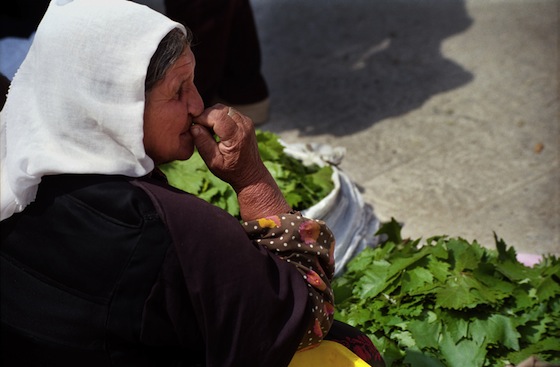
Top photo of woman in Bethlehem via Ryan Rodrick Beiler / Shutterstock.com