Greenpeace Blasts Turkish Nuclear Energy Institute Over Negligence

As Turkey moves to build its first nuclear power plant, there are troubling signs that the country’s nuclear energy institute is not monitoring nuclear hazards carefully.

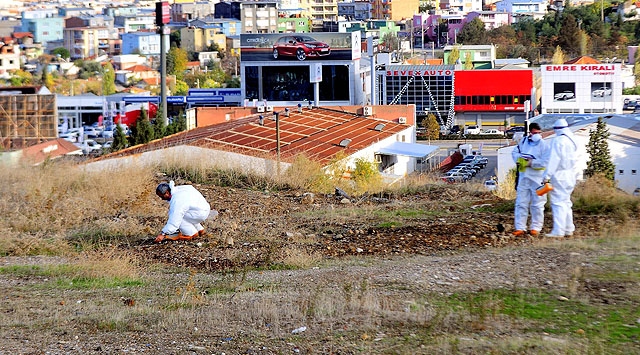
An abandoned lead factory yard used as a playground by local children in Turkey’s western İzmir Province contains high levels of radiation, according to Greenpeace Turkey, yet the Turkish Nuclear Energy Institute (TAEK) said the source of the radiation could not be found and pronounced the area safe.

Raising doubts

After high radiation levels were detected at the old factory yard early last week, a deputy from Turkey’s main opposition party submitted a parliament commission request that the area be investigated. TAEK sent in a team to seek the source of the radioactivity.

The TAEK team’s report made no mention of some dangerous materials known to be sequestered in the area, according to Greenpeace Climate and Energy campaign leader Cenk Levi. These include Isotope Europium 152, a variant that doesn’t occur naturally and poses a special risk to pregnant women.

Instead, the TAEK report simply said the radiation levels did not seriously threaten the environment, adding that the source of the radioactivity could not be traced. Children continue to play in the area, since it is unfenced.

TAEK had never conducted a thorough investigation of the factory in the past, according to Greenpeace campaign leader Levi, even though radioactive leakage was always possible.

Adding to worries about nuclear energy

“Aside from long dispatches on the topic of how to dispose of the radioactive materials found in İzmir over the past five years, TAEK has done nothing. Unfortunately, it’s becoming clear that they won’t be able to keep Turkey’s first nuclear plant secure either,” said Levi.

Although countries around the world have grown more wary of nuclear power since the catastrophic meltdown at the Fukushima reactor in Japan last year, Turkey plowed ahead with plans to develop its first nuclear power plant.

The government’s enthusiasm for nuclear energy seems misplaced, given the disease and agricultural loss that Turkey suffered after the Chernobyl meltdown of 1986.

If Turkey develops a nuclear plant, however, the country’s ability to effectively monitor and treat radioactive leakage will be critical. Lives, as well as the health of Turkey’s environment, will hinge on TAEK’s ability to handle radiation threats.

The way TAEK has responded to the high radiation levels at this old factory in İzmir does not bode well.

:: Bianet

Read more about nuclear energy in Turkey:

Plans For Turkey’s First Nuclear Plant Revealed
Despite Japan, Turkey Goes Ahead With Nuclear Reactors
Post-Chernobyl Agriculture in Turkey: A Sign of What’s in Store for Japan?

Image via TRT Haber

Julia Harte
Julia Hartehttp://www.greenprophet.com
Julia spent her childhood summers in a remote research station in the Rocky Mountains of Colorado, helping her father with a 25-year-old experiment in which he simulated global warming over a patch of alpine meadow. When not measuring plant species diversity or carbon flux in the soil, she could be found scampering around the forests and finding snowbanks to slide down. Now she is a freelance journalist living in Istanbul, where her passion for the environment intersects with her interest in Turkish politics and grassroots culture. She also writes about Turkish climate and energy policy for Solve Climate News.
7 COMMENTS

LEAVE A REPLY

Please enter your comment!
Please enter your name here

TRENDING

Bringing back the farm after a nuclear meltdown

Since the 1990’s scientists in Ukraine and overseas have been saying that the land can be safely used again despite contamination by radiocaesium and radiostrontium. But political complexities have meant that the land remains officially abandoned. That hasn’t stopped a few farmers taking matters into their own hands and beginning unofficial production in some areas. The new study has confirmed that the farmers were right – crops can be grown safely in most areas.

Huge eco-friendly luxury living project coming to Cairo

Luxury usually comes at a high price, not only...

Iraq-born Zaha Hadid’s new towers on former radiation zone in Australia

Just about every week UK-based and Iraq-born architect Zaha...

Israeli Cell Phone User Compensated $100 K for Ear Cancer

Cellphone usage outside is less risky than in a...

Will Radiation Danger Spoil Israel’s Electrified Train?

And make it electric? Electrifying Israel's railway system may...

Qatar’s climate hypocrisy rides the London Underground

Qatar remains a master of doublethink—burning gas by the megaton while selling “sustainability” to a world desperate for clean air. Wake up from your slumber people.

How Quality of Hire Shapes Modern Recruitment

A 2024 survey by Deloitte found that 76% of talent leaders now consider long-term retention and workforce contribution among their most important hiring success metrics—far surpassing time-to-fill or cost-per-hire. As the expectations for new hires deepen, companies must also confront the inherent challenges in redefining and accurately measuring hiring quality.

8 Team-Building Exercises to Start the Week Off 

Team building to change the world! The best renewable energy companies are ones that function.

Thank you, LinkedIn — and what your Jobs on the Rise report means for sustainable careers

While “green jobs” aren’t always labeled as such, many of the fastest-growing roles are directly enabling the energy transition, climate resilience, and lower-carbon systems: Number one on their list is Artificial Intelligence engineers. But what does that mean? Vibe coding Claude? 

Somali pirates steal oil tankers

The pirates often stage their heists out of Somalia, a lawless country, with a weak central government that is grappling with a violent Islamist insurgency. Using speedboats that swarm the targets, the machine-gun-toting pirates take control of merchant ships and then hold the vessels, crew and cargo for ransom.

Leopoldo Alejandro Betancourt López Turned Ocean Plastic Into Profitable Sunglasses

Few fashion accessories carry the environmental burden of sunglasses. Most frames are constructed from petroleum-based plastics and acrylic polymers that linger in landfills for centuries, shedding microplastics into soil and waterways long after they've been discarded. Leopoldo Alejandro Betancourt López, president of the Spanish eyewear brand Hawkers, saw this problem differently than most industry executives.

Why Dr. Tony Jacob Sees Texas Business Egos as Warning Signs

Everything's bigger in Texas. Except business egos.  Dr. Tony Jacob figured...

Israel and America Sign Renewable Energy Cooperation Deal

Other announcements made at the conference include the Timna Renewable Energy Park, which will be a center for R&D, and the AORA Solar Thermal Module at Kibbutz Samar, the world's first commercial hybrid solar gas-turbine power plant that is already nearing completion. Solel Solar Systems announced it was beginning construction of a 50 MW solar field in Lebrija, Spain, and Brightsource Energy made a pre-conference announcement that it had inked the world's largest solar deal to date with Southern California Edison (SCE).

Related Articles

Popular Categories