World’s First Genetically-Modified Camels in Dubai to Produce Medicine

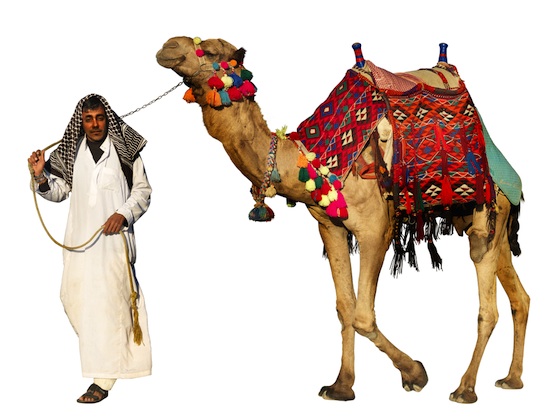
Dubai, Camel Reproduction Center, science, health, FDA, genetically-modified animals, camelsThe same research laboratory behind the world’s first cloned camel and a hybrid llama and camel called Cama has recently announced that they are genetically modifying camels in order to produce pharmaceutical proteins through their milk.

Dr. Nisar Wani from the Reproductive Biology Laboratory at the Camel Reproduction Center outside of Dubai says the project is designed to decrease the cost of life-saving medicines such as insulin, but the words genetically modified are likely to sound off an alarm – especially since no other first world country has approved drugs produced from transgenic animals.

Humans have been altering the genetic makeup of animals for a long time. This tampering allows us to express favorable traits, with no harm to either us or the animals themselves. In the case of the Dubai’s Cama, for example, Dr. Skidmore wanted to produce an animal that would have the llama’s lovely fleece and the camel’s resilience and strength.

But genetic modification is different as it involves introducing foreign genes into the animal’s genome.

Dr. Wani told SciDev.net that they are creating camel cells that have been modified with exogenous DNA for use in producing transgenic cloned animals. Eventually, perhaps as soon as this year, the lab will transfer the transgenic embryos to surrogate mothers.

Cloning is very difficult and comes with a very low success rate.

We talked to Dr. Mark Band, the Director of Functional Genomics at the University of Illinois at Urbana-Champaign, who says that thousands of transgenic animals around the world have been produced.

“Most likely they will insert human genes to produce proteins through the camel’s milk,” he said. “These genes will then be modified so that they are only expressed in the mammary.”

This ensures that the camel will not use the inserted proteins themselves, which could be potentially harmful to them, as they will only be produced through the camel’s milk.

However, Dr. Band notes that, as far as he knows, no other countries in the world have approved drugs produced by transgenic animals.

In 2009, the United States Federal Drug Administration compiled a list of frequently asked questions related to transgenic animals.

“To date, no transgenic animals have been approved for use as human food. A very limited number have been approved for rendering into animal feed components,” the agency notes.

This means that any drugs produced by Dubai’s genetically-modified camels can only be sold in Dubai, as it would be unlawful to sell them in countries that do not approve such pharmaceuticals.

We contacted Dr. Wani for comment but have not yet received a response.
Tafline Laylin
Tafline Laylinhttp://www.greenprophet.com
As a tour leader who led “eco-friendly” camping trips throughout North America, Tafline soon realized that she was instead leaving behind a trail of gas fumes, plastic bottles and Pringles. In fact, wherever she traveled – whether it was Viet Nam or South Africa or England – it became clear how inefficiently the mandate to re-think our consumer culture is reaching the general public. Born in Iran, raised in South Africa and the United States, she currently splits her time between Africa and the Middle East. Tafline can be reached at tafline (at) greenprophet (dot) com.
5 COMMENTS
  1. Vow, it is a great news. I think this is a very good project. One of my friends is on a constant need of highly priced exogenous drug for her body to fight diseases. They say it is becuase of some genetic abnormality which does not allow her body to produce a protein responsible for it. There will not be a better news for her than sucess of such projects, wherein she can get the drug at cheaper prices.

  2. Wouldn’t it be better to help PREVENT diabetes via healthy lifestyle and healthy nutrition and clean air in the cities??

    ://

  3. This is very bad news. I pray there is no success in this GMO endeavor. As far as I see it, cloned animals are more disgusting than the offspring of two siblings.

  4. This is very bad news. I pray there is no success in this GMO endeavor. I personally believe cloned animals are as worse than the offspring of two siblings.

  5. This happens with all the new technologies. People do not like them initially but then become so much dependant on them that they become a part of routine life. Take example of testtube babies, insemination and so many other things. In few years we will have most of the drugs fron transgenic animals and that is good because it will make it cheaper.

Comments are closed.

TRENDING

Australian camels fly on a plane to Saudi Arabia

Australia has the largest population of feral camels in the world. Some get repatriated to Saudi Arabia.

BM Studios is designing systems, not just buildings in the UAE

Balsam Madi is an architect and systems thinker whose work bridges culture, sustainability, and design intelligence across the Middle East and Europe.

Astro uses AI to help procure land for renewable energy

For oil-rich, environmentally vigilant Gulf states, Astro isn’t just another startup story. It is a blueprint for accelerating an energy transition that is now existential, not optional.

Runners Can Break Guinness World Records at the Dubai Marathon in 2026

Runners at the Dubai Marathon will have a rare chance to enter the Guinness World Records archive this year, as the global record-keeping authority partners with the marathon to mark the race’s 25th anniversary.

Dubai developer uproots ancient Italian olive trees, $270,000 USD each for “eco” project

Flying centuries-old trees across continents via specialized cargo burns enormous fossil fuels. Replanting them in a desert climate—no matter how advanced the irrigation or “heritage preservation techniques”—places immense stress on organisms that evolved for Mediterranean seasons, soils, and rainfall patterns. And we've seen that the UAE is not capable of taking care of trees so survival rates are uncertain.

Turning Your Energy Consultancy into an LLC: 4 Legal Steps for Founders in Texas

If you are starting a renewable energy business in Texas, learn how to start an LLC by the books.

Tracking the Impacts of a Hydroelectric Dam Along the Tigris River

For the next two months, I'll be taking a break from my usual Green Prophet posts to report on a transnational environmental issue: the Ilısu Dam currently under construction in Turkey, and the ways it will transform life along the Tigris River.

6 Payment Processors With the Fastest Onboarding for SMBs

Get your SMB up and running fast with these 6 payment processors. Compare the quickest onboarding options to start accepting customer payments without delay.

Qatar’s climate hypocrisy rides the London Underground

Qatar remains a master of doublethink—burning gas by the megaton while selling “sustainability” to a world desperate for clean air. Wake up from your slumber people.

How Quality of Hire Shapes Modern Recruitment

A 2024 survey by Deloitte found that 76% of talent leaders now consider long-term retention and workforce contribution among their most important hiring success metrics—far surpassing time-to-fill or cost-per-hire. As the expectations for new hires deepen, companies must also confront the inherent challenges in redefining and accurately measuring hiring quality.

8 Team-Building Exercises to Start the Week Off 

Team building to change the world! The best renewable energy companies are ones that function.

Thank you, LinkedIn — and what your Jobs on the Rise report means for sustainable careers

While “green jobs” aren’t always labeled as such, many of the fastest-growing roles are directly enabling the energy transition, climate resilience, and lower-carbon systems: Number one on their list is Artificial Intelligence engineers. But what does that mean? Vibe coding Claude? 

Somali pirates steal oil tankers

The pirates often stage their heists out of Somalia, a lawless country, with a weak central government that is grappling with a violent Islamist insurgency. Using speedboats that swarm the targets, the machine-gun-toting pirates take control of merchant ships and then hold the vessels, crew and cargo for ransom.

Related Articles

Popular Categories