

 Although many people in our region revere wildlife, too often we write about egregious abuse. Here are 7 of the saddest wildlife stories from the Middle East, and what you can do to help such harmful practices come to an end.
Many people living in the Middle East believe that it is haram to harm animals, and all kinds of excellent conservation work is taking place in Egypt, Iraq, and elsewhere. But too often we feature stories about rich Arabs who think it’s cool to capture cheetahs and other wild animals and keep them as pets, or about dolphins and lions that are confined to filthy, tiny spaces in order to lure tourists.
Sometimes ignorance lies at the root of animal abuse, while at other times people are simply trying to earn a living, but compassion and biodiversity preservation projects can benefit everyone. Step in for 7 of the saddest wildlife stories in the Middle East and be inspired to help your neighbor re-think his relationship to these magnificent creatures.
1. Red Sea Sharks Face Extinction
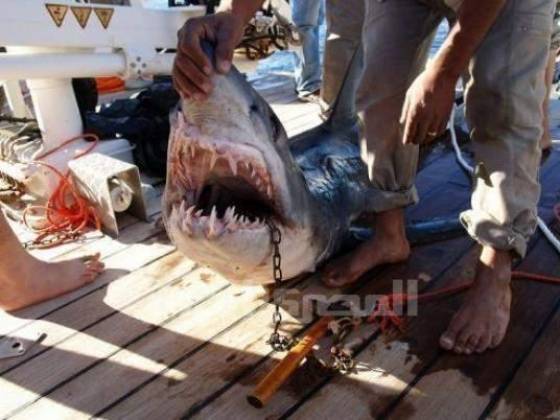
The politics du jour can have either a positive or negative effect on a country or region’s wildlife, and no where is this more true than in present-day Egypt. With a still unstable political situation and general lawlessness sweeping throughout the country, no one is paying attention to poachers who are killing off sharks in order to meet mostly an Asian demand for shark fin soup. Since last year’s revolution broke out and the country has been unable to quell its general mayhem, 40 million USD in tourist revenue is lost every day, so this comes as no surprise to us. On the other hand, one of the Red Sea’s most important species – its sharks – face extinction.
2. Kuwaiti Kills Wolf and Then Shows Off
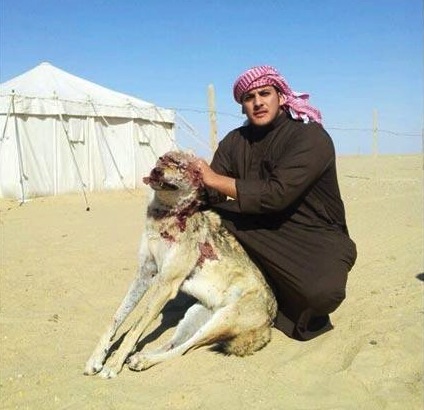
Abdullah Algelawi from Kuwait went on a fishing trip with his friends, armed with a shotgun. In the morning when he woke up, he said that a wild animal was hovering around his tent but couldn’t identify its species. So he pumped a pile of shotgun shells into what turned out to be a rare wolf, and proceeded to pose for a series of photographs that he then forwarded to his local newspaper. It is not legal for Kuwaiti nationals to own firearms.
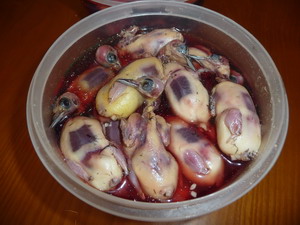
Every year trappers in Cyprus kill millions of migrating songbirds that are boiled or pickled – a national delicacy called ambelopoulia. Using mist nets and lime sticks to catch mostly whitethroats and blackcaps, the poachers then sell the dead birds to local restaurants where they are prepared in accordance with tradition. Wildlife conservationists want authorities there to do more to prevent what amounts to an ecological disaster.
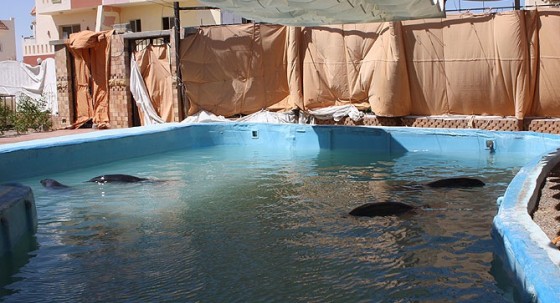
The Hurghada Environmental Protection and Conservation Association (HEPCA) has taken huge strides to protect the marine environment in one of Egypt’s most popular tourist destinations, and it was them that raised the alarm when four bottle nose dolphins were discovered awaiting transfer to a dolphinarium in a tiny, private swimming pool. The water was filthy – most likely because the pool lacked an adequate filtration system to cope with the waste produced by the four dolphins. Visibility was apparently no more than 20 cm. The owner of the villa set his pit bull on The Cove’s Richard O’Barry when he set out to investigate the story.
5. Corruption is Alive and Well at Egyptian Zoo
We had hoped that the revolution in Egypt would usher in a new era of accountability, but if anything, the opposite appears to be true. The government issued the zookeeper at a lion park north of Cairo a new permit even though the lions in his care were dehydrated, hungry, and forced to live in cramp, dirty conditions. Elsewhere at the facility, an unattended monkey ate a plastic bag and hyenas that require plenty of space to roam were deeply distressed by their small cages.
6. Lion Cub Shot Dead in Egypt
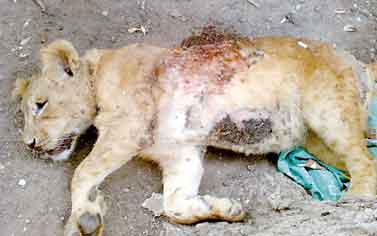
Egyptian police officers who raided the house of a wanted suspect in northern Cairo found themselves confronted by a lion cub. This was so shocking for some of the officers that they jumped from the second floor of the building to escape and then pumped as many as 200 bullets into the cub. The suspect escaped, but the lion cub did not. The police officers also discovered a falcon inside the suspect’s apartment.
7. Dubai Marine Life at Risk After Devastating Shark Catch
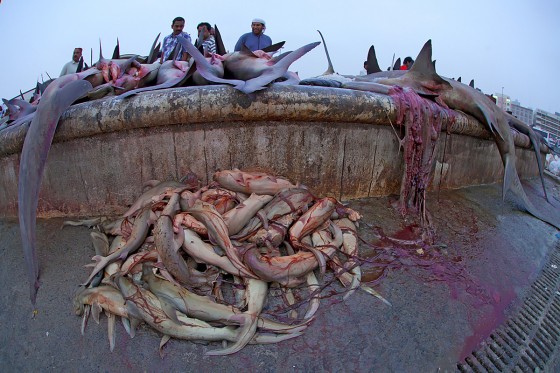
This last story is also the most disturbing. Conservationists working with the Shark Quest Project found a dead 9 meter long Hammerhead shark alongside all forty-five of her pups gutted from her belly at the Deira fish market in Dubai. It is illegal to fish for endangered shark species between January and April in this Gulf country, but poor oversight ensures that the practice continues more or less unabated.
If you love wildlife as much as we do, then these stories are bound to get you down. But don’t let that happen. Instead, donate funds to your local conservation group or better yet, get involved. A few hours every week generating better awareness can amount to many hours over the year – and our fauna will reap the benefits. Report people who are keeping animals that belong in the wild and stand up to your friends if you see them taunting or abusing any kind of animal.


Awesome things here. I’m very glad to peer your article.
Thanks a lot and I’m having a look forward to touch you.
Will you kindly drop me a e-mail?
cant wait for the next big flood to get rid of a good size population of humans on this planet.
In places where people are being butchered like cattle and revolutions taking place against tyrant rulers i think animals will be the last of their concerns unfortunately rare or otherwise,
lives of animals matter too. what a cruel thing to write.
This is disturbing. I’m glad people are aware of this and I hope in the future I can contribute to preventing these incidents.
Most of these crimes against Nature are being committed by macho men who feel proud of their male supremacy over other the other creatures of the World. As boys they were taught to show their manhood whenever possible, but now because of them, the human population is 7 billion and counting, and this planetary biosphere we all depend on is so polluted it will soon collapse unless we stop and think about what we are doing while there is still time. Already, global warming is melting the ice caps faster than ever before so the water they supply to rivers will be gone. You think the Middle East has a water problem?
How about no water at all?
One word: Disgusting!