


Blueseed’s Incredible Offshore Visa-Free Hub for Foreign Innovators in California

Blueseed, Cleantech, renewable energy, waste water treatment, alternative energy, visa-free hub, googolplex of the sea, California

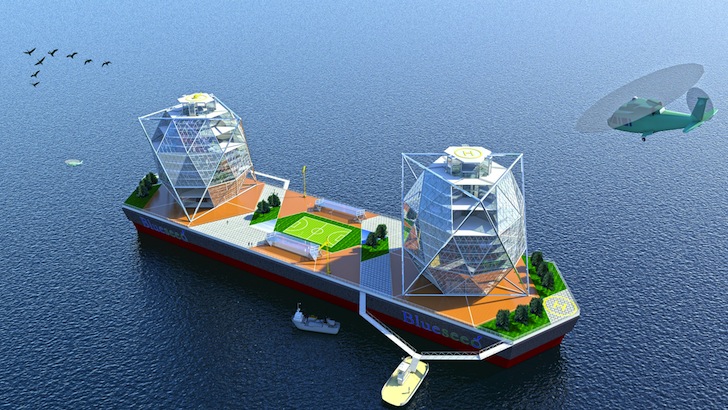
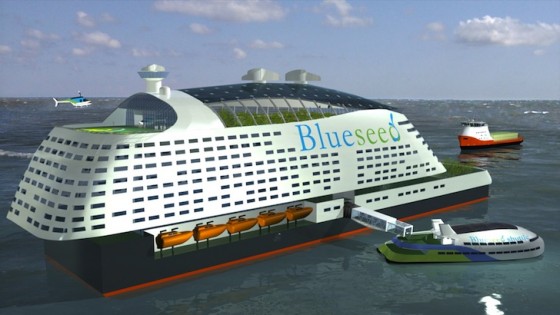
California-based startup company Blueseed has plans to either build or retrofit a ship that will provide accommodation and office space for talented foreign innovators who don’t meet America’s stringent working visa regulations. Since the September 11 attacks on the World Trade Center in New York City, even the brightest would-be entrepreneurs have met serious legislative barriers to getting their companies off the ground in Silicon Valley.

Blueseed’s CEO Max Marty and his team aims to change all that by giving 1,000 of the best entrepreneurs a chance to develop their ideas “in an ecosystem designed for their success” in the contiguous zone just 12 nautical miles from San Francisco. Although still in the planning stage, Paypal’s founder Peter Thiel has already entered the 500K USD “seed funding” round of the project, which will also showcase cutting edge waste management and energy generating technologies. 
Blueseed, Cleantech, renewable energy, waste water treatment, alternative energy, visa-free hub, googolplex of the sea, California

Wasted talent

So much foreign talent is wasted as a result of the United States’ immigration laws, which turns out to be an impediment to growth in America. Blueseed’s innovation hub will reverse that trend by allowing visionary techies with a passport to live and work on the adapted ship.

Albeit just a short ferry ride from San Francisco, the hub’s residents will have access to the internet, as well as entertainment, fitness, and medical facilities on board. They will also be able to purchase food around the clock.
Blueseed, Cleantech, renewable energy, waste water treatment, alternative energy, visa-free hub, googolplex of the sea, California

Blueseed’s green vision

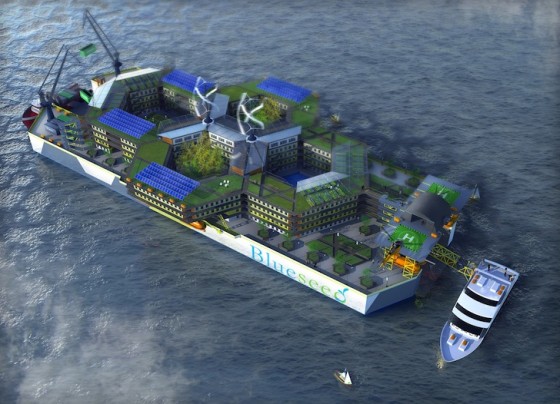
Making their offshore venture “green” is a priority and Blueseed is eager to incorporate new green technologies into the ship’s design. Marty explained in an email interview that technology has evolved to such an extent that it is possible to make waste water almost fit for human consumption, and that a host of renewable energy opportunities now exist.

However, Marty is concerned to find applications that are both environmentally sensible and financially viable, and hopes to connect with individuals or organizations that can pose solutions to these challenges.
Blueseed, Cleantech, renewable energy, waste water treatment, alternative energy, visa-free hub, googolplex of the sea, California

Opportunities for clean tech firms

Although it is not impossible for startups to succeed in the Middle East, this could be an excellent opportunity for innovators in the region to spread their wings and enjoy the support of a well-established network of go-getters.

If you are serious about helping Blueseed turn their offshore visa-free facility into a lean, green machine and advancing your own clean tech savvy in the process, contact Max Marty at max [at] blueseed [dot] co.

Tafline Laylin adapted this story from an interview she conducted with Blueseed’s Max Marty and Dan Dascalescu for her work at Inhabitat.

Tafline Laylin
Tafline Laylinhttp://www.greenprophet.com
As a tour leader who led “eco-friendly” camping trips throughout North America, Tafline soon realized that she was instead leaving behind a trail of gas fumes, plastic bottles and Pringles. In fact, wherever she traveled – whether it was Viet Nam or South Africa or England – it became clear how inefficiently the mandate to re-think our consumer culture is reaching the general public. Born in Iran, raised in South Africa and the United States, she currently splits her time between Africa and the Middle East. Tafline can be reached at tafline (at) greenprophet (dot) com.
4 COMMENTS
  1. There was an abortion ship working off the coast of Spain or Portugal for similar reasons – abortion is not illegal in international waters. Radio for Peace off the coast of Israel years ago, also worked on this principle.

  2. They have to be close to American soil because they need to be able to ferry back and forth to Silicon Valley. The idea is that such proximity will be a boon for their projects, and money will go back into the American economy.

  3. Is being close to US soil so important? Why don’t they just buy an island somewhere in South America or move where there are less restrictions and closer to the native countries of their employees?

LEAVE A REPLY

Please enter your comment!
Please enter your name here

TRENDING

Astro uses AI to help procure land for renewable energy

For oil-rich, environmentally vigilant Gulf states, Astro isn’t just another startup story. It is a blueprint for accelerating an energy transition that is now existential, not optional.

Leading Through a Dual-Energy Transition: Balancing Decarbonisation with Energy Security

Experience in one area of the energy industry isn't enough to guarantee readiness across all the others. That's where a structured program like an MBA in energy can come in. Today's advanced curricula explore energy economics, finance, policy, and strategic management alongside the technical subjects. And when pursuing an energy MBA online, professionals can skill up and retrain without having to step out of the labor market -- an important perk at a time when skilled professionals are already in short supply.

What Renewable Energy Means for Long-Term Environmental Planning

In the context of American energy policy (setting the stage for the world as oil prices are in USD), the relevance of renewable energy planning is increasingly evident. Federal agencies are preparing final biofuel blending mandates under the Renewable Fuel Standard, with decisions expected early in 2026 after delays that have left investors and producers in limbo.

How wind energy must adapt to a changing climate

For a wind farm designed on 20 years of historical data, this matters. A project that looks profitable today may deliver less energy in the future, on the opposite, way more. Uncertainty replaces confidence.

Alphabet buys Intersect Power for $4.5 Billion USD to sustainably power its AI infrastructure

That shift helps explain why Alphabet, Google’s parent company, has agreed to acquire American renewable energy company Intersect Power in a deal valued at roughly $4.75 billion. It’s a move that reflects a deeper change: technology companies are paying closer attention to the physical systems that support their growth. 

6 Payment Processors With the Fastest Onboarding for SMBs

Get your SMB up and running fast with these 6 payment processors. Compare the quickest onboarding options to start accepting customer payments without delay.

Qatar’s climate hypocrisy rides the London Underground

Qatar remains a master of doublethink—burning gas by the megaton while selling “sustainability” to a world desperate for clean air. Wake up from your slumber people.

How Quality of Hire Shapes Modern Recruitment

A 2024 survey by Deloitte found that 76% of talent leaders now consider long-term retention and workforce contribution among their most important hiring success metrics—far surpassing time-to-fill or cost-per-hire. As the expectations for new hires deepen, companies must also confront the inherent challenges in redefining and accurately measuring hiring quality.

8 Team-Building Exercises to Start the Week Off 

Team building to change the world! The best renewable energy companies are ones that function.

Thank you, LinkedIn — and what your Jobs on the Rise report means for sustainable careers

While “green jobs” aren’t always labeled as such, many of the fastest-growing roles are directly enabling the energy transition, climate resilience, and lower-carbon systems: Number one on their list is Artificial Intelligence engineers. But what does that mean? Vibe coding Claude? 

Somali pirates steal oil tankers

The pirates often stage their heists out of Somalia, a lawless country, with a weak central government that is grappling with a violent Islamist insurgency. Using speedboats that swarm the targets, the machine-gun-toting pirates take control of merchant ships and then hold the vessels, crew and cargo for ransom.

Leopoldo Alejandro Betancourt López Turned Ocean Plastic Into Profitable Sunglasses

Few fashion accessories carry the environmental burden of sunglasses. Most frames are constructed from petroleum-based plastics and acrylic polymers that linger in landfills for centuries, shedding microplastics into soil and waterways long after they've been discarded. Leopoldo Alejandro Betancourt López, president of the Spanish eyewear brand Hawkers, saw this problem differently than most industry executives.

Why Dr. Tony Jacob Sees Texas Business Egos as Warning Signs

Everything's bigger in Texas. Except business egos.  Dr. Tony Jacob figured...

Related Articles

Popular Categories