

 Aircraft behemoth Boeing estimates at least 90,000 commercial planes fly daily: a massive fuel burn that translates into elephantine emissions of toxic air. There is opportunity for change in the Middle East.
If you are not already afraid of the giant plume of methane gas now emitting greenhouses gases into the atmosphere, there’s another worry: air emissions. Airplane emissions are plunked into two broad source categories: stationary (think factories) or mobile: planes, ships, heavy construction equipment. Environmental agencies have a hard enough battle regulating fixed assets within defined geopolitical limits, never mind chasing these moving polluters around the globe. Did you know that aviation has been exempt from all international controls on greenhouse gas (GHG) emissions?
The United Nations Framework Convention on Climate Change and the Kyoto Protocol both specifically exclude the industry, instead Kyoto kicked this regulatory ball to the International Civil Aviation Organization (ICAO).
Impressively, last year ICAO resolved to improve fuel efficiency 2% per year through 2050; agree a global framework for alternative fuels; propose a GHG emission standard for aircraft engines by 2013; and cap GHG emissions at 2020 levels. Good stuff, except there’s no agreement on how exactly to define or enforce aircraft GHG limits (um, Stewardess, got an aspirin?).
Aircraft exhaust is a toxic soup whose ingredients, mainly carbon dioxide, nitrogen oxide, and water vapor, are spilled directly into the upper atmosphere. Variables like flight time (day versus night), cruising altitudes and sunshine intensity make calculating emissions problematic.
Absent global regulation of this mega-industry, the EU and a handful of individual countries have set their own emissions targets. Aviation was a topic at last week’s United Nations Climate Change Conference in Durban, South Africa, but clear outcomes from those discussions remain up-in-the-air.
The air travelling population is increasing. There’s massive growth in developing nations and their airports balloon to meet demand. New terminals are online and expanding in Dubai, Doha and Abu Dhabi.Kuwait and Jordan have major airport redevelopments underway, each targeting ambitious green building credentials.
World Green Building organizations have incited enviro-awareness resulting in radical improvements in passenger terminal design, construction and ongoing operations. It’s time now for the guys in the sky to get grounded in sustainability too. Where does this sit on the global green agenda?
Scientific uncertainty is no excuse for inaction.
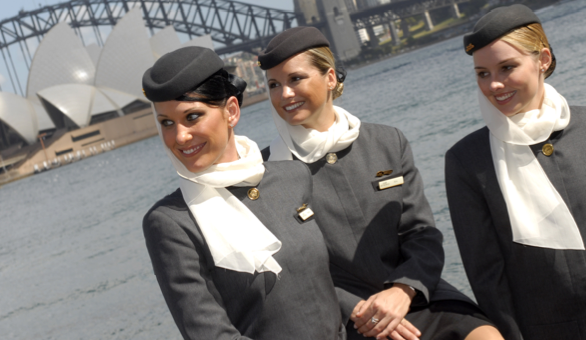
Image via Etihad airlines


It’s interesting how a person can almost completely ignore the obvious fact that the human population and its garbage-dumping economy continues to grow while planet Earth is very obviously NOT growing. It must be the money. People are so involved in various levels of finance they can’t see anything beyond it; but of course, the ever-changing biosphere, as it reacts to the spreading pollution, will make reality clear to everyone.
The occupywallstreet’s list of demands does not include climate change and it’s condemning of our children to the greenhouse gas chambers with bank funded and corporate run CARBON TRADING STOCK MARKETS ruled by politicians any longer. And Obama never even mentioned the crisis in his state of the union address and how can tens of thousands of consensus scientists not be exaggerating when they sit on their thrones instead of marching in the streets and acting like it’s the ultimate emergency of a disaster they say it is? Scientists have kids too and science after all gave us pesticides that poisoned the planet in the first place. As rebels we should be questioning and doubting and challenging authority, not bowing to it like goose stepping Greenzis. Pollution is real. Death for all by Human Monkey Gas was neoconish fear mongering and REAL planet lovers are happy climate change crisis wasn’t real after all.