UN Says Aquaculture Could Solve Fish Collapse

aquaculture pond fishAquaculture, especially in ponds, may help preserve ocean fish species

Catching wild fish in the sea is now threatening to deplete many fish species from the world’s seas and oceans, including illegal tuna fishing in the Mediterranean Sea. With world population figures now topping 7 billion, an increasing demand is being made for fresh fish as a source of protein. This demand has resulted in an increase in fish farming, or aquaculture both in the oceans and seas themselves and in salt and fresh water ponds on dry land.

Aquaculture has grown significantly in North and South America, Europe, and in the Far East; particularly in Asian countries such as Thailand and China. Countries such as China grow carp; with China, Thailand, Vietnam, Indonesia and India growing  shrimps and prawns. Norway and Chile are growing salmon in aquaculture projects as well. These projects were noted  recently in a news report by the UN Food and Agriculture Organization (FAO). The report sent to Green Prophet highlights the importance of aquaculture in supplementing the world’s growing demand for protein, especially fish.
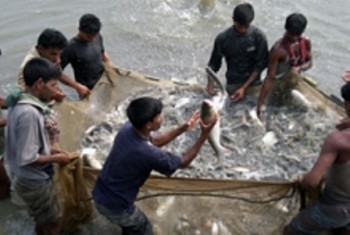
Netting high protein

The high protein content of fish, plus nutrition supplements such as Omega 3 fatty acids are vital to health and help prevent conditions of malnutrition, increased brain function, and deterrents of heart disease and cancers.

Mediterranean and Middle Eastern countries like Turkey, Israel, and Egypt, especially fresh water species like Tilapia, known as “musht” in Arabic, is helping countries like Egypt feed its growing population.

An FAO report entitled World Aquaculture Growth 2010  goes into detail regarding various aquaculture projects being carried out by countries all over the world. The report adds that:

“Achieving the global aquaculture sector’s long-term goal of economic, social and environmental sustainability depends primarily on continued commitments by governments to provide and support a good governance framework for the sector.”

Even areas where land availability is at a minimum, such as population dense Gaza, are also engaged in aquaculture. In Gaza, a small aquaculture project is being carried out by a Gaza marine engineer and sea captain, Sohail Ekhail who has been trying to provide his fellow Palestinians with nourishing fish by operating a fish farm on the outskirts of Gaza City.
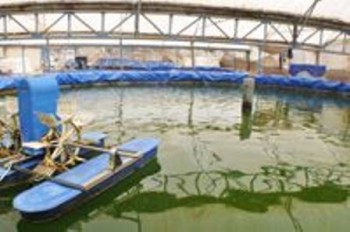
Ekhail’s fish farm

While growing fish in the sea may cause some damage to coral and other marine habitations, as occurred with a fish farm in the Red Sea, off Israel’s coastal city of Eilat, the ultimate solution is growing fish in ponds instead of in the sea.

Or in your own tanks inside apartment buildings, like one Israeli entrepeneur has proposed.

With this in mind, the future of aquaculture looks bright, and will help to feed and nourish an increasing world population.

::FAO

Read more on aquaculture and related issues:

Accelerating decline of world oceans: Why it matters for the Middle East

Seaside, Gaza Fish Farmers Grow Own Fish

Fish Farming Isn’t so Evil After All

Eilat Fish Cages: Out of the Frying and into Ashdod harbor

Maurice Picow
Maurice Picowhttps://www.greenprophet.com/
Maurice Picow grew up in Oklahoma City, U.S.A., where he received a B.S. Degree in Business Administration. Following graduation, Maurice embarked on a career as a real estate broker before making the decision to move to Israel. After arriving in Israel, he came involved in the insurance agency business and later in the moving and international relocation fields. Maurice became interested in writing news and commentary articles in the late 1990’s, and now writes feature articles for the The Jerusalem Post as well as being a regular contributor to Green Prophet. He has also written a non-fiction study on Islam, a two volume adventure novel, and is completing a romance novel about a forbidden love affair. Writing topics of particular interest for Green Prophet are those dealing with global warming and climate change, as well as clean technology - particularly electric cars.

TRENDING

Fish or Vegan Omega-3? Does quality, source and science matter more than you think?

In the modern nutrition universe, that level of commitment deserves an applause. But for those who don’t live in a Nordic fishing village, the nutrition company Zinzino has built its omega-3 research and formulations around these principles, combining biomarker testing, antioxidant protection and traceable sourcing across both sustainably harvested small-fish oils and a vegan marine-microalgae alternative.

Yalla Parkour – A Gaza documentary of the movement before the war

Yalla Parkour, directed by Areeb Zuaiter, captures this culture from within. The film follows Zuaiter’s long relationship with Ahmed Matar, a parkour athlete in Gaza, as she reflects on loss, memory, and belonging after the death of her mother. What begins as a personal search gradually opens into a portrait of how movement shapes young lives under constraint.

Fishermen sue tire manufacturers on behalf of the salmon

A federal trial in San Francisco has brought US tire manufacturers, fishing groups, and environmental scientists into court over a chemical most drivers have never heard of — but which scientists say may be silently reshaping aquatic ecosystems.

Ethiopians are Looking to Somaliland for Red Sea Access as Global Powers Move In

Somaliland, for its part, has operated as a de facto independent state since 1991. It has its own government, elections, currency, and security forces. It’s often described as one of the more stable and democratic political systems in the region, despite never being formally recognized internationally. 

Mud bricks are not just for Minecraft – they can solve real-world refugee housing

Unconfirmed photos are circulating on the internet that a Gazan family has started to rebuild their home using mud bricks. And just a few days ago we reported on a Saudi Arabian designer and his plans for using mud bricks as a solution to the refugee crisis. 

Should You Invest in the Private Market?

startustartup Unlike public stock exchanges, which offer daily trading, strict...

How to build a 100-year-company

Kongō Gumi is a Japanese construction company, purportedly founded in 578 A.D., making it the world's oldest documented company. What can we learn about building sustainable businesses from them?

From Pilot Plant to Global Stage: How Aduro Clean Technologies’ 2026 Expansion Signals a Turning Point for Chemical Recycling Investors Like Yazan Al Homsi

The company's Next Generation Process (NGP) Pilot Plant in London, Ontario, has officially moved into initial operating campaigns, generating the kind of structured, repeatable data that separates laboratory promise from commercial viability.

How AI Helps SaaS Companies Reduce Repetitive Customer Support Work

SaaS products are designed for large numbers of users with different levels of experience, and also in renewable energy.

Pulling Water from the Air

Faced with water shortage in Amman, Laurie digs up...

Turning Your Energy Consultancy into an LLC: 4 Legal Steps for Founders in Texas

If you are starting a renewable energy business in Texas, learn how to start an LLC by the books.

Tracking the Impacts of a Hydroelectric Dam Along the Tigris River

For the next two months, I'll be taking a break from my usual Green Prophet posts to report on a transnational environmental issue: the Ilısu Dam currently under construction in Turkey, and the ways it will transform life along the Tigris River.

6 Payment Processors With the Fastest Onboarding for SMBs

Get your SMB up and running fast with these 6 payment processors. Compare the quickest onboarding options to start accepting customer payments without delay.

Related Articles

Popular Categories