Saudi Peak Oil Could Affect World in 2012

Saudi-peak-oil-internal-demand

While most experts say it is hard to know what is really going on with Saudi oil supplies, “What we do know is that, for whatever reason, Saudi Arabia produced 600,000 fewer barrels each day in 2010 than it did in 2005, and with growing Saudi consumption of their own oil, the drop in exports from Saudi Arabia has been even more dramatic.”

That is the opinion of UC San Diego economist James Hamilton who brings a fresh perspective to peak oil.

We who write about clean tech see it in the inexplicable Saudi moves towards solar power – Saudi Arabia to Replace Oil with Sun Power for Desalination Plants, It Must be Peak Oil Driving Saudis to Solar, Could Saudi Arabia Become the Saudi Arabia of Solar? – and The Oil Drum has written frequently about the evidence for peak oil.

But Hamilton considers peak oil from an economic perspective in his paper Oil Prices, Exhaustible Resources, and Economic Growth. His findings suggest that the peak in oil production may be much closer than we think.

Until recently, he says, Saudi Arabia has often made a deliberate decision  to alter its own production in an effort to mitigate price increases and decreases. That that behavior has now slowed is a sign that it is no longer able to increase production enough to export and supply its own rapidly rising demand internally. For example, the kingdom cut production to try to hold up prices during the weak oil market 1981-85 and recession of 2001, and boosted production during the two Persian Gulf wars, to make up for output lost from other producing countries.

Its huge Ghawar field has produced prodigious amounts of oil since 1951, and in recent years had accounted for perhaps 6% of total world production all by itself. Athough this is difficult to confirm, many experts believe that Ghawar has peaked and is declining already.

Total production from OPEC has essentially been flat since 2005, mostly due to the decline in Saudi production. Although China, Brazil, Africa and Canada have increased production (and Canada’s is coming from oil sands; the dregs) it is difficult to see these ever accounting for a major fraction of total world oil production.

The bottom line is that even with more production from other parts of the world to make up the Saudi losses, global production of oil from all sources was essentially flat from 2005 to 2010.

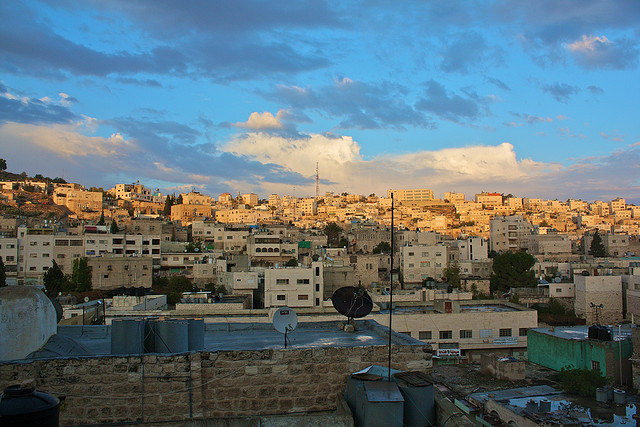
Image: MSFS in Arabia

Related stories:

Saudi Arabia to Replace Oil with Sun Power for Desalination Plants
It Must be Peak Oil Driving Saudis to Solar
Could Saudi Arabia Become the Saudi Arabia of Solar?

LEAVE A REPLY

Please enter your comment!
Please enter your name here

TRENDING

Italy’s energy company Eni adds Italian flair for design in industrial fusion reactor

“We have the chance to explore new forms of storytelling about energy,” adds Italo Rota, co-designer of the installation. “We believe that design is a powerful tool to turn a narration into an experience, allowing visitors to sense the energy while being surrounded by a unique atmosphere.”

Don’t Regret Your Host: Alternatives to SiteGround That Impress

Discover top alternatives to SiteGround that offer impressive features and performance. Make an informed choice for your hosting needs today!

Asia Powers Ahead in Global Renewable Boom, But Africa Risks Being Left Behind

Asia continues to dominate global renewable energy growth, accounting for 71% of new capacity added in 2024, while Africa and other developing regions remain far behind despite their potential. Solar and wind lead the charge, comprising 97.5% of additions, with solar alone adding 453 GW. Although global renewables capacity hit a record 582 GW, the world is still off track to meet the COP28 goal of tripling capacity by 2030. Without faster growth and more equitable investment, the energy transition risks deepening the global divide.

Yosef Abramowitz: The Israeli Bringing the Sun to the World’s Darkest Places

Abramowitz employs what he calls the Quadruple Bottom Line Impact Platform when bringing solar energy to countries with limited resources and infrastructure. While not the primary driver, each project must provide returns for investors. While these returns may not turn a massive profit, projects must ensure financial viability. Second, every project contributes to climate mitigation.

Iraq’s Ancient Water Wisdom Faces a Modern Reckoning

The land between the Tigris and Euphrates was once a wellspring of invention. Thousands of years before modern irrigation, the Sumerians, Akkadians, Babylonians, and Assyrians carved canals, engineered flood basins, and developed qanat systems—ingenious underground channels that carried water from mountain springs to distant farms.

Qatar’s climate hypocrisy rides the London Underground

Qatar remains a master of doublethink—burning gas by the megaton while selling “sustainability” to a world desperate for clean air. Wake up from your slumber people.

How Quality of Hire Shapes Modern Recruitment

A 2024 survey by Deloitte found that 76% of talent leaders now consider long-term retention and workforce contribution among their most important hiring success metrics—far surpassing time-to-fill or cost-per-hire. As the expectations for new hires deepen, companies must also confront the inherent challenges in redefining and accurately measuring hiring quality.

8 Team-Building Exercises to Start the Week Off 

Team building to change the world! The best renewable energy companies are ones that function.

Thank you, LinkedIn — and what your Jobs on the Rise report means for sustainable careers

While “green jobs” aren’t always labeled as such, many of the fastest-growing roles are directly enabling the energy transition, climate resilience, and lower-carbon systems: Number one on their list is Artificial Intelligence engineers. But what does that mean? Vibe coding Claude? 

Somali pirates steal oil tankers

The pirates often stage their heists out of Somalia, a lawless country, with a weak central government that is grappling with a violent Islamist insurgency. Using speedboats that swarm the targets, the machine-gun-toting pirates take control of merchant ships and then hold the vessels, crew and cargo for ransom.

Leopoldo Alejandro Betancourt López Turned Ocean Plastic Into Profitable Sunglasses

Few fashion accessories carry the environmental burden of sunglasses. Most frames are constructed from petroleum-based plastics and acrylic polymers that linger in landfills for centuries, shedding microplastics into soil and waterways long after they've been discarded. Leopoldo Alejandro Betancourt López, president of the Spanish eyewear brand Hawkers, saw this problem differently than most industry executives.

Why Dr. Tony Jacob Sees Texas Business Egos as Warning Signs

Everything's bigger in Texas. Except business egos.  Dr. Tony Jacob figured...

Israel and America Sign Renewable Energy Cooperation Deal

Other announcements made at the conference include the Timna Renewable Energy Park, which will be a center for R&D, and the AORA Solar Thermal Module at Kibbutz Samar, the world's first commercial hybrid solar gas-turbine power plant that is already nearing completion. Solel Solar Systems announced it was beginning construction of a 50 MW solar field in Lebrija, Spain, and Brightsource Energy made a pre-conference announcement that it had inked the world's largest solar deal to date with Southern California Edison (SCE).

Related Articles

Popular Categories