

From a small office on Bliss Street in Beirut, overlooking the Mediterranean sea, a small team of young Lebanese activists are busy trying to expose environmental injustices, change attitudes, recruit volunteers, lobby and fundraise, in a country where every day politics often comes in the way of any environmental reform.
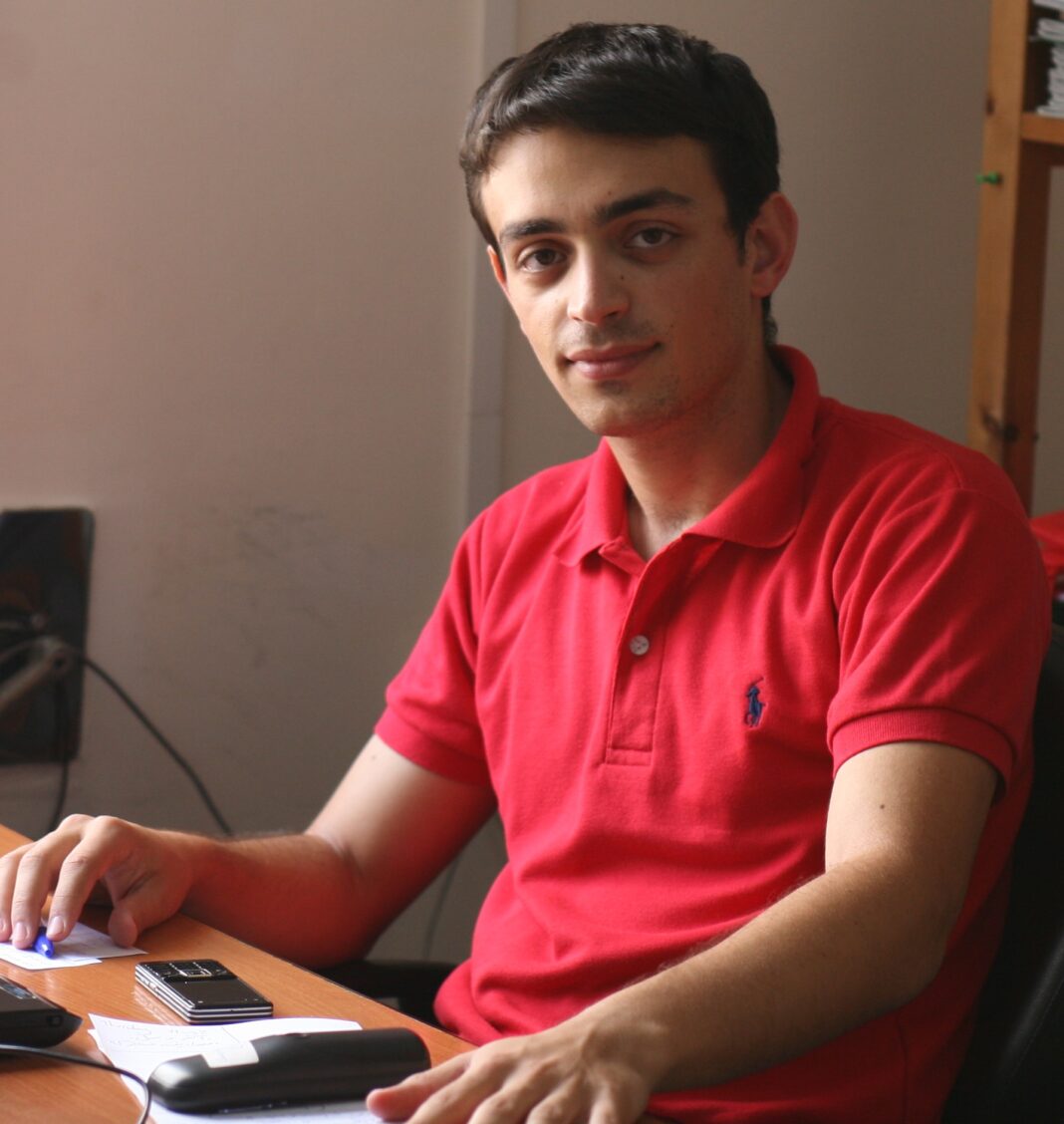
Fresh out of college, Campaigner Rayan Makarem has his tasks set: complete the programs launched by the founders of Greenpeace Lebanon while coordinating with the global and regional offices to initiate new Pan Arab campaigns from the only official Greenpeace office in the Arab world.
– Rola: Tell us about yourself and your role at Green Peace Lebanon.
I just graduated from the American University of Beirut with a Masters in Environmental Policy. I had volunteered for a year before than and I’m now a full time Campaigner. I am in charge of Campaign Department. Within that Department, we are 4 people in the Fundraising and 6 people in Programme.
We are a young small team but have many years of experience. The older group has passed their knowledge to us. In addition, we get volunteers mainly from high schools and universities in the hundreds. We can mobilize them depending on what we want to achieve. In total, there are 28 regional offices. This is the Beirut office, part of the Greenpeace Mediterranean with the head office Istanbul. Beirut office was set up in 1996 and currently we are starting to launch pan-Arab world projects targeting nuclear power and rampant pollution and promoting energy efficiency from here. This is the only Arabic speaking office and we now have an Arabic website. We coordinate from the Beirut office but have volunteers from local countries like in Jordan where we now have an officially affiliated group.
– Rola: Locally, how do you campaign and what have been your major achievements?
To promote our message we use the same methods as Greenpeace globally since we share the same mission and values. We lobby and send out messages using non-violent direct action means. One of our successful campaigns was started in Lebanon in 1996, a toxic campaign against hospital solid waste. We worked for 5 years to stop hospitals from incinerating their waste. We also campaigned against incineration of solid waste in landfills such as the Normandie landfill. The campaign was a success and helped change attitudes and close the landfill.
In another campaign in 2001, Greenpeace exposed the environmental crimes of the Lebanese Chemical Company (LCC) in Selaata. More recently, in 2006 we launched a new campaign following the oil spill in Jiyyeh power plant. At the time our ship, the Rainbow Warrior, helped to ship medicine for Medecins sans Frontieres and the campaign subsequently joined the global ocean campaign. We were able to bring marine protection practices to the attention of the Lebanese public and political opinion, starting from joining oil spill mitigation efforts in 2006 and continuing through with establishing the first coastal marine reserve in Lebanon and lately demanding the establishment of a network of marine reserves in no less than 40% of the Lebanese coastal waters. Recently and for the first time, the Lebanese Ministry of Environment added marine protection to its agenda.
-Rola: Tell us more about your work on coastal marine reserves and how far your have reached with this campaign.
The campaign focuses on coastal marine reserves and biodiversity protection. In 2008 we came up with the project to establish a Byblos Marine Reserve extending 500 meter into the sea and 1 kilometer along the coast. We proposed a decree to be signed into law and gave it to the Ministry of the Environment. They said yes initially. But last year a new Mayor was appointed and he has been stalling. We are trying to influence stakeholders to complete the documents but one paper remains missing from the Municipality to establish a reserve.
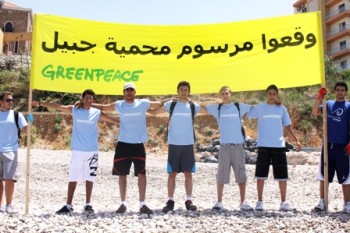
This however is meant to be a pilot project and we have identified 14 other sites for marine reserves. The “human chain” event that occurred on May 22 2010 which got media attention took around 2 months to prepare, with Greenpeace volunteer groups touring various regions to give lectures about marine reserves to students in schools. It represented a call from the civil community for establishing the Byblos marine reserve, a cornerstone for establishing a network of marine reserves along the Lebanese coast.
– Rola: What are the biggest challenges to your local campaigns ?
Political stability remains a big issue for us. We are a small country and there are a lot of NGOs, so we have a relatively active civil society. According to the Ministry of the Environment, we have 400 environmental NGOs in Lebanon but most are small local NGOs. We work together and try to coordinate if there are big issues but we would like to have more coordination and formal rapport with the government. The government knows about us, they don’t clamp down on us, they tolerate us. We are known to be backed by an international organization. But the Ministry of Environment has limited budget and many projects in Lebanon are UNDP funded projects, so it has limited influence. A lot of politics and political bickering takes place between different ministries preventing things getting done.
From the corporate side, we try to target and expose private corporations that are damaging the environment, but in Lebanon the politicians are the same people that are leading big industries and corporations. Sanita was an example of this. The company was polluting the ocean in a very visible way from their generators. They claimed it was an accident but we could see they were cleaning up their generator spills with Kleenex tissues. But powerful politicians have shares in Sanita. Business monopolies are a big in Lebanon. Sukleen for solid waste collection is another example of a monopoly.
In spite of these challenges, we are still hopeful. I compare our generation of young Lebanese environmentalists to a “dog on a chain”. We have a lot of passion and good intentions but we are limited in what we can achieve. I remain optimistic and believe that environmental activism will continue to grow among the younger generation, particularly with the rise of social media which we are getting very active in.
Related stories
A Classic Case of Whodunit Arises over Toxic Waste in Lebanon Lebanon’s Mediterranean Apocalypse: Scuba Diving In Waters Devoid Of Life Poor Environmental Oversight Leads to Lebanon’s Mediterranean Kerosene Leak