

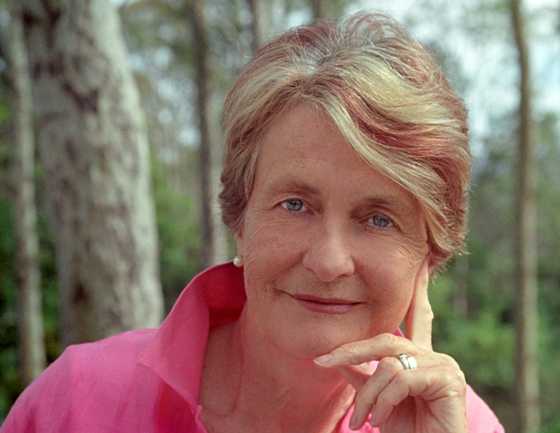
 Dr. Helen Caldicott has campaigned against nuclear energy for decades. Today she talked to Green Prophet about how no nuclear event is merely local.
We had a skype conversation with Dr. Helen Caldicott today, during which she stated in no uncertain terms that there is only one side to the nuclear question. Dr. Caldicott is a long time anti-nuclear activist, physician, and speaker whose name is trailed by an exhaustive list of impressive accolades. For roughly four decades, she has been tirelessly speaking out against the absolute nightmare that that is nuclear anything, and recently claimed that the Fukushima nuclear disaster is worse than Chernobyl.
Why would we want to talk about Fukushima when we are in the Middle East, far from Japan? Because nuclear disasters in our interconnected world are never merely local affairs. Following Chernobyl, Turkish tea and food, along with produce from other parts of Europe, were contaminated after the stratosphere winds carried radiation from the Ukraine to other parts of the northern hemisphere. We wanted to get a clear sense of what kind of fallout, if any, we can expect from Fukushima.
Nothing nuclear knows boundaries
“Chernobyl contaminated 40% of the European landmass,” Dr. Caldicott explained.
Instead of being restricted to the Ukraine, radiation was propelled into the stratosphere by Chernobyl’s massive explosion, where it was picked up by the wind and swept throughout the Northern Hemisphere to Greece, Austria, Turkey, and elsewhere.
“Now there are radioactive wild boar roaming through Germany,” she said.
After the Fukushima disaster, which is ongoing even if the original media excitement has dulled, both the United States and Canada have discovered that radiation knows no borders. Dr. Caldicott notes that radiation has been detected near Lake Louise in British Columbia, as well as in Vermont and Massachussets in the United States. However, its presence will only be known if measurements are taken.
Don’t forget Iraq
To date, we need not worry. Dr. Calidicott believes the radiation fallout from this nuclear disaster is unlikely to impact the Middle East. At least not unless there is another explosion. “We are not out of the woods yet,” she said.
But that doesn’t mean that we should let down our anti-nuclear guard, since radiation is derived from many sources with varying environmental and health impacts. For example, many Fallujah babies are born deformed as a result of depleted uranium contamination gifted by the American armed forces in Iraq.
Depleted uranium has a half-life of 4.5 billion years, which is roughly the age of the solar system. For the next 4.5 billion years (times ten or twenty), we will have radioactive isotopes in our environment that will permanently alter the DNA of all of humanity for as long as they can stand to live on what is becoming an increasingly toxic planet.
Dr. Caldicott, whose organization the International Physicians for the Prevention of Nuclear War received a nobel peace prize in 1985, and who has been awarded 20 honorary doctorate degrees, says that radiation, which has a bio-cumulative effect in our bodies and causes all kinds of cancers and congenital defects, will exist “for all time.”
She attributes our failure to prevent nuclear proliferation to the media (who hold the fate of the earth in their hands, she says, a responsibility I found to be a bit unfair) and ignorant politicians. “There aren’t two sides to the nuclear debate,” she says, adding that “politicians need to become more scientifically literate.”
From whence it came
Although our conversation left me feeling somewhat deflated and unhopeful, Dr. Caldicott notes that it is possible to return uranium back to the earth (from whence it came). A quick wikipedia search reveals that depending on what kind of uranium is being buried, it might have to be submerged as deep as 300 meters or 1,000 feet below ground in order to prevent leaching into the water supply or further ground contamination. Such a burial is termed a “deep geological repository.”
In the meantime, the fearless activist one Green Prophet reader wrongly called a “coal shill” says the consequence of our society’s ignorance and irresponsibility amounts to nothing less than “genocide.”
Read more about the Fukushima Nuclear Disaster:
Worse Case Scenario Realized as Three Fukushima Reactors Melt Down
Dr. Helen Caldicott: Fukushima Nuclear Disaster Much Worse than Chernobyl
Post-Chernobyl Agriculture in Turkey: A Sign of What’s in Store for Japan?
image taken from www.helencaldicott.com


I hope people realize this,especially the Japanese,before it may be too late.