Middle East Countries Prepare For Natural Disasters

From earthquakes to water scarcity, the Middle East faces its fair share of natural disasters but countries are only now starting to take disaster risk reduction seriously

Over the last 25 years, the Arab region has suffered 276 disasters in which 100,000 people died, 1.5 million were left homeless and 10 million affected – yet the region has systematically failed to prioritize disaster preparedness.

This all looks set to change, as for the first time ever the region has a strategy which outlines a commitment to reduce risk and vulnerability for Arab countries. And whilst experts state that the commitment is still low, they have welcomed the move as a step in the right direction.

“The region is affected by several hazards: earthquakes, floods, landslides and drought. However, disaster risk reduction has not been a priority for governments until recently,” Luna Abu-Swaireh, regional programme officer at the Cairo office of the UN International Strategy for Disaster Reduction (UNISDR), told IRIN.

As part of the commitment to reduce risk, several Middle Eastern countries including Syria, Jordan and Yemen have established a national database which should allow them to estimate the level of risk and improve their response when disaster strikes.

One of the risks the Middle East region faces is that of earthquakes in the Jordan rift valley which extends from the Red Sea, Palestine, the Dead Sea to Lebanon. This puts around two thirds of Jordan’s population, the entire population of Lebanon and the urban Syrian population that lives within 50km of the fault line at risk.

Flooding in places such as Saudi Arabia as well as increasing water scarcity and food security has also increased the vulnerability of Arab populations to disasters. For example, last year a drought in Syria meant that 500,000 people were forced to abandon their homes in east Syria in search of water and food.

Egypt and Morocco will also be developing national disaster loss databases to ramp up their ability to deal with disasters whilst reducing the vulnerability of their populations.

“The impact of disasters on the economics of the Arab countries coupled with the problems they are already facing in terms of poverty, etc., makes it a challenge to engage in disaster risk,” Abu-Swaireh explained. “You need to work today on disaster reduction, to make sure your system does not collapse in the face of a disaster.”

The UNISDR has plans to bring together the relevant governments, civil society organisations and businesses at the end of 2011 to help them translate policy into action and increase investment in risk reduction.

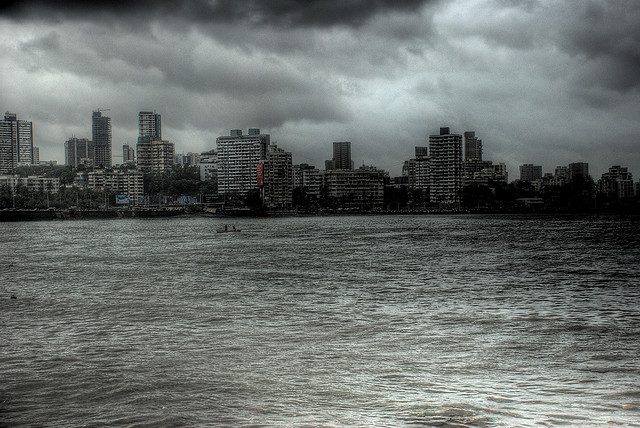
:: Image via nimboo/flickr.

:IRIN

For more on natural disasters in the Middle East see:

Arab Scientists Model Red Sea and Persian Gulf To Stop Flash Floods

Saudi Citizens Release Documentary Criticizing Lack of Flood Protection

500,000 Syrians Flee Drought-Stricken Zone
 

Arwa Aburawa
Arwa Aburawahttp://www.greenprophet.com
Arwa is a Muslim freelance writer who is interested in everything climate change related and how Islam can inspire more people to care for their planet and take active steps to save it while we can. She is endlessly suspicious of all politicians and their ceaseless meetings, especially as they make normal people believe that they are not part of the solution when they are the ONLY solution. Her Indian auntie is her model eco-warrier, and when Arwa is not busy helping out in the neighborhood alleyway garden, swap shopping or attempting fusion vegetarian dishes- with mixed success, she’d like to add- she can be found sipping on foraged nettle tea.

LEAVE A REPLY

Please enter your comment!
Please enter your name here

TRENDING

The Flash Flood Wave Redefining Policy in the MENA Region

If you’ve ever imagined the Middle East and North...

Earthquake data can predict war

Seismic meters used to detect upcoming earthquakes may be used in the Art of War

Why Turkey earthquakes don’t hit Israel? It’s the Dead Sea Fault

The researchers add that the meeting area between the Dead Sea and East Anatolian Faults may be considered a natural laboratory for studying the processes in which tectonic junctions are formed between plate boundaries.

Why was the Morocco quake so deadly?

At the base of Toubkal in the Atlas Mountains. We visited this kasbah a decade ago. And it has taken some damage from the earthquake but all residents and guests were safe.

Russia fires up Turkey’s first nuclear power plant while Germany shuts down its last

Germany, one of the world’s leafing producers of clean, renewable energy has officially shut down its last nuclear reactor last month. On the flip-side, Turkey, the world’s most liberal Muslim country, has fired up its first.

Qatar’s climate hypocrisy rides the London Underground

Qatar remains a master of doublethink—burning gas by the megaton while selling “sustainability” to a world desperate for clean air. Wake up from your slumber people.

How Quality of Hire Shapes Modern Recruitment

A 2024 survey by Deloitte found that 76% of talent leaders now consider long-term retention and workforce contribution among their most important hiring success metrics—far surpassing time-to-fill or cost-per-hire. As the expectations for new hires deepen, companies must also confront the inherent challenges in redefining and accurately measuring hiring quality.

8 Team-Building Exercises to Start the Week Off 

Team building to change the world! The best renewable energy companies are ones that function.

Thank you, LinkedIn — and what your Jobs on the Rise report means for sustainable careers

While “green jobs” aren’t always labeled as such, many of the fastest-growing roles are directly enabling the energy transition, climate resilience, and lower-carbon systems: Number one on their list is Artificial Intelligence engineers. But what does that mean? Vibe coding Claude? 

Somali pirates steal oil tankers

The pirates often stage their heists out of Somalia, a lawless country, with a weak central government that is grappling with a violent Islamist insurgency. Using speedboats that swarm the targets, the machine-gun-toting pirates take control of merchant ships and then hold the vessels, crew and cargo for ransom.

Leopoldo Alejandro Betancourt López Turned Ocean Plastic Into Profitable Sunglasses

Few fashion accessories carry the environmental burden of sunglasses. Most frames are constructed from petroleum-based plastics and acrylic polymers that linger in landfills for centuries, shedding microplastics into soil and waterways long after they've been discarded. Leopoldo Alejandro Betancourt López, president of the Spanish eyewear brand Hawkers, saw this problem differently than most industry executives.

Why Dr. Tony Jacob Sees Texas Business Egos as Warning Signs

Everything's bigger in Texas. Except business egos.  Dr. Tony Jacob figured...

Israel and America Sign Renewable Energy Cooperation Deal

Other announcements made at the conference include the Timna Renewable Energy Park, which will be a center for R&D, and the AORA Solar Thermal Module at Kibbutz Samar, the world's first commercial hybrid solar gas-turbine power plant that is already nearing completion. Solel Solar Systems announced it was beginning construction of a 50 MW solar field in Lebrija, Spain, and Brightsource Energy made a pre-conference announcement that it had inked the world's largest solar deal to date with Southern California Edison (SCE).

Related Articles

Popular Categories