Hidden Costs of Constructing Wind Farms in Turkey Include Many New Roads

turkey wind farmsThe new roads required to transport wind turbines to installation sites in Turkey can delay projects and add to their costs, but also create hundreds of new construction jobs.

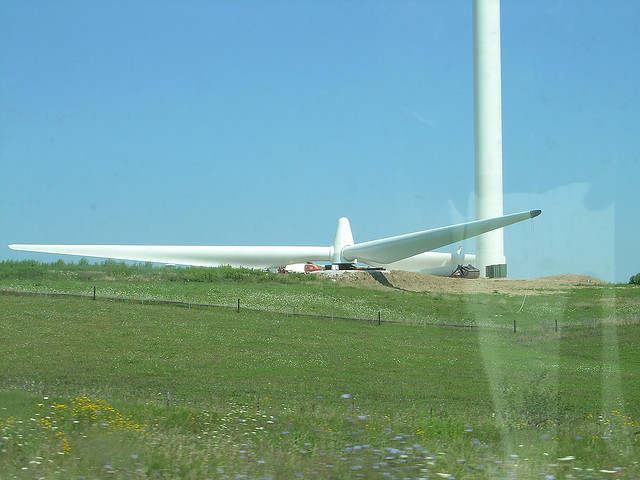
An anonymous representative from one of Turkey’s largest wind energy companies says that every new wind project requires new access roads, because the best wind is found in relatively remote, inaccessible terrain, according to the Hurriyet Daily News. Even main roads sometimes need to be rebuilt, because the trucks bringing the wind turbine equipment cannot maneuver sharp curves.

As a result, the extra costs of road construction are often figured into the projected costs of wind energy companies. Local authorities, the Ministry of Environment and various NGOs must also be consulted when planning any wind project, to ensure that local communities and ecosystems won’t be too disrupted by the new roads.

But so far, these roads’ biggest effect on local communities seems to be the new construction jobs they create.

Certainly, wind companies have not imitated the heavy-handed way in which hydropower plants or thermal power plants are built in Turkey, often without regard for the local environment or local residents’ concerns. Unlike thermal power companies, wind energy companies typically employ local construction outfits, and take pains to inform local residents about the project in detail, according to Mustafa Ataseven, chairman of the Turkish Wind Energy Association.

These procedures can delay a wind project by several months, Ataseven told the Daily News. But they are small hurdles compared to the major forces that have held back the wind industry in Turkey: a lack of government funding and an inefficient licensing system.

Wind power in Turkey took a big hit in the early 2000s, when the country suffered a financial crisis and requested help from the International Monetary Fund. To encourage market privatization, the IMF aid forced the Turkish government to cancel guaranteed funds to seventeen already-approved wind power projects, according to a report by Richard Lynch of the U.S. Department of Energy.

In 2007, the Turkish government passed a renewable energy law with small incentives for wind energy, which boosted the sector. An amendment to that law, passed at the end of 2010, increased feed-in tariffs for wind to $0.073 per kilowatt-hour, which, though small, should further promote investment in wind projects.

When Turkey’s Energy Market Regulatory Authority (EMRA) invited power companies to apply for wind project licenses in 2008, it received applications for almost 80 GW of projects. Unfortunately, most of these applications overlapped at a handful of grid connection points. As a result, no construction on the projects can begin until new tenders are held for each separate connection area, which will begin to happen later this year.

Currently, the country has an installed wind power capacity of 1.3 GW, which is still a fraction of its estimated potential of 90 GW. But the capacity is increasing quickly. In 2010 alone, 343 MW were added to the grid, and by 2015, Turkey’s wind power capacity is projected to reach 5 GW. The government wants to increase that figure to 20 GW by 2023.

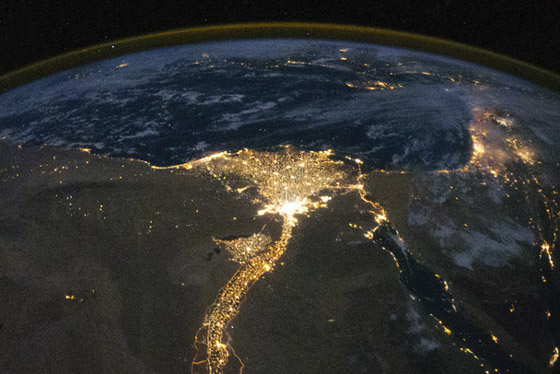
If these exciting numbers come true, Turkey may well become a major player in the Middle Eastern wind energy industry — more so than countries like Egypt, which just announced a tender for 2.7 gigawatts of wind projects, and Jordan, where the government aims to install 1.6 GW of wind power by 2020.

Compared to its neighbors, and to the depressing incentives for other renewable energies in Turkey, wind energy has a bright future in the country. If wind projects can be responsibly planned while also creating employment opportunities for local construction workers, so much the better.

:: Hurriyet Daily News

Read more about wind energy in Turkey and the region:

Turkey Blowing and Going on Wind Energy

Egypt Requests Bids to Get 2.7 Gigawatts of Wind Power by 2016

Syria’s Master Plan for Renewable Energy

Image via royalgeekg

Julia Harte
Julia Hartehttp://www.greenprophet.com
Julia spent her childhood summers in a remote research station in the Rocky Mountains of Colorado, helping her father with a 25-year-old experiment in which he simulated global warming over a patch of alpine meadow. When not measuring plant species diversity or carbon flux in the soil, she could be found scampering around the forests and finding snowbanks to slide down. Now she is a freelance journalist living in Istanbul, where her passion for the environment intersects with her interest in Turkish politics and grassroots culture. She also writes about Turkish climate and energy policy for Solve Climate News.
1 COMMENT

Comments are closed.

TRENDING

EU startup aiming to generate energy on moon villages

Stepping up to democratize the moon is an EU-funded company, Deep Space Energy, which has just raised more than $1 million USD as a seed fund to help it create energy generators on the moon.

Fix Cash Flow Issues in Wind Energy Biz

Wind energy is a business that looks ahead 35 years. How to keep financing stable?

Astro uses AI to help procure land for renewable energy

For oil-rich, environmentally vigilant Gulf states, Astro isn’t just another startup story. It is a blueprint for accelerating an energy transition that is now existential, not optional.

Leading Through a Dual-Energy Transition: Balancing Decarbonisation with Energy Security

Experience in one area of the energy industry isn't enough to guarantee readiness across all the others. That's where a structured program like an MBA in energy can come in. Today's advanced curricula explore energy economics, finance, policy, and strategic management alongside the technical subjects. And when pursuing an energy MBA online, professionals can skill up and retrain without having to step out of the labor market -- an important perk at a time when skilled professionals are already in short supply.

M2PV Capital Targets the American Southwest as Its Launchpad for Off-Grid EV Growth

In the American Southwest, electric vehicles face extreme heat, long travel distances, and limited grid access that expose the real infrastructure gaps behind the EV transition. M2PV Capital is building off-grid charging and power systems designed to operate independently in the region’s most demanding conditions.

Turning Your Energy Consultancy into an LLC: 4 Legal Steps for Founders in Texas

If you are starting a renewable energy business in Texas, learn how to start an LLC by the books.

Tracking the Impacts of a Hydroelectric Dam Along the Tigris River

For the next two months, I'll be taking a break from my usual Green Prophet posts to report on a transnational environmental issue: the Ilısu Dam currently under construction in Turkey, and the ways it will transform life along the Tigris River.

6 Payment Processors With the Fastest Onboarding for SMBs

Get your SMB up and running fast with these 6 payment processors. Compare the quickest onboarding options to start accepting customer payments without delay.

Qatar’s climate hypocrisy rides the London Underground

Qatar remains a master of doublethink—burning gas by the megaton while selling “sustainability” to a world desperate for clean air. Wake up from your slumber people.

How Quality of Hire Shapes Modern Recruitment

A 2024 survey by Deloitte found that 76% of talent leaders now consider long-term retention and workforce contribution among their most important hiring success metrics—far surpassing time-to-fill or cost-per-hire. As the expectations for new hires deepen, companies must also confront the inherent challenges in redefining and accurately measuring hiring quality.

8 Team-Building Exercises to Start the Week Off 

Team building to change the world! The best renewable energy companies are ones that function.

Thank you, LinkedIn — and what your Jobs on the Rise report means for sustainable careers

While “green jobs” aren’t always labeled as such, many of the fastest-growing roles are directly enabling the energy transition, climate resilience, and lower-carbon systems: Number one on their list is Artificial Intelligence engineers. But what does that mean? Vibe coding Claude? 

Somali pirates steal oil tankers

The pirates often stage their heists out of Somalia, a lawless country, with a weak central government that is grappling with a violent Islamist insurgency. Using speedboats that swarm the targets, the machine-gun-toting pirates take control of merchant ships and then hold the vessels, crew and cargo for ransom.

Related Articles

Popular Categories