
Gaddafi Could Use Water As A Weapon In Conflict

Libya’s government forces could use their control over enormous water reserves as a weapon in the current conflict between Gaddafi and rebels trying to overthrow his regime

The ‘Great Man-Made River’, a great civil water works project dubbed by Gaddafi as the 8th wonder of the world, was built to resolve Libya’s severe water scarcity problems. With many parts of the country receiving less than 100 millimeters of rainfall per year, the country is one of the driest in the world and many of its inhabitants now rely on the river and its water reserves for their existence.

Every day, the Great Man-Made River (GMMR) pumps around 5 million cubic metres of fresh water from underground aquifers in southern Libya to the country’s six million inhabitants in the north. Yet this reliance on the water from the GMMR could place inhabitants at risk, as the operating centre for their water is at the heart of the pro-Gaddaffi city of Tripoli.

In the mid 1950’s, oil exploration in the deserts of south Libya uncovered large underground aquifers with vast quantities of fresh water- for example, the Nubian Sandstone Aquifer System alone is estimated to cover 2 million square kilometres and contain 150,000 cubic kilometres of groundwater.

Later in the early 1980’s, Gaddafi announced his epic plans to build the ‘Great Man-Made River’ which would make the most of these aquifers and help resolve the poor water quality in Libya’s northern cities. At an estimated cost of nearly 30 billion dollars, the GMMR has a network of nearly 5,000 kilometres of pipelines which bring fresh water into the cities and also increase the amount of arable land for agriculture.

As Ivan Ivekovic, professor of political science at the American University of Cairo told IPS, “The GMMR provides 70 percent of the population with water for drinking and irrigation, pumping it from Libya’s vast underground aquifers like the NSAS [Nubian Sandstone Aquifer System] in the south to populated coastal areas 4,000 kilometres to the north.”

Whilst there were concerns that NATO air-strikes on the GMMR pipelines could spark a humanitarian crisis, there is a possibility that pro-government forces may disrupt the water flow to cities opposed to Gaddafi. Many opposition-held regions in the east are extremely vulnerable to water cuts and if the water from GMMR was withheld, they would have to rely on the Ajdabiya reservoir which only holds one month’s supply of water.

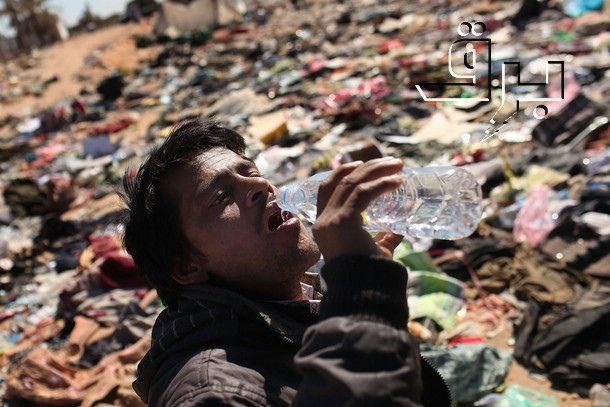
:Image via brqnetwork/flickr.

::IPS News

For more on Libya and water see:

Libyan Violence Dampens Great Man-Made River Project

Libya Touts Great Man-Made River Project As 8th Wonder of the World
Libyan Revolution Will End Gaddafi’s Green Visions

Arwa Aburawa
Arwa Aburawahttp://www.greenprophet.com
Arwa is a Muslim freelance writer who is interested in everything climate change related and how Islam can inspire more people to care for their planet and take active steps to save it while we can. She is endlessly suspicious of all politicians and their ceaseless meetings, especially as they make normal people believe that they are not part of the solution when they are the ONLY solution. Her Indian auntie is her model eco-warrier, and when Arwa is not busy helping out in the neighborhood alleyway garden, swap shopping or attempting fusion vegetarian dishes- with mixed success, she’d like to add- she can be found sipping on foraged nettle tea.

LEAVE A REPLY

Please enter your comment!
Please enter your name here

TRENDING

How does one start prepping?

Faced with an extreme winter storm this year, Americans wonder how to be prepared for catastrophe. Miriam has lived through wars in the Middle East - so she's prepared on giving you a guide to prepping.

Iran’s holiest city about to run dry as terror chosen over water management

Iran’s second-largest city, Mashhad, is facing an acute water emergency after dam reservoirs feeding the city fell below three percent capacity, according to Iranian state and local media. Officials warn that without rainfall or improved inflows from neighboring Afghanistan, the city’s supply could soon collapse.

Iran’s water mafia and thirst for war leaves the country on brink of being dry

Iran’s Lake Urmia, once the Middle East’s largest saltwater lake, has shrunk by 90 percent due to mismanagement, dams, and drought. As Tehran pours billions into foreign conflicts, water activists face repression at home. The crisis mirrors Syria’s drought-driven unrest, showing how water scarcity can destabilize entire regions.

Freedom Flotilla sets sail toward Gaza with Greta Thunburg on board to liberate Gaza

Inside the controversial voyage that merges climate activism, human rights, and Middle East politics. Will the Freedom Flotilla make it to Gaza?

The Emirates wants to help Lebanon become a sustainable winner

Can sustainable experts change the future of Lebanon for the better? The UAE is leading the way.

Qatar’s climate hypocrisy rides the London Underground

Qatar remains a master of doublethink—burning gas by the megaton while selling “sustainability” to a world desperate for clean air. Wake up from your slumber people.

How Quality of Hire Shapes Modern Recruitment

A 2024 survey by Deloitte found that 76% of talent leaders now consider long-term retention and workforce contribution among their most important hiring success metrics—far surpassing time-to-fill or cost-per-hire. As the expectations for new hires deepen, companies must also confront the inherent challenges in redefining and accurately measuring hiring quality.

8 Team-Building Exercises to Start the Week Off 

Team building to change the world! The best renewable energy companies are ones that function.

Thank you, LinkedIn — and what your Jobs on the Rise report means for sustainable careers

While “green jobs” aren’t always labeled as such, many of the fastest-growing roles are directly enabling the energy transition, climate resilience, and lower-carbon systems: Number one on their list is Artificial Intelligence engineers. But what does that mean? Vibe coding Claude? 

Somali pirates steal oil tankers

The pirates often stage their heists out of Somalia, a lawless country, with a weak central government that is grappling with a violent Islamist insurgency. Using speedboats that swarm the targets, the machine-gun-toting pirates take control of merchant ships and then hold the vessels, crew and cargo for ransom.

Leopoldo Alejandro Betancourt López Turned Ocean Plastic Into Profitable Sunglasses

Few fashion accessories carry the environmental burden of sunglasses. Most frames are constructed from petroleum-based plastics and acrylic polymers that linger in landfills for centuries, shedding microplastics into soil and waterways long after they've been discarded. Leopoldo Alejandro Betancourt López, president of the Spanish eyewear brand Hawkers, saw this problem differently than most industry executives.

Why Dr. Tony Jacob Sees Texas Business Egos as Warning Signs

Everything's bigger in Texas. Except business egos.  Dr. Tony Jacob figured...

Israel and America Sign Renewable Energy Cooperation Deal

Other announcements made at the conference include the Timna Renewable Energy Park, which will be a center for R&D, and the AORA Solar Thermal Module at Kibbutz Samar, the world's first commercial hybrid solar gas-turbine power plant that is already nearing completion. Solel Solar Systems announced it was beginning construction of a 50 MW solar field in Lebrija, Spain, and Brightsource Energy made a pre-conference announcement that it had inked the world's largest solar deal to date with Southern California Edison (SCE).

Related Articles

Popular Categories