Egypt Holds On Tight To Nile Water Rights

nile river egypt ethiopiaAs its grip on the Nile river slips away, Egypt reframes the tone of its negotiations.

Egypt has announced a final effort to re-negotiate the terms of the Cooperative Framework Agreement which apportions water from the Nile River to various basin countries. Since 1929, Egypt has held a near-monopoly on the water, but last year Burundi, Ethiopia, Kenya, Rwanda, Tanzania and Uganda signed the Entebbe Treaty that neither Egypt nor Sudan recognize in order to arrest that monopoly.

At the beginning of April 2011, Ethiopia started construction on the Grand Millennium Dam near Sudan. Egypt asked permission to conduct an assessment to gauge the impact of the 6,000MW hydropower plant on its own water supply, but Ethiopia refused. Almasry Alyoum reports that concerned parties will try one more time to find a fair solution.

Under the terms of the Entebbe Treaty, Nile basin countries will no longer have to ask Egypt’s permission to undertake water diversion projects on the mighty river. Emboldened by this, Ethiopia – which contributes more water to the river’s annual flow than any other country – began construction on a massive dam project.

Egypt sent a 40-person delegation to Uganda in order to persuade President Museveni to oppose the dam project currently underway in Ethiopia’s Benshangul Gumuz state. Egypt’s 85 million inhabitants rely almost exclusively on the Nile for their water needs, while Ethiopia claims that electricity produced by the hydropower project can benefit everyone.

In a last ditch effort to maintain some of its rights to the Nile waters, Egypt’s Water Resources Minister Hussein al-Atfy announced an initiative by the African countries to renegotiate the Nile Basin Framework Agreement.

According to Almasry Alyoum, he said the initiative aims at allowing all people of Nile Basin countries to benefit from the water, and added that international arbitration would be Cairo’s last resort in dealing with this issue.

Meanwhile, Prime Minister Essam Sharaf, in a meeting with the Ethiopian ambassador, expressed a willingness to improve relations between the two countries.

:: Almasry Alyoum

More on the Mighty River Nile:

Defiant Ethiopia to Proceed With Massive Nile Dam

American Elections Are Bad for the Nile Delta

In the Face of “Nilelessness,” Egyptians Protest Water Shortages

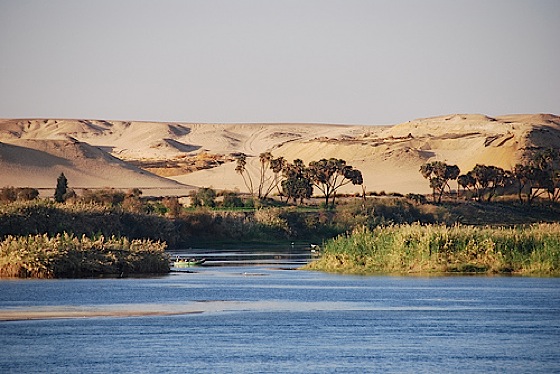
image via flickr

Tafline Laylin
Tafline Laylinhttp://www.greenprophet.com
As a tour leader who led “eco-friendly” camping trips throughout North America, Tafline soon realized that she was instead leaving behind a trail of gas fumes, plastic bottles and Pringles. In fact, wherever she traveled – whether it was Viet Nam or South Africa or England – it became clear how inefficiently the mandate to re-think our consumer culture is reaching the general public. Born in Iran, raised in South Africa and the United States, she currently splits her time between Africa and the Middle East. Tafline can be reached at tafline (at) greenprophet (dot) com.
7 COMMENTS
  1. Egypt has no way to dictate Ethiopia by this 21st century. Any such a kind of trial leads to unexpected damage. By this time Ethiopians are peoples who know the right to use its water with in its territory with the will of any body else. No leader has the way to negociate with Egypt on the right of Ethiopian people. Ethiopians has the right to use its water river not only for power generation even for irrigation.

  2. A small suggestion on this “Ethiopia – which contributes more water to the river’s annual flow than any other country ”

    must be corrected as “Ethiopia contributes 85% of the Nile water, which is more than 5 times the water contributed by the rest of the countries in the basin combined.”

  3. Ms. Laylin, Egypt has no more right over the Nile, then the portion that flows through it’s own territory. Looking at this from a logical standpoint, how can Egypt claim otherwise? To have such power, to dictate to Ethiopia (among other basin countries) what it can and can not do with water in their respective countries, compromises their sovereignty. Secondly, when the 1929 Nile agreement between Egypt and the British was conducted, Ethiopia was were never consulted. So, that’s irrelevant.

  4. Thanx Mr.Hussein al-Atfy Egypt’s Water Resources Minister.Although u r too late to start thinking and acting in confirmity to the demands of the 21 century it is not gone.21 century has no place for arogance.
    Ofcourse ,it can be a tablet that is bitter to swallow.But u have to take it if u want to get better.That’s the demand of the day.only cooperation and negotiation are and should be the ultimate solutions of all contraversaries.That’s why I appreciate the current stand of Mr.Hussein al-Atfy Egypt’s Water Resources Minister which was unthinkable before.
    Anyway advise the Egyptians to think twice and more in order to follow the outdated means of thinking and acting.B/c things are changed for the better in every aspect especially in the Ethiopian case.Thanx to the cuurent wise leadership and the committed nad courageous people of Ethiopia.

LEAVE A REPLY

Please enter your comment!
Please enter your name here

TRENDING

Ivanpah’s Sunset: Why the Collapse of a $2.2 Billion Solar Dream Threatens the Future of Renewable Energy

California is shutting down its Ivanpah CSP (Concentrated Solar Power) project, raising concerns about the future of CSP investments. Moshe Luz, a key scientist in the field, spoke to Green Prophet to address misconceptions and share insights. He argued that claims of bird deaths from CSP are myths and that Ivanpah's closure could hinder future renewable energy projects by discouraging investors from taking risks. Luz emphasized the need for bold investments to advance renewable technology.

How doTERRA, like its name, is offering gifts of the Earth

From replanting trees in Maui, Hawaii, after the island was ravaged by fires, to increasing medical care in Madagascar and helping blind students in Thailand, the doTERRA Healing Hands Foundation is doing its part to make a difference.

Egypt is protecting its people and its economy from the devastating impacts of sea-level rise

Children run after each other with kites flying along...

Ethiopian Nile dam to destroy about half of Egypt’s agriculture

Ethiopia has been building Africa's largest hydro-electric dam since 2011. $4 billion later and it is about to go online. It could drain Egypt's Nile so that life in Egypt as they know it (at least since the 70s) will never be the same again.

Egypt runs to Saudi for help over Ethiopia’s Grand Renaissance Dam

When all else fails, run to wealthy Saudi Arabia. That...

Qatar’s climate hypocrisy rides the London Underground

Qatar remains a master of doublethink—burning gas by the megaton while selling “sustainability” to a world desperate for clean air. Wake up from your slumber people.

How Quality of Hire Shapes Modern Recruitment

A 2024 survey by Deloitte found that 76% of talent leaders now consider long-term retention and workforce contribution among their most important hiring success metrics—far surpassing time-to-fill or cost-per-hire. As the expectations for new hires deepen, companies must also confront the inherent challenges in redefining and accurately measuring hiring quality.

8 Team-Building Exercises to Start the Week Off 

Team building to change the world! The best renewable energy companies are ones that function.

Thank you, LinkedIn — and what your Jobs on the Rise report means for sustainable careers

While “green jobs” aren’t always labeled as such, many of the fastest-growing roles are directly enabling the energy transition, climate resilience, and lower-carbon systems: Number one on their list is Artificial Intelligence engineers. But what does that mean? Vibe coding Claude? 

Somali pirates steal oil tankers

The pirates often stage their heists out of Somalia, a lawless country, with a weak central government that is grappling with a violent Islamist insurgency. Using speedboats that swarm the targets, the machine-gun-toting pirates take control of merchant ships and then hold the vessels, crew and cargo for ransom.

Leopoldo Alejandro Betancourt López Turned Ocean Plastic Into Profitable Sunglasses

Few fashion accessories carry the environmental burden of sunglasses. Most frames are constructed from petroleum-based plastics and acrylic polymers that linger in landfills for centuries, shedding microplastics into soil and waterways long after they've been discarded. Leopoldo Alejandro Betancourt López, president of the Spanish eyewear brand Hawkers, saw this problem differently than most industry executives.

Why Dr. Tony Jacob Sees Texas Business Egos as Warning Signs

Everything's bigger in Texas. Except business egos.  Dr. Tony Jacob figured...

Israel and America Sign Renewable Energy Cooperation Deal

Other announcements made at the conference include the Timna Renewable Energy Park, which will be a center for R&D, and the AORA Solar Thermal Module at Kibbutz Samar, the world's first commercial hybrid solar gas-turbine power plant that is already nearing completion. Solel Solar Systems announced it was beginning construction of a 50 MW solar field in Lebrija, Spain, and Brightsource Energy made a pre-conference announcement that it had inked the world's largest solar deal to date with Southern California Edison (SCE).

Related Articles

Popular Categories