
Beating the Nationalist Drum and Israel’s Oil Interests


oil-tel-aviv

Israel needs to move away from nationalist oil rhetoric and pursue renewable energy projects instead

I was astounded to happen on the full-page advertisement on the back of the business section in the October 10, 2010 issue of  Maariv. “Israeli Gas or Arab Gas: What Do You Prefer?” read the central heading. The Arabic writing on the wall was translated: “Someone wants you not to understand.”

Striking a xenophobic tenor, the ad explains that “a year ago a large deposit of oil was discovered off the coast of Israel. Oil production from the new well would cancel Israel’s dependence on foreign-Arab sources and provide Israel with great resources for decades to come.” The article fails to note that the  reserves in the Leviathan field have yet to be proven.  

 Delegitimizing the Public Outcry

But then comes the pith of the advertisement, the boogie that it seeks to raise. It decries “various groups…that are applying pressure on the government to increase the royalties and taxes spitefully [davka] on blue-and-white gas.” These groups, the ad asserts, have behind them the New Israel Fund (NIF), a left-wing Israeli philanthropic organization supporting progressive causes in Israel.

The NIF is also the subject of smear campaigns by right-wing demagogues. In today’s political climate, associating individuals, organizations and causes with the NIF is a clear  (and cheap) attempt to delegitimize the subject at hand.

The ad represents an attempt to discredit the many Israelis from different quarters who challenge the country’s low royalty rates for mineral extraction by private companies. The current tariff was instituted in the early years of the state and is one of the lowest in the world.

It is the subject of scrutiny by the Finance Ministry’s Shishinsky Committee and responds to calls for a greater public share of the huge revenues that Israeli energy companies like Yitzhak Tshuva’s Delek Group (there are others, lesser known) stand to make from potential finds in Israel, on land or off-shore.

An Attempt to Sandbag Reform

The Delek Group has partnered with an American petroleum corporation, Noble Energy, in oil exploration off the Israeli coast. They have invested millions in uncovering potential finds that will bring them immense revenues. They now seek to share as little as possible of these revenues with the Israeli public and have pulled out all stops in order to sandbag any increase in the royalty payment to the state.

While they get a sympathetic hearing from the government ministers who came to power on an economic platform that is very caring of big business interests, there is public pressure to reform the royalty schedule, or, at least, to increase taxes on production revenues.

The Finance Ministry’s Shishinsky Committee is not a front for the New Israel Fund. The public outcry against the system of revenue giveaway is not a left-right issue and embraces people of many different political stripes. Opposition to the present arrangement can rightfully be viewed from a nationalist position, the desire to strengthen the state’s fiscal standing.

A string of slogans

Of course, this position does not cohere with the Israeli equivalent of the famous American credo: what is good for Ford (or Tshuva’s Delek, or other companies controlled by blue-and-white magnates) is good for America (Israel).  That credo is the underlying message of the ad.

The ad suggests that “A change in royalties or taxes could induce instability and alienate foreign investors, which even now do not invest in Israel because of the Arab threat.” This reasoning, with its logical frailty is followed by the statement “Israel requires economic independence. Together we will stop the New Israel Fund.”

This stringing of slogans waves a flag that is shredded by capitalist salvos. The connection to the NIF is tenuous and entirely tangential, merely a diversion.  What the ad advances is the squalid notion that Israeli’s economic welfare will be served by a partnership of foreign corporate interests with domestic tycoons intent on keeping as much of the future gas revenues for themselves and out of the state’s coffers.

The group sponsoring the advertisement is the Forum on Behalf of the Land of Israel. Its website states that it is a student group based at Bar-Ilan University and other campuses. Its objective is “to advance the national interests of the Jewish people through the utilization [nitzul] of all academic fields and to also strengthen and forge the nationalist-Zionist voice in academia.”

A question that naturally follows is: where does a student group draw the considerable monetary resources to buy a full page ad in a daily newspaper?

The Environmental Dimension

Energy independence is an important national goal. The dependence of the industrial world on Middle East oil has had disastrous geopolitical consequences for Israel. No less dire has been the environmental degradation and climate change that has resulted from regional fossil fuel extraction.

As I have stated elsewhere on these pages, the kind of energy independence that Israel should pursue is properly found in the green technology that we have developed and exported the world-over – but have not yet applied sufficiently at home.

What we lack in fossil fuels could be a blessing, enabling us to reduce further damage to the environment by making better use of alternative sources– like solar power in the Negev and wind.

Developing a long-term energy strategy based on such resources,  the prudent husbanding of natural gas for domestic use – and the economic benefit of the commonweal – would serve the national interest – but not on the terms the oil barons and their cronies are seeking.

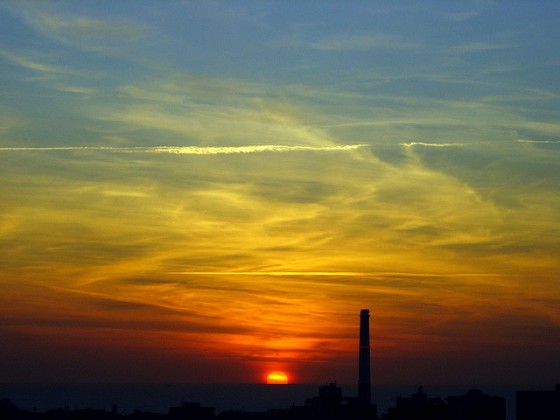
:: image via RonAlmog

More News From Israel:

Desert University Goes Green With Gusto

Arab High-Tech Entrepreneurs Changing the Face of Nazareth

Ernst & Young: Israeli Government Must Pick Up CleanTech Glove

Dr. Yosef Gotlieb
Dr. Yosef Gotlieb
Dr. Yosef (Yossi) Gotlieb is a geographer specializing in society-nature relations, international development and global change. He was born in Costa Rica and raised in the United States. During service as a planner in an Israeli international development cooperation program in Nepal in 1987, Yosef observed the systematic destruction of the environment in that resource-rich country, whose population was being made poorer by expatriate concerns in the name of “modernization.” During his doctoral studies, he proposed that development be directed toward geo-ethnic regions rather than in the confines of the post-colonial state. Kurdistan was his case study. Among Dr. Gotlieb’s writings are Self-Determination in the Middle East (NY: Praeger, 1982) and Development, Environment and Global Dysfunction (Delray Beach, FL: St Lucie Press, 1996). He currently directs text and publishing studies at David Yellin College of Education, Beit HaKerem, Jerusalem. Yosef Gotlieb is a writer of prose and poetry and paints. He practices tai chi and is a passionate listener of classic and progressive rock and blues. He lives with his family outside of Jerusalem, having made his home in Israel since 1984. You can reach him at yossi (at) greenprophet.com.

LEAVE A REPLY

Please enter your comment!
Please enter your name here

TRENDING

Astro uses AI to help procure land for renewable energy

For oil-rich, environmentally vigilant Gulf states, Astro isn’t just another startup story. It is a blueprint for accelerating an energy transition that is now existential, not optional.

How Renewable Energy is Revolutionizing the Way We Power Our World

Solar has become the star of the transition thanks to modular hardware and straightforward installation. It fits dense cities and remote towns alike. Many companies are turning to rooftop arrays and carport systems - and exploring commercial solar installation as a practical way to lock in future savings.

Leading Through a Dual-Energy Transition: Balancing Decarbonisation with Energy Security

Experience in one area of the energy industry isn't enough to guarantee readiness across all the others. That's where a structured program like an MBA in energy can come in. Today's advanced curricula explore energy economics, finance, policy, and strategic management alongside the technical subjects. And when pursuing an energy MBA online, professionals can skill up and retrain without having to step out of the labor market -- an important perk at a time when skilled professionals are already in short supply.

M2PV Capital Targets the American Southwest as Its Launchpad for Off-Grid EV Growth

In the American Southwest, electric vehicles face extreme heat, long travel distances, and limited grid access that expose the real infrastructure gaps behind the EV transition. M2PV Capital is building off-grid charging and power systems designed to operate independently in the region’s most demanding conditions.

What Renewable Energy Means for Long-Term Environmental Planning

In the context of American energy policy (setting the stage for the world as oil prices are in USD), the relevance of renewable energy planning is increasingly evident. Federal agencies are preparing final biofuel blending mandates under the Renewable Fuel Standard, with decisions expected early in 2026 after delays that have left investors and producers in limbo.

Qatar’s climate hypocrisy rides the London Underground

Qatar remains a master of doublethink—burning gas by the megaton while selling “sustainability” to a world desperate for clean air. Wake up from your slumber people.

How Quality of Hire Shapes Modern Recruitment

A 2024 survey by Deloitte found that 76% of talent leaders now consider long-term retention and workforce contribution among their most important hiring success metrics—far surpassing time-to-fill or cost-per-hire. As the expectations for new hires deepen, companies must also confront the inherent challenges in redefining and accurately measuring hiring quality.

8 Team-Building Exercises to Start the Week Off 

Team building to change the world! The best renewable energy companies are ones that function.

Thank you, LinkedIn — and what your Jobs on the Rise report means for sustainable careers

While “green jobs” aren’t always labeled as such, many of the fastest-growing roles are directly enabling the energy transition, climate resilience, and lower-carbon systems: Number one on their list is Artificial Intelligence engineers. But what does that mean? Vibe coding Claude? 

Somali pirates steal oil tankers

The pirates often stage their heists out of Somalia, a lawless country, with a weak central government that is grappling with a violent Islamist insurgency. Using speedboats that swarm the targets, the machine-gun-toting pirates take control of merchant ships and then hold the vessels, crew and cargo for ransom.

Leopoldo Alejandro Betancourt López Turned Ocean Plastic Into Profitable Sunglasses

Few fashion accessories carry the environmental burden of sunglasses. Most frames are constructed from petroleum-based plastics and acrylic polymers that linger in landfills for centuries, shedding microplastics into soil and waterways long after they've been discarded. Leopoldo Alejandro Betancourt López, president of the Spanish eyewear brand Hawkers, saw this problem differently than most industry executives.

Why Dr. Tony Jacob Sees Texas Business Egos as Warning Signs

Everything's bigger in Texas. Except business egos.  Dr. Tony Jacob figured...

Israel and America Sign Renewable Energy Cooperation Deal

Other announcements made at the conference include the Timna Renewable Energy Park, which will be a center for R&D, and the AORA Solar Thermal Module at Kibbutz Samar, the world's first commercial hybrid solar gas-turbine power plant that is already nearing completion. Solel Solar Systems announced it was beginning construction of a 50 MW solar field in Lebrija, Spain, and Brightsource Energy made a pre-conference announcement that it had inked the world's largest solar deal to date with Southern California Edison (SCE).

Related Articles

Popular Categories