


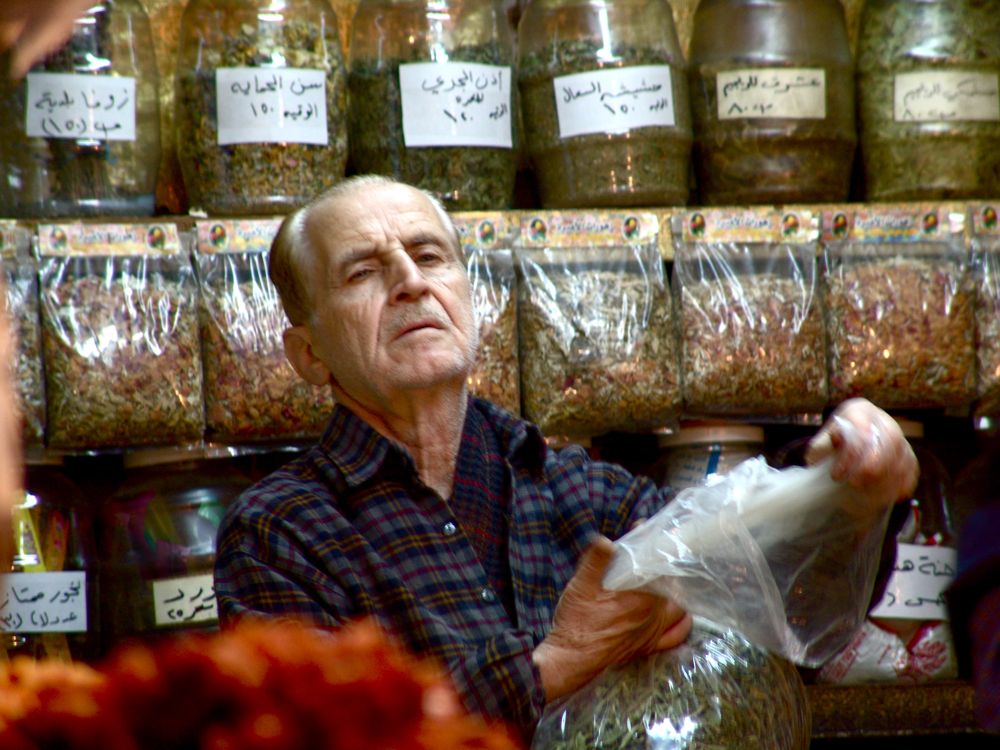
 Estimates of 15 million bags per day consumed in Damascus alone! Moshe uncovers news in Arabic – that Syrians are launching a campaign to “say no to plastic bags.”
Where bags litter highways, byways and in a region where camels choke on plastic bags, Syria is joining other countries in the Middle East, such as Lebanon, the UAE, campaigning to ban plastic bags. The Syrian Ministry of Environment is launching a campain to cut down on plastic bags because of their bad effects to human beings as well as to the environment.
According to Syria News – Nobles News in Arabic, as the first step in its campaign “No to the Nylon Bags,” the Ministry of Environment distributed on June 28 thousands of fabric and paper bags to the stores in the markets and the commercial centers to replace the nylon bags and to limit their use. The campaign also encourages, together with the civil association, the reuse of paper bags, which have become rarely used following the appearance of the nylon bags.
In the second phase of the campaign, the Syrian Ministry of the Environment together with the Ministry of Finance plan to impose a tax on the plastic bags in order to make them more expensive and to decrease thier use. The aim of this measure is to prevent the sellers from supplying plastic.
According to this article, the Syrian Ministry of the Environment estimates the consumption of plastic bags in Damascus and its vicinity at 15 million bags per day, while the civil environmental associations claim that the actual number is much higher. According to the Syrian Ministry of Industry, there are 539 licensed factories that produce 145,000 tonnes of plastic bags, cans and syringes every year. In addition, there are unlicensed factories, which distribute the plastic bags to the markets.
With these data in mind, it is no wonder that one of Syria’s most difficult environmental problems is the number and distribution of plastic bags, which it has been trying to decrease, until now without so much success.
According to Syria Today, the Ministry of Environment tried to cut down on plastic bags in August 2009, but to no avail. The Environment Minister, Kawkab al-Daieh, said in an informal workshop discussing the overuse of plastic bags in Syria which was conducted in December of last year, that “we do not want to entirely ban the manufacturing of plastic bags. We want to rationalise their use and introduce alternatives. We are trying to address wrong practices.”
A biodegradable option?
Indeed, the Ministry of Environment has been exploring such alternatives through the option of producing biodegradable plastic bags.
But, it should be remembered that only in April 2009, the Ministry of Environment, which had formerly been part of the Ministry of Local Administration, was established as an independent entity. This highlighted the growing emphasis the country places on environmental issues.
Since the focus of the Syrian government on the environment is very new, it seems like Syria has still a long way to go in its campaign to cut down on plastic bags, but, hopefully, through cooperation with civil society organizations and NGOs and raising the awareness of the public, the process will be shortened.
The UN Volunteers site reports that one of the biggest environmental problems facing Syria is the number of plastic bags. From the old city souqs to the shops of Mezzeh, plastic bags are given out freely and in large numbers. Once used, the bags are usually quickly discarded – often onto the streets causing litter to accumulate in the roads, gardens and parks around the country.
But the damage to the environment goes further than causing unsightly mess – plastic bags pose a huge danger to animals. Birds and small mammals who get trapped in the bags often die. Plastic bags pollute the sea too, killing marine creatures which often mistake the bags for food.
What can you do about it? Buy a canvas bag for shopping. You can keep inside it smaller plastic bags for reuse when you need to weigh and buy vegetables and fruit in the market.
More about campaigning to cut down on plastic/nylon bags in the Middle East:
Half of UAE’s Camels Choked and then Died on Plastic Bags
Waste LB Encourages Lebanese to Use Fewer Bags
Recycling Plastic Bags Into Beautiful Handbags Knit in Israel
Above image of Damascus market spice seller, and plastic, via alazaat


