Masdar And The Dicey Science Of Carbon Credits

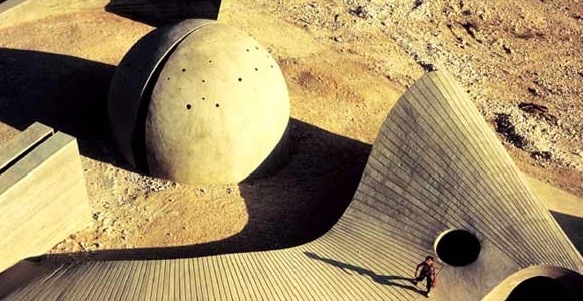
broken-earthy-heart Are oil and gas companies seeking carbon credits simply opportunists looking to make a profit? [image via oedipusphinx]

It  makes some sense that Masdar City, a carbon neutral city being built in Abu Dhabi, should receive carbon credits. But rewarding large oil companies such as Abu Dhabi’s ADNOC even though they continue to emit carbon into our choking atmosphere, is a much tougher sell.  

Carbon Neutral is good

According to The National, the UN-administered carbon credit scheme will reward Masdar with $1.45 million in carbon credits each year. These credits are rewarded for emissions saved through its 10MW solar panel array at Masdar City, and an energy efficiency initiative at a power station in Taweelah.

“The two projects have kept a total of 94,268 tonnes of emissions out of the atmosphere over the past 12 months,” according to monitoring reports uploaded earlier this month on the UN climate body’s website.

Masdar has translated their own carbon credit learning into an opportunity to help other businesses and projects implement the same. While at first this seems like a noble and worthwhile effort aimed at reducing emissions, their intentions are murky.

Carbon intensive is not

“Earlier this year it proposed a huge project for the Abu Dhabi National Oil Company (ADNOC) that would reduce gas flaring and cut emissions by 151,408 tonnes a year,” writes Chris Stanton. The credits would ” boost the rate of return on the US$29.5m (Dh108.2m) investment in the gas capture technology from 4.3 per cent to 9.6 per cent,” according to the project’s registration documents.

The average power plant, according to the US Environmental Protection Agency (EPA), emits 1,392 lbs of harmful greenhouse gases for every MWh of electricity produced. In comparison to Masdar City’s carbon neutral city, and despite considerable, noteworthy emission reductions, ADNOC’s carbon contribution should not be celebrated.

Profiting from pollution

Giving credit to oil and gas companies for negligible reductions is an inappropriate approach to climate change, according to sourcewatch.org, resulting in “substantial profits for corporate greenhouse gas polluters.”

Stanton claims that “… the carbon credit industry remains riddled with regulatory and bureaucratic risks, as Masdar learnt last year when it abruptly withdrew registrations for three ADNOC projects.”

Charlie Coghlan, vice president for SCC MENA told Stanton that “investors can wait years for registration, auditing and credit award processes to unfold,” though no one seems certain why.

We at Green Prophet hope that the UN’s reluctance to award credits willy nilly to potential profiteers reflects the agency’s genuine commitment to rewarding true innovation, and true efforts to halt and then reverse climate change.

:: The National

More Masdar Stories:

GE Ecomagination Centre in Masdar City

Vertical Farming in Masdar City? AeroFarms’ Soil-less Solution

Tafline Laylin
Tafline Laylinhttp://www.greenprophet.com
As a tour leader who led “eco-friendly” camping trips throughout North America, Tafline soon realized that she was instead leaving behind a trail of gas fumes, plastic bottles and Pringles. In fact, wherever she traveled – whether it was Viet Nam or South Africa or England – it became clear how inefficiently the mandate to re-think our consumer culture is reaching the general public. Born in Iran, raised in South Africa and the United States, she currently splits her time between Africa and the Middle East. Tafline can be reached at tafline (at) greenprophet (dot) com.
1 COMMENT
  1. I think the writer is a skewed one…..the investment in a 10 MW solar power giving 14000 CER or around 0.14million dollar is nothing compared to investment. If the intention of the investor is to make profit, he woould never install such projects…even with carbon credits, the projects are not profitable…..the baselne scenario would be flaring gases or firing natural gas for more power and water……

    the author should go to each project, study in deep and please confirm whether they are making profit or not………..the comments are taken bits and pieces without getting into complete truth and intention…

Comments are closed.

TRENDING

BM Studios is designing systems, not just buildings in the UAE

Balsam Madi is an architect and systems thinker whose work bridges culture, sustainability, and design intelligence across the Middle East and Europe.

UAE Green Finance Report 2025

Masdar is the the UAE’s flagship renewable energy company. Compare it to Neom in Saudi Arabia. Masdar has become one of the world’s most active clean energy investors, with projects in more than 40 countries across six continents. Established in 2006 and jointly owned by ADNOC, Mubadala, and TAQA, Masdar operates and develops solar, wind, and green hydrogen projects with a current portfolio exceeding 50 gigawatts of capacity. Masdar also buys companies, and paid $50 million for this US business Terra-Gen last year. 

Inca Hernández Brings Liwa Farm Village to Life in Abu Dhabi, Rooted in Desert Heritage

Greenhouses, aquaculture systems, and crops of lemongrass and lavender tie the project to contemporary concerns: food security, ecological resilience, and sustainable livelihoods in a fragile region facing climate extremes. 

Iran’s water mafia and thirst for war leaves the country on brink of being dry

Iran’s Lake Urmia, once the Middle East’s largest saltwater lake, has shrunk by 90 percent due to mismanagement, dams, and drought. As Tehran pours billions into foreign conflicts, water activists face repression at home. The crisis mirrors Syria’s drought-driven unrest, showing how water scarcity can destabilize entire regions.

Creamy Eggplant Soup Recipe

Eggplant seems an unlikely soup ingredient. But blended with vegetable stock, herbs, and cream, the shiny purple vegetable makes a creamy soup full of Middle-Eastern flavors.

Should You Invest in the Private Market?

startustartup Unlike public stock exchanges, which offer daily trading, strict...

How to build a 100-year-company

Kongō Gumi is a Japanese construction company, purportedly founded in 578 A.D., making it the world's oldest documented company. What can we learn about building sustainable businesses from them?

From Pilot Plant to Global Stage: How Aduro Clean Technologies’ 2026 Expansion Signals a Turning Point for Chemical Recycling Investors Like Yazan Al Homsi

The company's Next Generation Process (NGP) Pilot Plant in London, Ontario, has officially moved into initial operating campaigns, generating the kind of structured, repeatable data that separates laboratory promise from commercial viability.

How AI Helps SaaS Companies Reduce Repetitive Customer Support Work

SaaS products are designed for large numbers of users with different levels of experience, and also in renewable energy.

Pulling Water from the Air

Faced with water shortage in Amman, Laurie digs up...

Turning Your Energy Consultancy into an LLC: 4 Legal Steps for Founders in Texas

If you are starting a renewable energy business in Texas, learn how to start an LLC by the books.

Tracking the Impacts of a Hydroelectric Dam Along the Tigris River

For the next two months, I'll be taking a break from my usual Green Prophet posts to report on a transnational environmental issue: the Ilısu Dam currently under construction in Turkey, and the ways it will transform life along the Tigris River.

6 Payment Processors With the Fastest Onboarding for SMBs

Get your SMB up and running fast with these 6 payment processors. Compare the quickest onboarding options to start accepting customer payments without delay.

Related Articles

Popular Categories