

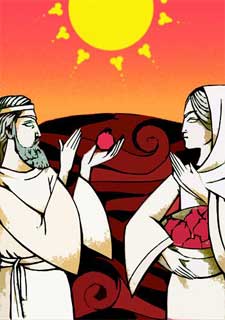
 Mehr was a goddess and symbol of a religious belief in Indo-Iranian culture associated with the creation of the world. Many from Iran look to their roots of this nature-based celebration with preparations already starting next month.
The Mehregan Festival or the Persian Festival of Autumn is an ancient Persian fest which is dedicated to Mehr (or Mithra/Mitra), the goddess and symbol of light, friendship, faith, love and kindness.
It is celebrated each year at the beginning of Autumn on the 16th of Mehr in the 7th month. This year October 8. But in some regions, it is celebrated earlier, like in September in the United States. And like in some religions, such as Christmas, preparations can start early.
In ancient Iran, there were two great national festivals that both were celebrated when the length of day and night were equal (solstice).
The first is exactly in the beginning of spring (summer solstice), which is called Nowruz. This festival is still the greatest national festival of Iran, despite it being an Islamic state, and is celebrated widely in the first day of spring with special ceremonies. It is also the first day of Iranian calendar and the day that the nature is alive again after winter. Nowruz is on March 21. Both Mehregan and Nowruz, derived from the Zoroastrian religion, rejoice nature and that’s why we think it’s the perfect holiday to “celebrate” on Green Prophet. We’re still in the heat of summer, but Mehregan is the winter solstice. On this day the ancient Persians and many nationals that were in cultural or political contact with Persians celebrated the festival with music, special dances, and by giving gifts to each other.
In both Nowruz and Mehregan the families gather some signs and symbols of the revival of the nature and the gifts of god on a cloth and spent the fest around it. During Mehregan, Iranians used a burgundy-colored cloth and put some flowers on it, which were called the “ever-lasting flower” and around this flower was adorned with other flowers. Today we do not know much about this flower. According to some researchers, it might be a flower that bud several months of the year.
The tradition of putting meaningful signs on a tablecloth is still continued during Nowruz, but Mehregan was paid less attention during the past millennium. After the Arab invasion to Iran and the change of the religion from Zoroastrianism to Islam, many cultural traditions survived and some were weakened. Mehregan is one of those that hardly survived and our knowledge about it its related history is scarce.
The Time of Mehregan Fest
As mentioned before, today Mehregan is celebrated on 8th of October. This day has been a day for the fest for the last 2,000 years. There is evidence that shows before this time, in the age of the Achaemenid Dynasty, the exact day was on the first day of autumn –– the 1st of of Mehr or the 23rd of September. Later, the date changed to October 8.
Why mention this? In the Zoroastrian calendar each day of the month had a special name and some of them were similar to the names of the months. The 16th day of the month of Mehr was called Mehr. This day was called the Mehr-day of the Mehr-month. So if someone heard this, it was clear which day of the year is mentioned.
The system of the festival of Persia in the age of Zoroastrianism was that every day, which had a similar day name and month name, was a day for happiness and celebration. Therefore, the Mehr-day of the Mehr-month or the 16thof Mehr became a national fest and gradually take the place of the first day of autumn.
The Origins of Mehregan
Mehr was a goddess and symbol of a religious belief in Indo-Iranian culture, which was associated with the creation of the world. This religion is called Mithraism in Mitraism, which was the religion of Iranians before Zoroaster in the 6th century BC. In fact mitra or mithra are the Old Persian forms of modern Mehr.
The time of beginning of this religion is not known, but it was the main religion of Iranians up to 6th century B.C. Mithraism has also an undeniable share in Zoroastrianism. Avesta the religious book of the Zoroastrians has a part called Mehr-Yasht, which is a poetic worship of this great Persian goddess. This phenomenon was combined with respect to sun as a sign of Mitra.
In 3rd and 4th century AD Mithraism spread through the Roman Empire through the Hellenic World. In many parts of Europe like Britain, Spain, Germany, and lands near Danube, Mithraism was the official religion. When Constantine accepted Christianity, Mithraism was forgotten but its impact on Christianity still exist. Many Christian notions which are now believed by Christians are dervived from Mithraism. For example, Christmas Day is the same day as the birth day of Mehr (Mitra).
Also the day Sunday is believed to be derived from Mehr or the Sun. Today in modern Persian language the word Mehr has the meanings of sun, kindness and love.
Mehregan Fest in Modern-Day Iranian Culture
In the past 200 years the attention of Iranians to Mehregan Fest has declined. But in the recent decades because of political and cultural transformations, people are interested in the ancient Persian values. Many people, especially in countries outside Iran celebrate this fest. Some of these celebrations are held every year in Orange County in California and Munich, Germany.
:: “Mitrakana Festival, Mehregan Festival” by Reza Moradi Ghiasabadi (in Persian)
More on green Iran:
The Windcatchers of Yadz
Iran Creates Biofuel from Algae
Iran and Qatar Align to Help the Environment
Above image via Parsarts



Just a slight clarification… the solstices of winter and summer are and the shortest and longest days of the year respectively, not to be confused with equinoxes that are the first day of spring and fall. Mehregan and Nowruz are celebrated on the fall and spring equinoxes (respectively), when there is an equal length of day and night.