
Lots of ‘Ifs’ – But Afghan Mineral Reserves Offer Hope for the War-torn Country (and for the Electric Car Industry)

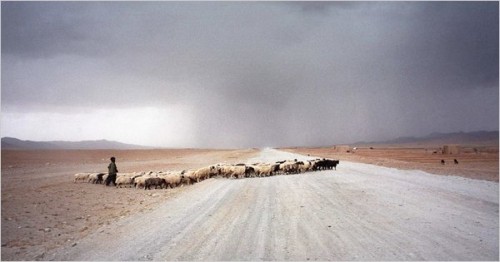
Afghanistan's Ghazni Province may hold world’s largest deposits of lithiumAfghanistan’s desolate Ghazni Province may hold the world’s largest deposits of lithium. (Image: Tyler Hicks/The New York Times)

Just days after the Afghan War became the longest war in US history – 104 months, surpassing the 103-month American engagement in Vietnam – the New York Times, quoting top US government officials, reported the discovery of near $1 trillion in untapped mineral deposits in Afghanistan.

In addition to huge finds of iron, copper, cobalt and gold, Afghanistan could potentially rival Bolivia as the world’s largest source of lithium, a key material for green technologies, including batteries for electric vehicles. In fact, the NYT cites an internal Pentagon memo stating that Afghanistan could become the “Saudi Arabia of lithium.”

The report quotes US officials who claim that these mineral deposits have the potential to “fundamentally alter the Afghan economy and perhaps the Afghan war itself ,” but also notes that “the Obama administration is hungry for some positive news to come out of Afghanistan.”

‘Rinse and repeat spin’

Treehugger.com is unimpressed by the NYT report: “Does the timing of this news have some significance born out of desperation?” it asks. The large-scale mineral reserves were originally discovered by the Soviet Union during its occupation of Afghanistan in the 1980s and were “rediscovered” in recent years by  US according to Treehugger, which dismisses the NYT report as “mostly rinse and repeat spin.”

Another green-related website, Inhabit.com, is less cynical: “When the story broke yesterday that Afghanistan has $1 trillion in untouched mineral deposits, you could almost hear the course of history changing.”

While expressing concerns about whether the mining will be conducted in an environmentally responsible way, Inhabit.com is largely upbeat about the news: “Whether the country’s newfound wealth will bring it prosperity or the resource curse remains to be seen, but the rugged land just abruptly entered modernity.” In particular, “it will almost certainly be good news for electric vehicle makers and buyers” as a greater supply of lithium should drive prices down.

Not a game-changer

Two experts interviewed by The Media Line express some reserved optimism, but cautioned that it will take some time before Afghanistan can profit from its mineral wealth.  According to Jorrit Kamminga of the International Council on Security and Development: “In general, one should not have high hopes. There cannot be any quick fix.  In the long term, there is a good possibility it would be a big part of the Afghan economy. But it will not be a game-changer or the backbone of the economy.”

Similarly, Anjalika Bardalai of the Economist Intelligence Unit told The Media Line: “Of course the mineral reserves, if they prove as vast as reported, have the potential to transform the Afghan economy.
“However, this is at best a medium-to-long-term prospect, as a lack of infrastructure and investment means that the country is many, many years away from being able to exploit such reserves on a large scale.”

Stunning potential

Perhaps the situation was best summarized by Gen. David H. Petraeus, commander of the U.S. Central Command in an interview on Saturday: “There is stunning potential here. There are a lot of ifs, of course, but I think potentially it is hugely significant.”

:: New York Times
:: Treehugger.com
:: Inhabit.com
:: The Media Line

Read more on Green Prophet:
Afghan Opium Growers Get “The Burn Out”
GM’s Volt Versus the Renault-Nissan Electric “Better Place” Edition

Ira Moskowitz
Ira Moskowitzhttps://www.greenprophet.com/
When his kids were small, Ira would point to litter on the ground and tell them: “That makes me angry!” He still gets angry about pollution, waste and abusive treatment of our world, but is encouraged by the growing awareness of environmental issues and has been following the latest developments in cleantech with great interest. Ira grew up in the green hills of western Massachusetts and moved to Israel in the early 1980s after completing an MA in Middle Eastern Studies. He has worked as a software developer and journalist, and translates works of Hebrew fiction and non-fiction to English. Ira is trying to age gracefully, but refuses to surrender his youthful belief in the potential for change, including a collaborative future for the peoples of the Middle East. To contact Ira, email ira (at) greenprophet (dot) com.

LEAVE A REPLY

Please enter your comment!
Please enter your name here

TRENDING

The US leaves 66 United Nations organizations to “put America first”

The world needs a reset and to restart well intentioned cooperation projects from start. Because right now the UN and EU projects look like software built on code from the 80s, rickety, patched, slow to adapt, and prone to crashing under the weight of outdated assumptions.

Musk’s Saudi Mega-Data Center Signals a Desert Arms Race for AI

For now, Musk’s partnership signals a deepening alignment between Silicon Valley and Riyadh — and a new chapter in the Middle East’s data-powered future. The satellites and robots may come later. The energy footprint, however, is already here.

Medical cannabis Syqe lays off 30% of its workforce

This backing gave Syqe financial muscle and strategic reach—but also raises reputational and strategic risks, given tobacco’s fraught public perception in the health space. Imagine if McDonald’s bought into a regenerative kale farm. The cash infusion could scale production, but people would always wonder if the lettuce was being served with a side of fries. 

Afghanistan’s earthquake and mud-brick homes. Can they rebuild safer and more sustainably?

A 6.0-magnitude earthquake in eastern Afghanistan killed over 800 people as mud-brick homes collapsed in rain-soaked landslides. Here’s why traditional earthen houses failed, how human-driven slope damage worsened the disaster, and how sustainable, earthquake-resistant construction can save lives.

Trump’s “Shower Liberation” Proposal: A Disastrous Step Back or a New Path to Efficiency?

New findings revealed that at any given flow rate, higher-pressure showers were associated with lower water consumption. While low-flow showers delivered less water than high-flow-rate showers, high-pressure showers used less water overall because they were turned off sooner.

Qatar’s climate hypocrisy rides the London Underground

Qatar remains a master of doublethink—burning gas by the megaton while selling “sustainability” to a world desperate for clean air. Wake up from your slumber people.

How Quality of Hire Shapes Modern Recruitment

A 2024 survey by Deloitte found that 76% of talent leaders now consider long-term retention and workforce contribution among their most important hiring success metrics—far surpassing time-to-fill or cost-per-hire. As the expectations for new hires deepen, companies must also confront the inherent challenges in redefining and accurately measuring hiring quality.

8 Team-Building Exercises to Start the Week Off 

Team building to change the world! The best renewable energy companies are ones that function.

Thank you, LinkedIn — and what your Jobs on the Rise report means for sustainable careers

While “green jobs” aren’t always labeled as such, many of the fastest-growing roles are directly enabling the energy transition, climate resilience, and lower-carbon systems: Number one on their list is Artificial Intelligence engineers. But what does that mean? Vibe coding Claude? 

Somali pirates steal oil tankers

The pirates often stage their heists out of Somalia, a lawless country, with a weak central government that is grappling with a violent Islamist insurgency. Using speedboats that swarm the targets, the machine-gun-toting pirates take control of merchant ships and then hold the vessels, crew and cargo for ransom.

Leopoldo Alejandro Betancourt López Turned Ocean Plastic Into Profitable Sunglasses

Few fashion accessories carry the environmental burden of sunglasses. Most frames are constructed from petroleum-based plastics and acrylic polymers that linger in landfills for centuries, shedding microplastics into soil and waterways long after they've been discarded. Leopoldo Alejandro Betancourt López, president of the Spanish eyewear brand Hawkers, saw this problem differently than most industry executives.

Why Dr. Tony Jacob Sees Texas Business Egos as Warning Signs

Everything's bigger in Texas. Except business egos.  Dr. Tony Jacob figured...

Israel and America Sign Renewable Energy Cooperation Deal

Other announcements made at the conference include the Timna Renewable Energy Park, which will be a center for R&D, and the AORA Solar Thermal Module at Kibbutz Samar, the world's first commercial hybrid solar gas-turbine power plant that is already nearing completion. Solel Solar Systems announced it was beginning construction of a 50 MW solar field in Lebrija, Spain, and Brightsource Energy made a pre-conference announcement that it had inked the world's largest solar deal to date with Southern California Edison (SCE).

Related Articles

Popular Categories