Libya Goes Ahead with BP Drilling Agreement despite the Gulf of Mexico Oil Spill

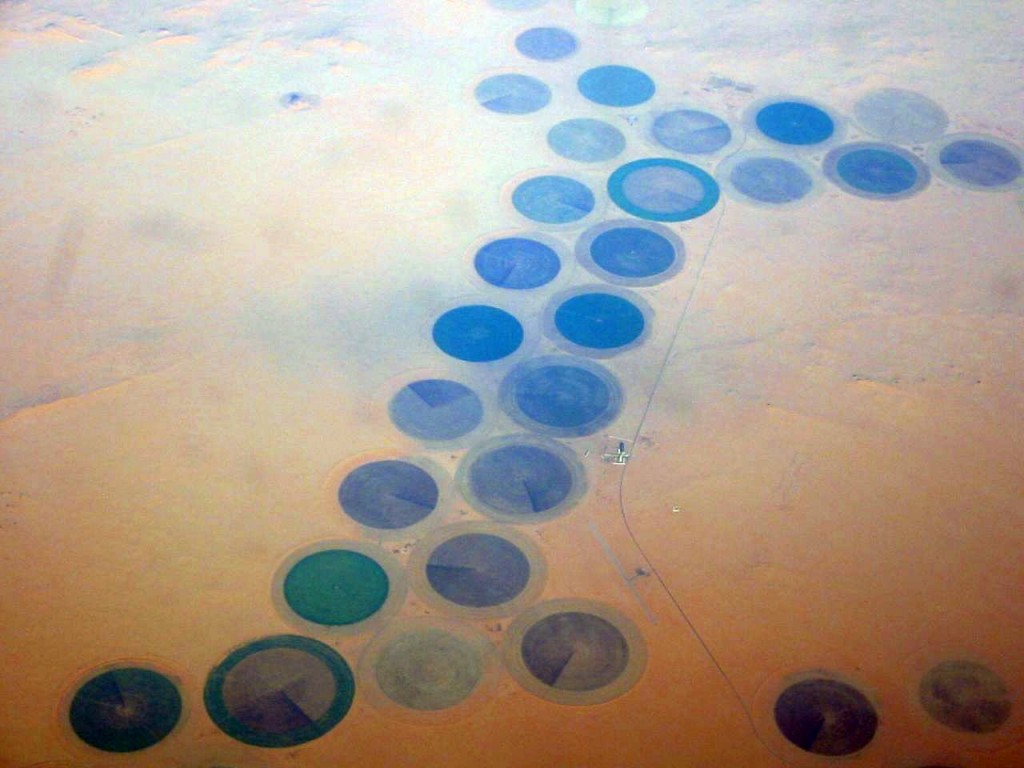
libya irrigation pivot sahara photoBP to go ahead with deepwater drilling in the Mediterranean Sea, off the coast of Libya, which holds Africa’s largest oil reserves – the 9th largest in the world. Should activists be alarmed? Above: pivot irrigation in the Sahara, paid for by Libyan oil wealth.

While a tropical storm approaching the Gulf of Mexico might worsen the BP oil disaster, Libya is going to allow the same company to begin drilling in its offshore deepwater region next month. Shukri Ghanem, the head of Libya’s National Oil Company who serves also as Libya’s de facto Oil Minister, confirmed on June 27 the 2007 agreement with BP, which allows it to drill in the Libyan deepwater region of the Mediterranean Sea. This is despite the negative news about oil pills, not only in the United States, but more recently in the Red Sea, off the coast of Egypt.

Ghanem stated in a Forbes article that although the deaths of those working on Deepwater Horizon and the resulting oil spill were “tragic accidents,” the oil industry is also moving into “new frontiers”.

He said that “an accident will not stop us from digging in this new frontier. Life must go on, but we will learn a lot of lessons.”

According to this exploration and production agreement with BP which was signed on May 29, 2007, BP and Libya’s National Oil Company will explore around 54,000 square kilometers, two kilometers of the onshore Ghadames and offshore frontier Sirt Basins.

During this exploration and appraisal phase, BP will acquire 5,500 kilometers of 2D and 30,000 kilometers of 3D seismic and will drill 17 exploration wells. The initial exploration commitment is set at a minimum of $900 million USD.

During the exploration and appraisal period, BP will spend $50 million on education and training projects for Libyan professionals, which will be designed and managed by Libya’s National Oil Company. If the exploration and appraisal period proves to be successful, BP will spend another $50 million from commencement of production.

BP is noted to be the first ever foreign company to drill in offshore waters for an OPEC (an Organization of the Petroleum Exporting Countries) member.

Libya has a very large amount of oil and is estimated to have the ninth largest oil reserve in the world. According to the Libya Analysis Briefs issued by the US Energy Information Administration in July 2009, “2008 total oil production (crude plus liquids) was approximately 1.88 million barrels per day (bbl/d).”

The Libya Analysis Briefs cites the Oil and Gas Journal, which says that “Libya holds close to 44 billion barrels of oil reserves, the largest in Africa.”

Since Libya is still recovering from many years of US and international sanctions, which were only lifted by the United Nations in 2003 and by the US in 2004, it is no wonder that the Libyan government wishes to increase its oil reserves, production capacity and further develop the natural gas sector. This is why Libya is going ahead with the BP drilling agreement despite the risk that an oil spill such as we witness happening in the Gulf of Mexico might happen also in the Mediterranean.

Read more on Libya:
Boutique Solar Panels Fit For Mosques, Pipelines and Airports
A Sustainable Architecture Conference in Libya

Image credit futureatlas

Hot this week

The Fitness App Revolution: Building the Future of Wellness Through Strategic Development

In an era where smartphones are ubiquitous and health consciousness is at an all-time high, the fitness industry has undergone a radical digital transformation. Fitness applications have moved far beyond simple pedometers, evolving into comprehensive wellness platforms that serve as personal trainers, nutritionists, and community hubs right in our pockets.

A Brief History of Basil From India to Italy

Beloved, fortunate, sweet, and royal; an herb with a long and storied history in Asia and across the world. Called by many names, basil has featured in previous Green Prophet articles, so enjoy another serving, a brief history of basil.

How Renewable Energy is Revolutionizing the Way We Power Our World

Solar has become the star of the transition thanks to modular hardware and straightforward installation. It fits dense cities and remote towns alike. Many companies are turning to rooftop arrays and carport systems - and exploring commercial solar installation as a practical way to lock in future savings.

How does one start prepping?

Faced with an extreme winter storm this year, Americans wonder how to be prepared for catastrophe. Miriam has lived through wars in the Middle East - so she's prepared on giving you a guide to prepping.

Fishermen sue tire manufacturers on behalf of the salmon

A federal trial in San Francisco has brought US tire manufacturers, fishing groups, and environmental scientists into court over a chemical most drivers have never heard of — but which scientists say may be silently reshaping aquatic ecosystems.

Topics

The Fitness App Revolution: Building the Future of Wellness Through Strategic Development

In an era where smartphones are ubiquitous and health consciousness is at an all-time high, the fitness industry has undergone a radical digital transformation. Fitness applications have moved far beyond simple pedometers, evolving into comprehensive wellness platforms that serve as personal trainers, nutritionists, and community hubs right in our pockets.

A Brief History of Basil From India to Italy

Beloved, fortunate, sweet, and royal; an herb with a long and storied history in Asia and across the world. Called by many names, basil has featured in previous Green Prophet articles, so enjoy another serving, a brief history of basil.

How Renewable Energy is Revolutionizing the Way We Power Our World

Solar has become the star of the transition thanks to modular hardware and straightforward installation. It fits dense cities and remote towns alike. Many companies are turning to rooftop arrays and carport systems - and exploring commercial solar installation as a practical way to lock in future savings.

How does one start prepping?

Faced with an extreme winter storm this year, Americans wonder how to be prepared for catastrophe. Miriam has lived through wars in the Middle East - so she's prepared on giving you a guide to prepping.

Fishermen sue tire manufacturers on behalf of the salmon

A federal trial in San Francisco has brought US tire manufacturers, fishing groups, and environmental scientists into court over a chemical most drivers have never heard of — but which scientists say may be silently reshaping aquatic ecosystems.

Listening to Water: Tarek Atoui’s Next Work for Tate Modern

Born in Beirut, Lebanon in 1980 and now living in Paris, Atoui has spent years building instruments that don’t sit comfortably in concert halls. Many of them involve water, glass, and ceramics — materials that react to sound instead of simply producing it.

Leading Through a Dual-Energy Transition: Balancing Decarbonisation with Energy Security

Experience in one area of the energy industry isn't enough to guarantee readiness across all the others. That's where a structured program like an MBA in energy can come in. Today's advanced curricula explore energy economics, finance, policy, and strategic management alongside the technical subjects. And when pursuing an energy MBA online, professionals can skill up and retrain without having to step out of the labor market -- an important perk at a time when skilled professionals are already in short supply.

From Green Energy to Healthy Societies: Why old systems thinking is becoming relevant again

Across the Middle East and North Africa, large investments are being made in green hydrogen, renewable energy, water infrastructure and sustainability. Most of these efforts are discussed in the context of climate change, decarbonization and economic diversification. That framing is important, but it may not capture their full value.

Related Articles

Popular Categories