Jacob’s trees were the Cedars of God

conservation, biodiversity, eco-tourism, climate change, Lebanon
Cedars of God, in Lebanon

In this week’s segment from the Torah, Parshat Vayigash, Jacob and his family go down to Egypt to Joseph, who is now second, only to Pharaoh, in Egypt. On his way down the Bible explains that Jacob went via Beersheba.

The Midrash Bereshit Rabbah, a sixth century commentary on the bible, notices extra language used to describe that journey and explains further. It explains that Jacob, on the way down to Egypt, stopped and cut down the cedar-trees that his grandfather, Abraham, planted.

The Midrash continues that Jacob foresaw that his great-great grandchildren would need that wood, in the desert, to build the Tabernacle on their way back to Israel. This was built from the cedars of Lebanon.

The people of Israel, while in Egypt, kept the wood intact. They did not use it for anything else; their purpose was passed down from one generation to the next. If they had been used for idolatry, while in Egypt, they would not have been suitable to be used in building the Tabernacle. But the message was passed on, along with the wood, from one generation to the next. This message was one of hope that the wood would be needed, on their way out of slavery, back to the Promise Land.

This Midrash has a message of its own, a message of hope as well. Deuteronomy (20:19) likens man to a tree. In Judaism, this parallel is significant. The Midrash is telling us that Jacob passed the message that while in Egypt the Israelites need to remain a holy people; trees fit to worship God in the building of the Tabernacle.
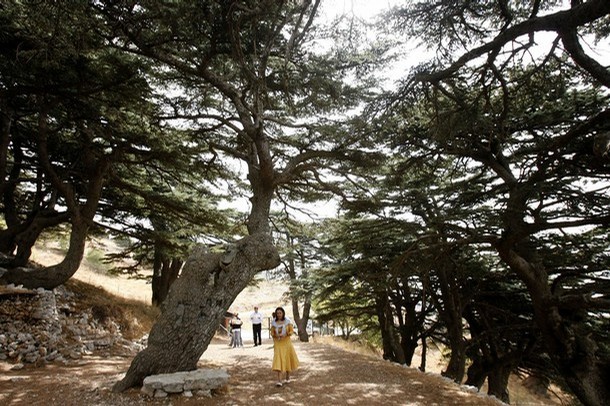
Cedars of God, or the Cedars of Lebanon

while in the worst conditions, slaves in a society that stood for everything that they did not believe in, they remained a holy people, and the wood was usable in the building of the Tabernacle.

Today we are at a crossroad, similar to the one that Jacob was at. We are living during difficult times, and there may be more difficult times ahead. It is important now, more than ever, to pass the message of the tree onto our children, both actually, and metaphorically. We need to replenish our forests, and all that that signifies: a symbiotic relationship with our planet and a sense of responsibility and caring for the future.

We also need to replenish the forests in our souls: the message that no matter what the situation – markets crashing, war, poverty, global warming or terrorism – it does not justify actions that are in any way less than human. This is the message of Jacob and this is the message that we need to pass on to our children if we want our world to heal on a global level.

Jack Reichert
Jack Reicherthttps://www.greenprophet.com/
As far back as he can remember Jack Reichert has been interested in the environment. In the second grade, he rallied all of his classmates to donate one recess a week to cleaning up litter from the schoolyard. That was the same year that a city councilman asked him to help with his campaign because of the letter Jack had written asking him to clean up Boston Harbor. Ever since Jack has followed the development of the international green conscience with anticipation and hope that one day we will treat Mother Earth with the respect she deserves and not turn her into another Giving Tree. For tips, feedback and prophet sightings, Jack can be reached at jack (at) greenprophet (dot) com.

TRENDING

Jewish Vegans invite global community to “Compassionate Passover” event

As Passover approaches, a global online gathering is inviting...

Plant trees in cities, for your heart

It seems like a no-brainer, but sometimes you need to give evidence to city councillors: A new multi-institutional study led by UC Davis Health suggests that not all green space is created equal. Living in urban neighborhoods with more visible trees is associated with a 4% lower incidence of cardiovascular disease, while areas dominated by grass or low shrubs may be linked to higher cardiovascular risk.

Funeral for a Tree plays birdsong from tree rings of beloved oak

When a 65-year-old oak tree in Steve Parker’s yard died from fungal disease, he did not cut it into firewood or haul it away. He did not erase it. He cut the tree into disks and then turned them into records that play birdsong –– a touching tribute to the years that the tree was house and home to birds and all manners of creatures. 

What is the Jewish Climate Trust?

Jewish Climate Trust has quickly attracted the attention and support of some of the most influential voices in Jewish philanthropy, drawing backing from prominent family foundations and business leaders connected to the Bronfman and Schusterman philanthropic networks, alongside climate-focused investors and community builders aligned with founding leader Nigel Savage. Together, these donors have committed many millions of dollars to build a serious, long-term climate platform for the Jewish world — not as a symbolic gesture, but as a strategic intervention in one of the defining challenges of this generation.

Dubai developer uproots ancient Italian olive trees, $270,000 USD each for “eco” project

Flying centuries-old trees across continents via specialized cargo burns enormous fossil fuels. Replanting them in a desert climate—no matter how advanced the irrigation or “heritage preservation techniques”—places immense stress on organisms that evolved for Mediterranean seasons, soils, and rainfall patterns. And we've seen that the UAE is not capable of taking care of trees so survival rates are uncertain.

Should You Invest in the Private Market?

startustartup Unlike public stock exchanges, which offer daily trading, strict...

How to build a 100-year-company

Kongō Gumi is a Japanese construction company, purportedly founded in 578 A.D., making it the world's oldest documented company. What can we learn about building sustainable businesses from them?

From Pilot Plant to Global Stage: How Aduro Clean Technologies’ 2026 Expansion Signals a Turning Point for Chemical Recycling Investors Like Yazan Al Homsi

The company's Next Generation Process (NGP) Pilot Plant in London, Ontario, has officially moved into initial operating campaigns, generating the kind of structured, repeatable data that separates laboratory promise from commercial viability.

How AI Helps SaaS Companies Reduce Repetitive Customer Support Work

SaaS products are designed for large numbers of users with different levels of experience, and also in renewable energy.

Pulling Water from the Air

Faced with water shortage in Amman, Laurie digs up...

Turning Your Energy Consultancy into an LLC: 4 Legal Steps for Founders in Texas

If you are starting a renewable energy business in Texas, learn how to start an LLC by the books.

Tracking the Impacts of a Hydroelectric Dam Along the Tigris River

For the next two months, I'll be taking a break from my usual Green Prophet posts to report on a transnational environmental issue: the Ilısu Dam currently under construction in Turkey, and the ways it will transform life along the Tigris River.

6 Payment Processors With the Fastest Onboarding for SMBs

Get your SMB up and running fast with these 6 payment processors. Compare the quickest onboarding options to start accepting customer payments without delay.

Related Articles

Popular Categories