 A day before Buy Nothing Day in 2008 an American salesman lost his life, as bargain hunters in a Wal-Mart shop in Long Island trampled him to death.
No one was going to get in the way of a good deal: shoppers walked on and killed the 34 year-old, while pushing their way through the door on Black Friday, the first Friday after Thanksgiving, and when Americans start their holiday shopping.
One of the things I love about living in Israel is that people here are not driven with the same kind of consumerism you can find in North America. It’s a real relief. Maybe it’s because most of us aren’t caught up with Christmas, being mainly Jewish or Muslim. Don’t get me wrong, Israelis love a good bargain, but shopping over here –– thankfully –– has not become a religion.
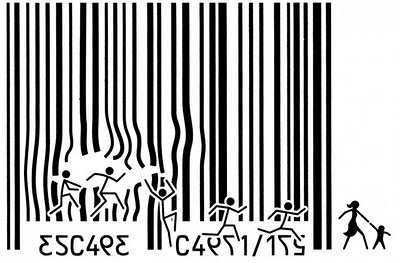
In light of today being “Buy Nothing Day” in North America, I’ve posted a story below, which I’d written after my first shopping experience two years ago in Bangkok, Thailand. Some food for thought about what drives us to shop, and consume:
________
Abercrombie and Fitch shorts, Birkenstock sandals, Gucci purses and Ray Ban sunglasses – I was faced with miles of aisles of goods in the shopping mall halls in Bangkok, Thailand. I looked at the products promising to make me more desirable, more pretty, more everything and wondered, do I have the power to choose not to choose?
I had anticipated the shopping experience in Thailand, where I was told that for tens – instead of hundreds and thousands of dollars, I could buy anything that my heart desired. But when faced with the prospect of what seemed like an endless sea of “knock-offs,” I started to feel pains in my stomach.
The sensory overload created by piles of clothes, stores pedaling watches, the screaming colors, the beckoning salespeople looking at me as the commodity, made me feel nauseous. What promised to be a day of shop-till-we-dropped, ended in me reflecting on the concept of the “brand” and how it drives us to consume much more than we really need.
What’s in a name brand?
According to Wikipedia, a brand is a symbol that embodies all the information about a product or service. A brand creates in our minds expectations from products. Explicit logos, fonts, color schemes, symbols, and sounds are developed to represent values, ideas, and even the personality of specific products and companies.
For instance “Just do it!” and “Because I’m worth it” are famous slogans many of us identify with. Repetition on the radio, TV and on billboards plant these words inside our head and create associations between the product being advertised and the user’s experience of using the product.
In effect, we end up buying much more than we need; and the act is not just wasteful, but has a toll on our planet by contributing to Global Warming.
But brands have an upside as well. In some cases, brands help us weed out the good from the bad. Certain electronic equipment or clothing manufacturers may have a reputation for delivering high quality goods that survive years of wear and tear. The brand helps us save time so we can know what to expect.
And other brands may communicate a superior value, or ethics, by being environmentally-friendly, or by being produced by fair trade labor practices.
Fishy tricks to get you to buy
At the end of the day, it is up to us as the consumer to decide whether or not we want to buy into a brand, but with today’s aggressive marketing campaigns, it is best to stay out of the shopping malls if you don’t want to play the game.
As an example, this past summer, while I was in the Lacoste store at Paris’ Lafayette mall, I smelled something fishy. Literally. thinking it was strange that restaurant smells would leak into such a high-end clothing store, I looked around and no restaurant was in sight. Then I moved over to Ralph Lauren and smelled fried chicken.
“Don’t you know about olfactory marketing schemes?” my friend asked me.
He went on to explain about a new and secret form of advertising used by marketing departments in companies to send customers ‘smell’ cues while shopping. Since smell is the sense most strongly connected to memory, smells are injected into the shopping experience to help sell a lifestyle; to invoke memories of youth, of love, of home.
Just don’t buy into it
Some activists are saying “no!” to mass consumerism and sneaky advertising tricks; they are advocating that people flex their consumer muscles in the areas of buying less, buying locally and buying products that support fair trade.
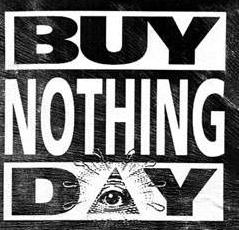 Adbusters, one such group, is a magazine that works to demystify the allure of the brand. They say that 20 percent of the world’s affluent population in the west are consuming about 80 percent of the world’s resources. One of their solutions is “Buy Nothing Day.”
With historical roots in Canada, Buy Nothing Day was started in 2002 by a Vancouver artist named Ted Dave who came up with the idea that people should refrain from buying anything for a 24 hour period in order to demonstrate consumer power.
Says the editorial staff at Adbusters, “Every November, for 24 hours, we remember that no one was born to shop – we make a small choice to participate by not participating.”
“If you’ve never taken part in Buy Nothing Day, or if you’ve taken part in the past but haven’t really committed to doing it again, consider this: 2006 will go down as the year in which mainstream dialogue about global warming finally reached its critical mass. The event, they believe, raises awareness to what are wasteful consuming habits of the west. In the United States and Canada, supporters demonstrate on the day after American Thanksgiving, Black Friday, as it is one of the busiest shopping days of the year.
Last year about 10,000 people in 65 countries participated in Buy Nothing Day and specifically in America they were credit card cut-up booths, no-logo parades, free food parties and concerts and bartering markets. More than 2 million people chose not to spend any money.
Now I ask myself, What can I do in the rest of the year to take responsibility for how much I shop and not contribute to Global Warming and waste?
For me at least, I avoid wearing other people’s logos on my clothes, and remove them when I can; I have also come to appreciate my aging wardrobe and second-hand finds (see this post on my magical red T-shirt). These days in particular, with a little more money in my pocket, when choosing new clothes, I buy from local designers and try to avoid the big retail outlets that manufacturer clothing for pennies in Third World countries.
Buy Nothing Day isn’t just about changing your habits for one day,” concludes Adbusters. “It’s about starting a lasting lifestyle commitment to consuming less and producing less waste – to begin setting the example.”
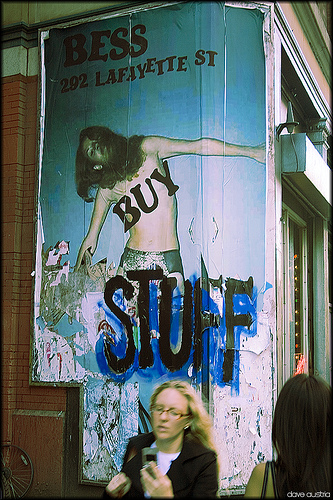
Image of top poster, Dave Astra
More ways to cut down on consuming:
Green Prophet on Greening Your Wardrobe
Shtaim, A Second Hand Store With a Twofold Conscience
Dumpster Diving in Tel Aviv